The Biological Blueprint: How Aquarium Fish Bring New Life Into the Tank
Yes, pet fish can absolutely have babies in your home aquarium, though their breeding strategies vary wildly between livebearers that give birth to fully formed free-swimming young and egg-layers that scatter, stick, bury, or carry eggs in their mouths. Survival depends heavily on pristine water, optimized nutrition, and hiding spaces to prevent parent cannibalism.
Witnessing the numbers of your aquatic community swell with a new generation is one of the most exhilarating milestones for any aquarium keeper. If you are housing prolific live-bearing species, you might easily witness a fresh explosion of life in the tank multiple times throughout the calendar year. For the adventurous hobbyist, this rapid reproductive rate unlocks the fascinating ability to cross-breed different color variations, mixing genetics to develop entirely unique patterns right before your eyes.
However, a harsh truth must be acknowledged by anyone stepping into the role of an aquatic custodian: the vast majority of challenging aquarium fish will not simply breed on their own without dedicated intervention. While a few opportunistic species will populate a tank completely unassisted, most require you to master the biological levers of their environment before they ever consider reproducing.
To achieve consistent success, you must transform your glass box into a precise mirror of the natural habitats these creatures evolved in over millions of years. This means look-alike environments, pristine water conditions, and highly targeted, nutrient-dense nutrition are non-negotiable foundations for triggering the primal drive to spawn.
Livebearers vs. Egg-Layers: The Two Divergent Paths of Aquatic Reproduction
In the grand evolutionary design of the underwater world, fish have split into two fundamentally different reproductive camps: those that give birth to live young and those that deposit eggs. Livebearers carry their developing young internally, providing protection within the mother’s body until they are fully formed. When the moment arrives, the female expels miniature, fully functioning versions of the adult fish that are immediately ready to face the world.
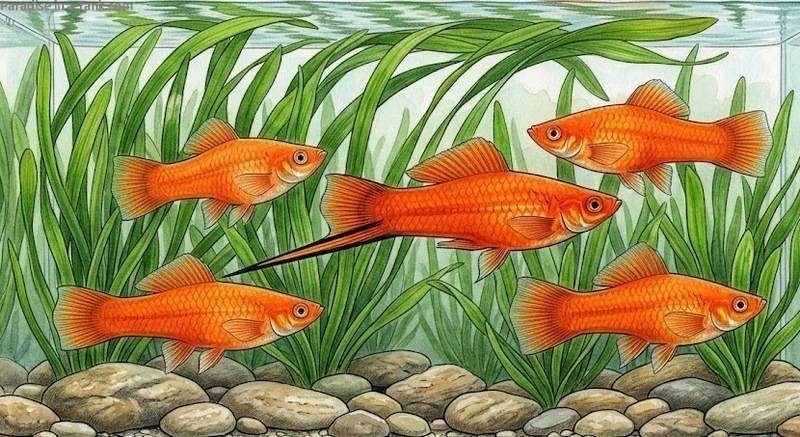
These tiny newborns possess fully developed eyes, functional mouths, and an instinctual drive to immediately hunt for microscopic food particles while dodging hungry predators. If you are looking to manage a classic live-bearing species, checking out a comprehensive swordtail fish care guide will give you an excellent roadmap for handling their highly active reproductive cycles.
Egg-layers, by contrast, rely on an entirely different survival strategy that demands specialized environmental structures to succeed. These species release unfertilized eggs into the open environment, where they are simultaneously fertilized by the male and left to hatch based on ambient water conditions.
Because these external embryos are completely defenseless against hungry tankmates and fluctuating water parameters, egg-layers have developed highly intricate, specialized behaviors to give their offspring a fighting chance. Understanding the stark difference between these two strategies is the first step toward safeguarding the next generation of your tank.
The Architecture of Oviparous Survival: Five Types of Aquatic Egg-Layers
Egg Scatterers
Species that employ the strategy of scattering their eggs are the ultimate gamblers of the aquatic world, tossing their genetic material across the substrate and hoping for the best. Creatures like the hyperactive zebra danio and the brightly banded tiger barb will simply release hundreds of non-sticky eggs directly onto the aquarium floor during a chaotic spawning chase. They provide absolutely zero parental protection, often turning around to eat their own freshly dropped eggs before they even hit the gravel.
Vertical Surface Stickers
Other egg-laying species demand absolute stability for their future offspring, choosing to deposit adhesive eggs only onto rigid, vertical structures within the environment. The majestic discus is a prime example of this methodology, carefully cleaning smooth rocks, broad plant leaves, or slate pieces before laying their neat rows of sticky eggs. This localized approach allows the parents to fiercely guard a single, compact zone rather than defending an entire aquarium floor.
Substrate Buriers
For species evolved to live in unpredictable, ephemeral environments, hiding eggs completely out of sight is the only way to ensure the survival of the species. Killifish are famous for this subterranean tactic, literally driving their eggs deep down into the soft peat moss or muddy substrate of their native pools. This adaptation protects the eggs from drying out during seasonal droughts, allowing the embryos to enter a state of suspended animation until fresh rainwater triggers a hatch.
Bubble Nest Builders
Certain air-breathing fish rely on architectural engineering at the water’s surface to keep their young saturated with vital oxygen. The labyrinth-breathing betta fish meticulously blows hundreds of tiny bubbles, binding them together with oral mucus to form a floating raft tucked among surface vegetation. The male carefully gathers every fallen egg in his mouth, deposits it into the safety of the bubble matrix, and guards the nest with aggressive vigilance.
Mouthbrooders
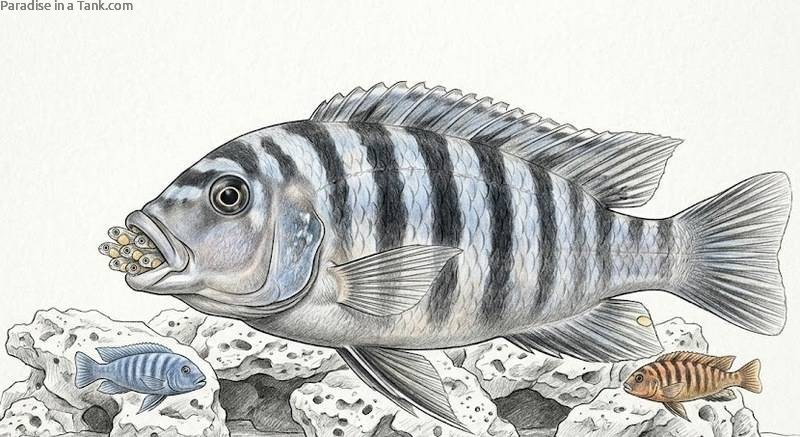
The ultimate expression of physical egg protection comes from species that transform their own bodies into living incubators. Several evolutionary lines of African cichlids, along with prehistoric giants like the Arowana, gather their fertilized eggs into their buccal cavities immediately after spawning. These mouthbrooding parents hold the entire clutch behind their jaws, constantly tumbling the eggs to keep them oxygenated and clean until they hatch.
Parental Devotion vs. Cannibalistic Instincts: Who Protects and Who Eats Their Fry?
The stark contrast in parental investment across the fish world can be shocking to an unprepared hobbyist. Many cichlid species display an astonishing degree of parental devotion, establishing a fierce perimeter around their eggs and newly hatched fry. Both the mother and father cooperate seamlessly, their normal color patterns darkening as they morph into hyper-aggressive sentinels that will unhesitatingly attack tankmates three times their size to shield their young.
For mouthbrooders, this protective instinct requires a profound physical sacrifice that pushes the boundaries of animal endurance. While carrying eggs and developing fry inside their mouths, these parents undergo an absolute fasting period that lasts for weeks on end.
As they refuse all food to avoid accidentally swallowing their children, these dedicated parents lose substantial body mass and display visible exhaustion. If you want to successfully manage these highly protective species, studying a comprehensive Lake Malawi cichlid care guide is essential to understanding their long-term health needs post-spawn.
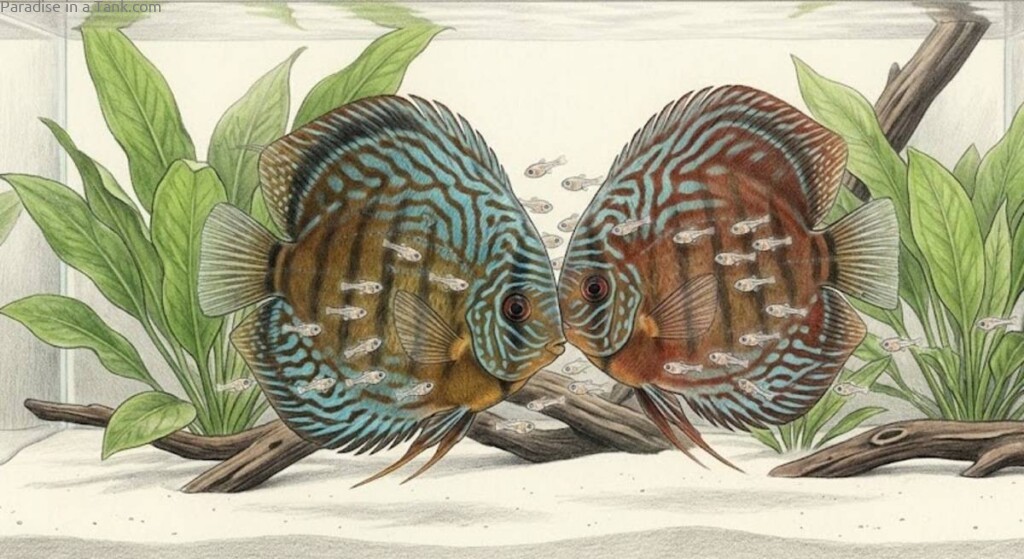
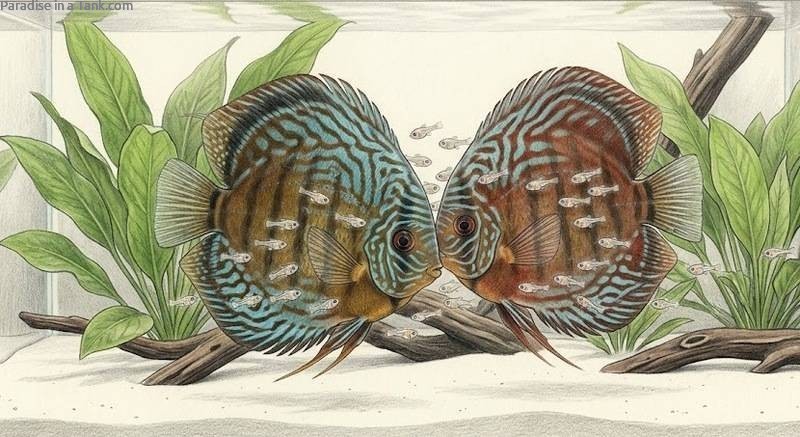
Meanwhile, the discus fish has evolved a truly spectacular method of nourishment that closely mirrors mammalian lactation. Once their eggs hatch, the tiny fry do not hunt for external food; instead, they cling to the bodies of both parents, ravenously feeding on a specialized, nutrient-rich mucus secreted directly through the parents’ skin.
| Breeding Strategy | Level of Parental Care | Primary Threat to Fry Survival |
|---|---|---|
| Livebearers | Absolutely zero care provided after birth. | Immediate cannibalism by parents and adult tankmates. |
| Egg Scatterers | Zero care with zero defensive guarding. | Eggs being devoured before reaching the substrate. |
| Surface Stickers | High parental guarding and constant fanning. | Fungal infections on unfertilized eggs spreading to healthy ones. |
| Mouthbrooders | Extreme internal guarding throughout development. | Starvation of the parent leading to accidental swallowing. |
This intense relationship lasts for about four weeks, with the nutritional composition of the mucus shifting dynamically to meet the developmental demands of the growing fry. By the fourth week, the young begin to venture away from the parents’ flanks, but the initial weeks require the adults to endure constant, physical nibbling from their offspring.
On the dark end of the spectrum sit the livebearers, who operate on a cold, instinctual protocol devoid of any maternal recognition. The second a livebearer gives birth, its relationship with its offspring terminates instantly, leaving the tiny babies to fend entirely for themselves.
Worse yet, adult livebearers will actively hunt and gobble up their own newborn babies without a second thought if given the opportunity. In a confined home aquarium, this lack of parental recognition results in a rapid slaughter unless the keeper steps in to provide dense cover or physical separation.
Environmental Enablers: How to Trigger the Breeding Instinct Safely
To successfully stimulate your fish to breed, you must first ensure that the basic biological foundation of the aquarium is perfectly stable. Introducing breeding stresses into an uncycled or unstable aquarium is a fast track to disaster, as the increased organic waste will quickly cause a catastrophic collapse. A deep understanding of the biological filtration system, which you can master by reading about the aquarium nitrogen cycle, is mandatory before you attempt to raise a massive generation of fry.
Once your water is structurally stable, you can utilize specific environmental triggers to signal to your fish that a prime spawning season has arrived:
- Thermal Adjustments: Gently raising or lowering the water temperature by a few degrees over several days simulates seasonal weather shifts, mimicking spring warming or cooling rains.
- Aggressive Water Cleanliness: Implementing large, frequent water changes with slightly cooler, pristine water mimics the influx of clean river water during seasonal monsoons.
- Targeted Dynamic Diets: Shifting away from standard dry flakes to high-protein, live, or frozen foods like brine shrimp and bloodworms provides the necessary fatty acids to condition females for egg production.
- Structural Spawning Sites: Installing dense clumps of live moss, spawning mops, or specialized slate tiles provides the physical security egg-layers require to deposit their clutches.
Troubleshooting Fry Mortality: Why Baby Fish Die and How to Stop It
The true challenge of aquarium breeding is not getting the fish to drop eggs or give birth; it is keeping the incredibly fragile fry alive during their first critical weeks. A massive portion of amateur breeders face the devastating experience of watching an entire batch of healthy babies vanish or perish over the course of forty-eight hours. When this occurs, it is almost always linked to preventable environmental hazards, systemic pollution, or severe nutritional deficits. If you have recently lost an entire clutch, evaluating the core causes via our guide on why aquarium fish die suddenly can help pinpoint the exact breakdown in your husbandry protocol.
The primary killer of young fry is mechanical filtration; standard high-powered filter intakes act as underwater vacuum cleaners, easily sucking weak, swimming babies into the impeller blades. You must replace or cover open intakes with coarse pre-filter sponges to prevent this tragic outcome.
Additionally, the massive feeding schedule required to keep tiny fry growing (often four to six small feedings a day) can rapidly foul the water, causing spikes in raw ammonia and toxic nitrite. To counteract this, utilize the natural filtering capacity of live vegetation; reviewing the benefits of live plants in aquariums will show you how targeted planting can create a safe, self-cleaning nursery that protects your new generation.
By mastering the balance of pristine water, proper structural cover, and specialized nutrition, you transition from a passive collector to a true custodian of aquatic life. Take the time to audit your current setup today, prepare your spawning triggers deliberately, and give your future fish fry the ultimate foundation for survival.