Species Overview & Natural Amazon Origins
Discus fish care requires pristine, soft, acidic water with a pH between 6.0 and 6.8, temperatures locked at 82°F to 86°F (28°C to 30°C), and 0 PPM ammonia and nitrite. Feed them high-protein granules, beef heart, and frozen bloodworms alongside weekly 50% water changes to maintain long-term vitality.
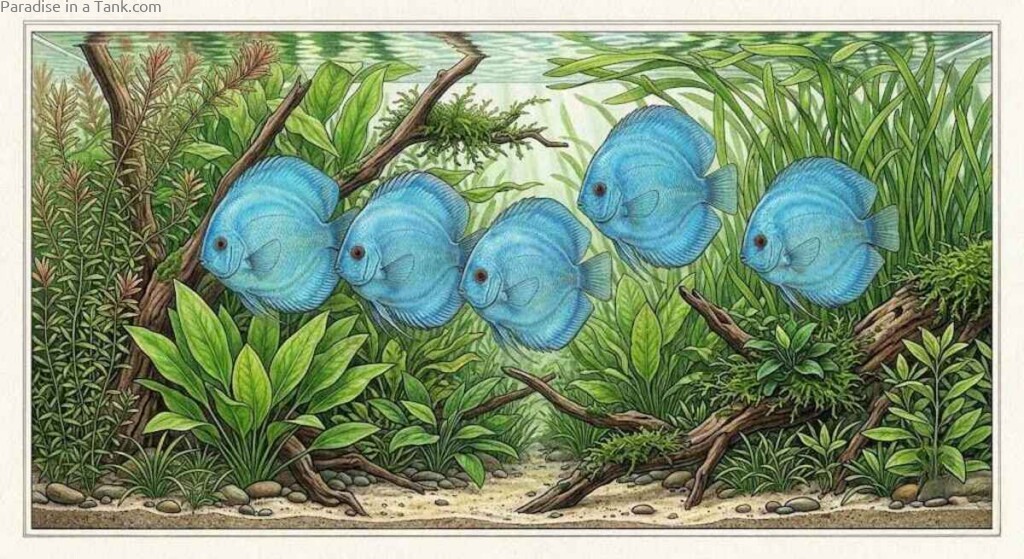
Discus (Symphysodon aequifasciatus and Symphysodon discus) hold the undisputed title of the kings of the freshwater aquarium. Originating from the slow-moving, warm tributaries of the Amazon River basin—such as the Rio Negro and Rio Abacaxis—these majestic cichlids have evolved over millions of years to navigate tangled floodplains and dense submerged root systems. Their compressed, disc-like bodies allow them to slice gracefully through vertical fallen branches and thick brush where predators cannot easily follow. In the wild, their native waterways are stained deep amber by decaying organic matter, creating mineral-deficient blackwater environments with virtually undetectable carbonate hardness.
Stepping into keeping these fish means honoring that ancient Amazonian reality inside your living room. Wild-caught specimens and modern captive-bred strains carry identical instinctual wiring: they demand calm water, dim lighting, and absolute environmental stability. When you introduce them to bare, brightly lit tanks with chaotic currents, their immune systems crash within days. Stress turns their vibrant bodies pitch-black, collapses their slime coats, and invites opportunistic parasites to attack.
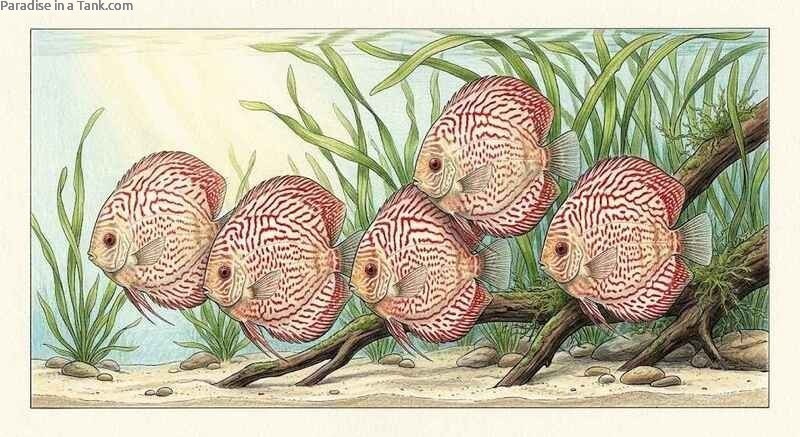
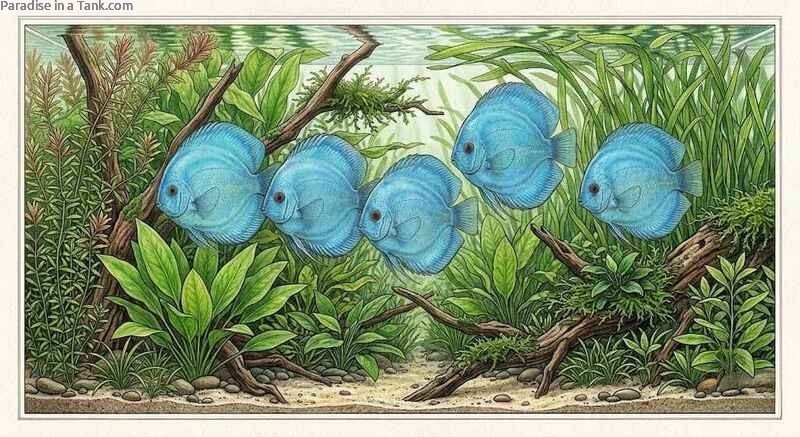
Captive breeders have spent decades developing breathtaking strains that bring the allure of the Amazon straight to modern hobbyists. Exploring the wide array of stunning Discus fish colour varieties reveals how selectively bred lineages like Pigeon Bloods, Blue Diamonds, and Cobalt Discus maintain their ancestral biology while showcasing brilliant domestic color patterns.
Understanding their social structure is equally essential before you purchase your first specimen. Discus are schooling cichlids that establish strict dominance hierarchies through subtle nudging, fin flaring, and occasional pecking order squabbles. Keeping fewer than five or six individuals concentrates aggression onto the weakest fish, leading to severe stunting, clamped fins, and refusal to eat. In a proper group, that natural behavioral pressure distributes evenly across the school, allowing every fish to explore the open water with total confidence.
| Amazon Habitat Feature | Wild Environmental Condition | Domestic Tank Translation |
|---|---|---|
| Water Flow | Sluggish river bends and slow floodplains | Gentle filtration with low surface turbulence |
| Submerged Structure | Dense root tangles and vertical wood | Smooth driftwood branches with open swim space |
| Substrate Base | Fine river sand and leaf litter beds | Soft, inert silica sand vacuumed routinely |
| Social Dynamic | Expansive shoals navigating cover | Minimum group size of 6 individuals |
Strict Water Parameters (pH 6.0–6.8, 82°F–86°F / 28°C–30°C, zero ammonia/nitrites)
Discus have virtually zero tolerance for shifting water chemistry. In their wild habitats, the constant influx of pristine rain runoff dilutes dissolved waste to imperceptible trace amounts. In an enclosed glass box, you must serve as their artificial river system by holding the baseline parameters within tight, unforgiving thresholds.
The baseline chemical balance starts with an acidic to neutral pH maintained between 6.0 and 6.8, alongside a general hardness (GH) of 3 to 8 dGH and a carbonate hardness (KH) of 1 to 4 dKH. Discus skin and gill membranes are remarkably sensitive to osmotic shock. When carbonate hardness climbs too high or the pH swings wildly between water changes, their gills produce heavy mucus, forcing the fish to gasp near the surface.
Temperature control is your primary biological shield against bacterial and protozoan infections. You must lock your aquarium temperature firmly between 82°F and 86°F (28°C to 30°C) using dependable, dual-heater redundancy. High heat accelerates their metabolic rate, fuels efficient digestion, and naturally repels common tropical parasites like Ichthyophthirius multifiliis (Ich) that thrive in cooler waters. If your water drops below 80°F (26.7°C), their digestive tract slows to a crawl, food begins rotting inside their intestines, and systemic internal bloating quickly follows.
You must maintain undetectable toxic waste levels at all times. Beneficial bacterial colonies of Nitrosomonas and Nitrobacter must process biological waste immediately to ensure both ammonia and nitrite stay pinned at absolute 0 PPM. Even a transient spike of 0.25 PPM ammonia will chemically burn their delicate gill lamellae, leaving permanent scar tissue. Keep dissolved nitrate buildup strictly below 10 PPM to prevent chronic immunosuppression and head-and-lateral-line erosion (HLLE).
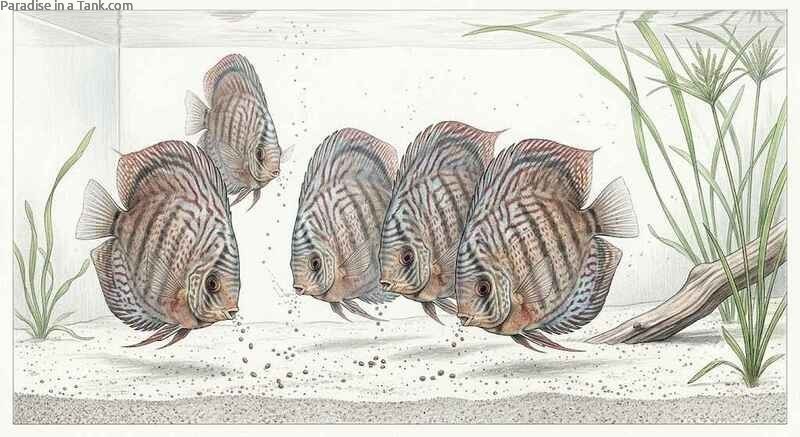
Designing an appropriate enclosure requires balancing open swimming zones with protective hiding spots. Reviewing dedicated Discus tank setup requirements helps you choose properly sized biological filters, safe tank mates, and gentle aeration patterns that safeguard these peaceful cichlids from territorial bullies.
- Raw ammonia concentration exceeding 0 PPM.
- Nitrite accumulation measuring above 0 PPM.
- Chronic nitrate concentrations creeping past 10 PPM to 15 PPM.
- Temperature fluctuations dropping beneath 82°F (28°C).
- Rapid pH shifts greater than 0.3 units within a 24-hour cycle.
| Critical Water Parameter | Ideal Target Range | Danger Threshold |
|---|---|---|
| Water Temperature | 82°F–86°F (28°C–30°C) | Below 80°F (26.7°C) or above 88°F (31°C) |
| Potential of Hydrogen (pH) | 6.0–6.8 | Below 5.5 or above 7.6 |
| Ammonia Level | 0 PPM | Any reading above 0 PPM |
| Nitrite Level | 0 PPM | Any reading above 0 PPM |
| Nitrate Concentration | Below 10 PPM | Any reading above 15 PPM |
| General Hardness (GH) | 3–8 dGH (50–140 PPM) | Above 12 dGH (215 PPM) |
Complete Diet & Nutrition Plan
Discus are opportunistic, carnivorous bottom-feeders that spend their days sifting through substrate debris for aquatic insects, small crustaceans, and biological micro-fauna. Replicating this diverse profile in captivity is the key to building robust immune systems, thick dorsal musculature, and vibrant natural color patterns. A mono-diet of standard flake food will quickly lead to severe nutritional deficiencies, hollow bellies, and intestinal blockages.
Their unique digestive system operates best on high-protein, easily digestible food sources that leave minimal undigested ash behind. Because Discus eat by “blowing” water onto the substrate to dislodge food particles before vacuuming them up, food consistency and pellet sinking speeds dictate how cleanly your school feeds.
Best Commercial Granules (Tetra / Sera Discus)
Premium slow-sinking granules form the nutritional backbone of a disciplined feeding program. Formulations like Tetra Discus and Sera Discus Granules are engineered specifically to match the bite mechanics and gut flora of captive cichlids. These granules soften slowly in the water column without immediately disintegrating into microscopic dust that fouls your mechanical filter pads.
These commercial staples provide calibrated levels of stabilized vitamin C, spirulina, and natural carotenoids like astaxanthin that enhance natural red, yellow, and blue pigmentation. When you drop them into the tank, the granules sink at a steady, predictable rate, allowing your mid-water school to inspect and snap them up before they settle into the substrate.
High-Protein Fresh/Frozen Options (Beef Heart Mix, Bloodworms)
Fresh and frozen whole foods deliver the raw caloric density needed to maintain robust body weight and fuel explosive juvenile growth. Custom beef heart mixes—blended with lean beef heart tissue, spinach, garlic, and multivitamin binders—have served as the gold standard among master breeders for generations. The ultra-lean muscle protein builds thick foreheads and full, rounded body discs faster than dry diets alone.
Gamma-irradiated frozen bloodworms and enriched brine shrimp provide critical roughage and natural chitin that stimulate digestive motility. The scent of thawed bloodworms activates primitive hunting drives, prompting shy or acclimating fish to break cover and feed aggressively. Always thaw frozen cubes in a cup of aquarium water and drain the preservative packing liquid before feeding to prevent introducing dissolved phosphates directly into your tank.
Juvenile vs. Adult Feeding Schedules
Your feeding schedule must adapt directly to the biological age and developmental stage of your fish. Young, growing juveniles possess high metabolic rates and small stomach capacities, requiring frequent, protein-rich micro-feedings to prevent irreversible physical stunting. Adults, on the other hand, require controlled portions to prevent fatty liver disease and water quality degradation.
Maintaining pristine water while feeding heavily is particularly vital if you plan on exploring Discus fish breeding and health management, where conditioning parent pairs and raising delicate fry depends directly on water clarity and feed quality.
- Juvenile Discus (under 4 inches): Feed 4 to 6 times daily in small, monitored batches.
- Sub-Adult Discus (4 to 5 inches): Feed 2 to 3 times daily, alternating between dry granules and frozen blends.
- Mature Adult Discus (5 to 7+ inches): Feed 1 to 2 times daily, providing only what the school consumes within 3 to 5 minutes.
- Siphoning unconsumed food: Remove all leftover beef heart and bloodworms within 15 minutes of feeding.
| Food Type | Nutritional Benefit | Recommended Feeding Frequency |
|---|---|---|
| Commercial Granules | Balanced vitamins, minerals, and color enhancers | Daily baseline food source |
| Lean Beef Heart Mix | Massive protein density for muscle growth | 3–4 times weekly for adults, daily for young juveniles |
| Frozen Bloodworms | High palatability and feeding response trigger | 2–3 times weekly as a supplemental treat |
| Enriched Brine Shrimp | Natural dietary roughage for smooth digestion | 1–2 times weekly to prevent constipation |
Essential Maintenance Routine (50% Weekly Water Change Rules)
There are no shortcuts or miracle chemical additives that can replace regular, physical water extraction in a Discus aquarium. Discus continuously release metabolic waste products, organic pheromones, and growth-inhibiting hormones directly into the water column. If these compounds accumulate, your fish will experience suppressed growth rates, faded coloration, and chronic stress that leaves them vulnerable to systemic bacterial infections.
Executing a disciplined 50% weekly water change is the single most effective habit you can build to guarantee long-term vitality. In heavily stocked display aquariums or grow-out systems receiving multiple heavy beef heart feedings daily, splitting this volume into two 30% to 50% changes per week yields even cleaner results. The goal is total stability: you are resetting the biological baseline before nitrate concentrations and organic acids degrade water chemistry.
Preparation of the replacement water is where most hobbyists make critical mistakes. Pouring cold, chlorinated tap water directly into a warm Discus tank causes thermal shock and strips the protective slime coat off your fish within seconds. Your replacement water must be completely dechlorinated, properly remineralized if using pure reverse osmosis (RO) water, and heated to match the exact temperature of the display aquarium before it ever touches the glass.
- Use a dedicated gravel siphon to vacuum uneaten food and fish feces out of the sand bed.
- Turn off tank heaters and filters during the drain to prevent equipment burnouts and airlocks.
- Dose a high-quality water conditioner to neutralize chlorine, chloramines, and heavy metals.
- Pump warmed replacement water slowly into the tank to avoid stirring up settled debris or startling the school.
- Clean mechanical pre-filter sponges in extracted tank water to preserve your beneficial bacteria colonies.
By respecting their ancient Amazonian origins, locking in strict environmental parameters, serving a nutrient-dense diet, and committing to unyielding water change discipline, you transform your aquarium into a thriving aquatic sanctuary. Discus reward that dedicated care with unrivaled grace, electric colors, and an inquisitive personality that makes every ounce of effort completely worthwhile.