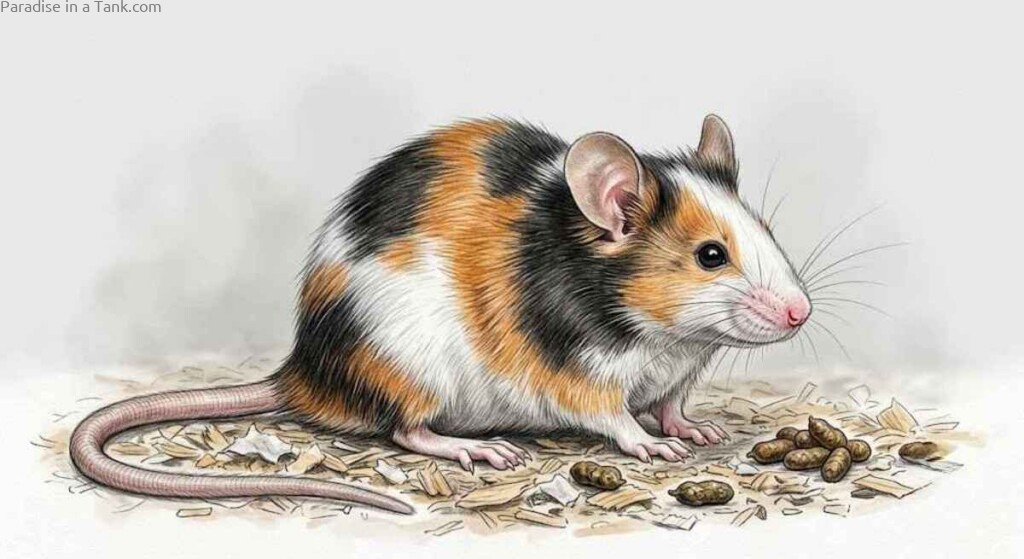
Understanding Pet Mouse Digestion & High Metabolism
A healthy pet mouse produces between 40 and 80 droppings every 24 hours due to an exceptionally high metabolic rate and rapid gastrointestinal transit time. Their digestive tract processes food continuously in under two hours, requiring constant grazing and leading to frequent, uniform, dark brown droppings necessary for proper gut motility and health.
If you recently brought home your first pair of fancy mice, you were probably expecting cute twitching whiskers, tiny paw prints, and endless wheel-spinning. What you likely did not expect was waking up every morning to an enclosure covered in hundreds of tiny brown pellets. It can feel like your new pets are little waste factories, leaving you wondering if their digestive systems are spiraling out of control. Rest assured, seeing a constant scatter of droppings is completely normal for a healthy mouse, though keeping up with it requires a firm grasp on how these small animals function.
To properly manage your enclosure, it helps to start with our complete pet mouse care guide to establish a solid husbandry routine. A mouse’s body operates like a miniaturized, high-revving engine. Because their tiny bodies lose heat rapidly to the surrounding room air, their metabolic demand is staggering compared to larger mammals. To keep their heart beating at 500–800 beats per minute, a mouse must ingest food virtually around the clock. What goes in fast must come out fast, making frequent elimination the ultimate sign of a functioning digestive tract.
Frequent Eating & Fast Processing: Why Small Rodents Produce 40–80 Droppings a Day
The biological machinery inside a mouse is built for speed. While a human takes anywhere from 12 to 48 hours to fully digest a meal, a mouse processes food through its stomach and small intestines in as little as 45 to 120 minutes. Their gastrointestinal tract relies on continuous mechanical peristalsis—the smooth muscle contractions that push food along—which means new incoming food literally forces older digested material out the back end.
Because they graze continuously day and night, a single mouse routinely produces 40–80 individual fecal pellets in a single 24-hour cycle. When you house a small group of three or four females together, those numbers quickly multiply into hundreds of droppings every single day. If a mouse stops producing droppings for even 12 hours, it indicates severe physiological distress, gut stasis, or an intestinal blockage.
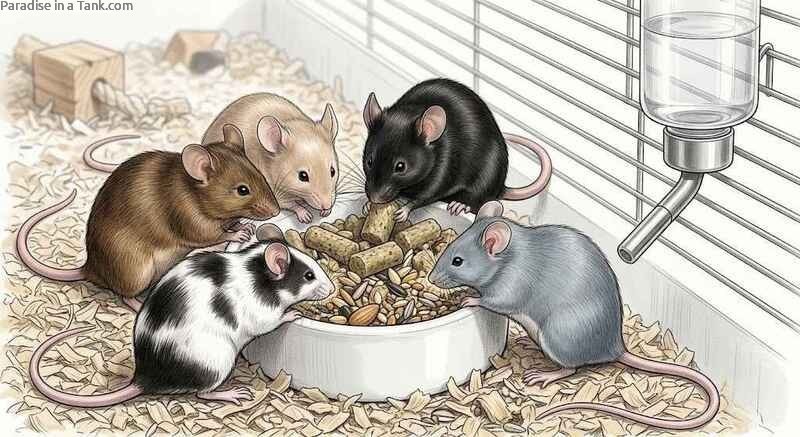
Coprophagy in Mice: Why Mice Re-Ingest Certain Droppings for Essential Vitamin B Absorption
You might catch your mouse bending down, reaching toward its tail, and eating a freshly passed dropping straight from its vent. While this behavior looks unhygienic to human eyes, it is a crucial physiological process known as coprophagy. Mice are hindgut fermenters, meaning bacterial fermentation of tough plant fibers and complex carbohydrates occurs late in their digestive tract within the cecum.
Because the cecum is located after the stomach and small intestine, many vital nutrients synthesized by gut microflora—specifically B-complex vitamins, vitamin K, and crucial amino acids—cannot be absorbed directly through the colon wall. To reclaim these lost nutrients, the mouse produces specialized, soft, nutrient-rich fecal pellets called cecotropes. By eating these specific droppings directly, the mouse passes them through the stomach and small intestine a second time, fully absorbing the essential nutrients required to keep its nervous system functioning.
What Normal vs. Unhealthy Mouse Poop Looks Like
Monitoring the daily output of your mouse enclosure serves as your first line of defense against stealthy health issues. Because mice are prey animals by nature, they instinctively mask signs of pain, weakness, or illness until they are critically ill. Sometimes, sudden behavioral shifts like defensive nipping occur when a mouse feels unwell; understanding why do pet mice bite can help you spot whether physical pain or gastrointestinal distress is driving their mood.
Examining fecal morphology gives you a direct, non-invasive window into your pet’s internal health. You do not need a biological laboratory to inspect their waste; you simply need to observe color, moisture, size consistency, and structural integrity during your daily spot checks.
Healthy Droppings: Dark Brown, Cylindrical, Firm, and Uniform in Size
A perfectly healthy mouse dropping is easy to recognize once you know what to look for. Normal droppings should be dark chocolate brown or near-black in color, oval or cylindrical in shape, with slightly tapered ends. They should measure roughly 3–6 mm in length, similar to a small grain of wild rice.
| Fecal Parameter | Healthy Appearance | Warning Sign / Unhealthy |
|---|---|---|
| Consistency | Firm, solid, crumbles under firm pressure when dry. | Soft, sticky, smeary, watery, or liquid. |
| Color | Dark brown to black, uniform tint throughout. | Yellow, green, pale grey, white, or red-tinged. |
| Shape & Size | Uniform oval cylinders, 3–6 mm length. | Misshapen, pinched, tiny specks, or bloated clumps. |
| Frequency | 40–80 pellets daily per mouse. | Less than 10 pellets daily or sudden profuse diarrhea. |
When freshly dropped, healthy feces have a slight natural sheen but are firm enough that they do not smear across bedding when stepped on. Within a few hours, normal droppings dry out into hard, odorless pellets. If all droppings in the cage match this description, your pet’s gut flora is balanced and performing normally.
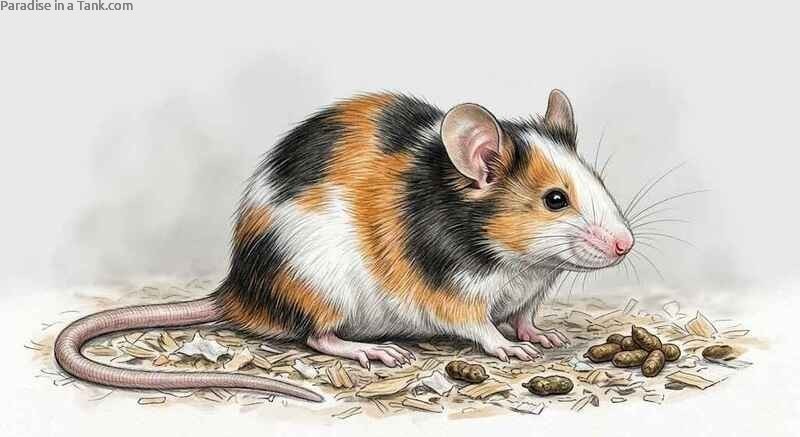
Signs of Illness: Soft, Runny, Discolored, or Wet Tail/Diarrhea Warnings
When digestive trouble hits a mouse, it progresses rapidly. Soft, misshapen, or watery stools mean the colon is failing to reabsorb water, leading to swift, life-threatening dehydration. Pale yellow or green droppings indicate rapid transit where bile has not been properly broken down, often triggered by bacterial overgrowth such as Salmonella, Clostridium, or internal parasite infestations.
Red or tarry black droppings point to gastrointestinal bleeding in the lower or upper intestinal tract. If you see diarrhea smeared around the mouse’s tail, hindquarters, or belly fur, treat it as an emergency. While true “wet tail” (proliferative ileitis) is primarily a disease of hamsters, mice suffer from severe bacterial enteritis that presents identically. A mouse with active diarrhea can succumb to hypovolemic shock and electrolyte failure within 24 to 48 hours without immediate veterinary care.
Managing Waste and Odor in Glass Tanks & Cages
Keeping up with dozens of daily droppings per inhabitant requires a strategic cleaning system rather than brute-force stripping of the cage. Many keepers turn to keeping pet mice in glass tanks to contain messy bedding and stray pellets, but solid glass walls reduce airflow and trap moisture if waste management isn’t dialed in.
The goal is not to create a sterile, bleach-scented environment. Completely scrubbing down a habitat every few days destroys the familiar scent markers your mice rely on for security, driving male mice to aggressively scent-mark with pungent urine to reclaim their territory. Instead, smart husbandry balances targeted spot-cleaning with deep bedding management.
Nesting vs. Toilet Corners: Spot-Cleaning Strategies to Keep Bedding Dry
Mice are surprisingly clean animals when provided with adequate space and proper environmental enrichment. They naturally divide their enclosure into distinct functional zones: sleeping nests, foraging areas, and dedicated toilet spots. Mice usually pick one or two far corners of the enclosure—often away from their primary sleeping burrow—to deposit the majority of their urine and droppings.
Spot-Cleaning Action Plan
- Locate the Latrine: Observe where droppings pile up most heavily during the first few days after fresh bedding is added.
- Daily Scooping: Use a small scoop or gloved hands to remove heavily soiled bedding and feces from latrine corners every 24–48 hours.
- Preserve Nesting Material: Leave clean sleeping burrows and unsoiled nesting paper untouched during daily spot-cleans to reduce territorial stress.
- Replenish Substrate: Toss a handful of fresh, dust-free aspen shavings or paper bedding into the scooped corner to absorb fresh moisture and control odor.
By removing dirty waste spots daily and leaving core nest structures intact, you prevent ammonia buildup while keeping your mice calm, secure, and stress-free.
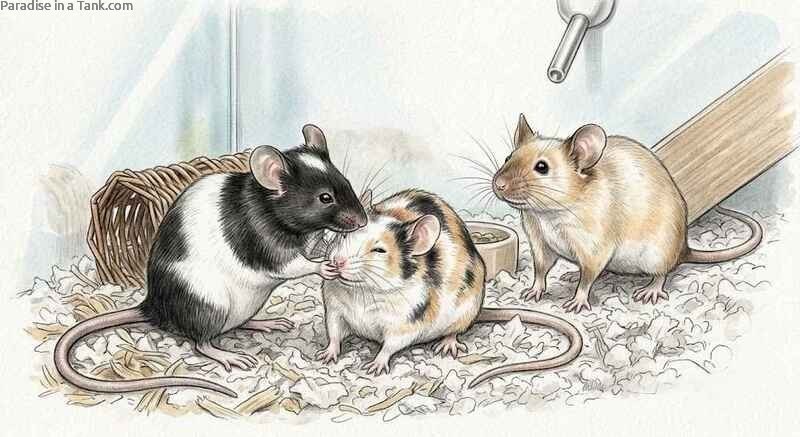
Dietary Adjustments: How Excess Fresh Veggies Cause Watery Stools
While feeding your mice fresh treats feels rewarding, diet is the single most common trigger for sudden, non-infectious diarrhea. High-water produce like cucumbers, iceberg lettuce, celery, and watermelon flood the mouse’s simple stomach with excess fluid. The intestinal tract cannot absorb this sudden surge of moisture, resulting in loose, foul-smelling droppings that ruin cage bedding within hours.
Stick to a staple diet of high-quality lab blocks or balanced seed-and-grain mixes containing 14–16% protein and low fat. Reserve fresh vegetables like broccoli, kale, or carrots for rare treats, serving portions no larger than the size of a mouse’s ear once or twice a week. If you notice soft droppings after introducing a new food, immediately strip all fresh produce from their diet and offer dry block staples along with fresh, clean water until their stools firm back up into solid, dark brown pellets. With the right diet and a consistent cleaning routine, you can easily keep waste under control and enjoy a healthy, happy pet.