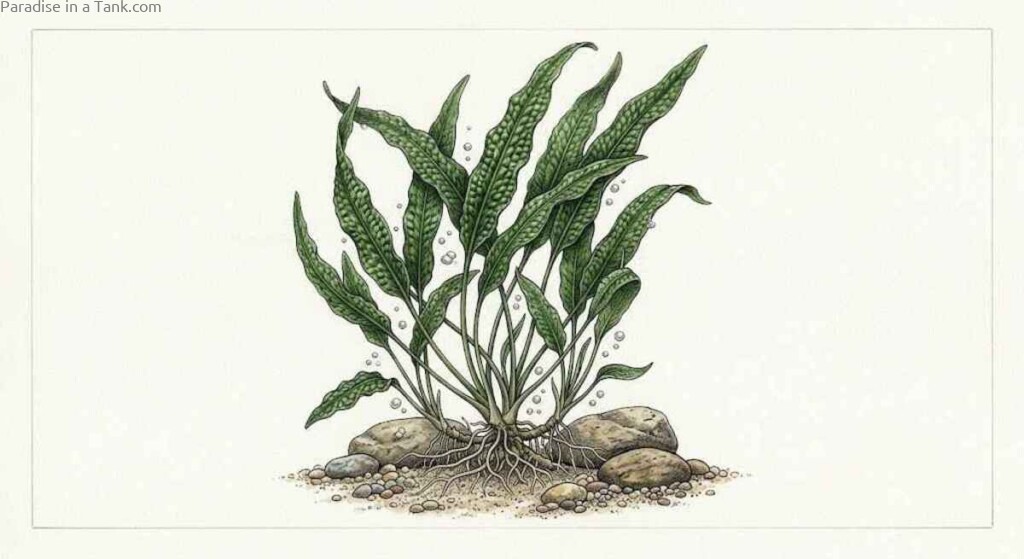
Cryptocoryne species thrive across aquarium zones in lighting from 10 to 50 PAR and pH levels of 6.0–8.0. These adaptable heavy root-feeders flourish in nutrient-rich substrates, offering vibrant colors, ruffled textures, and varied heights from 2-inch carpeting options to 20-inch tall background accents.
Foreground & Dwarf Varieties
When you take a close look at the bottom of a tropical stream, nature rarely plants neat, perfectly manicured lawns. Instead, you find low-lying foliage hugging the substrate, wedged between rocks and anchored deep into the muddy riverbed. In the home aquarium, bringing that rugged, timeless look down to the front of your tank starts with dwarf Cryptocoryne varieties. Unlike fragile stem plants that require endless trimming and blinding light, these compact heavyweights slow down, dig their roots in deep, and stay low to the ground without fuss.
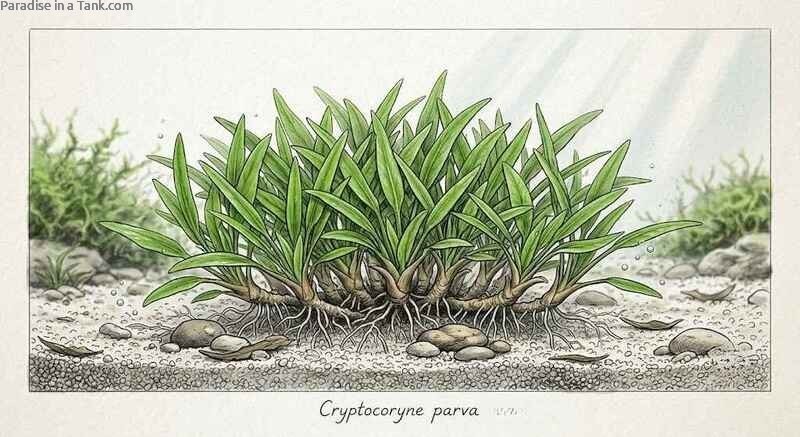
Cryptocoryne Parva: Micro 2-inch height; slow-growing carpeting Crypt.
If you are looking for a true foreground carpet plant that will not force you to spend your weekends slaved over the tank with pruning shears, Cryptocoryne parva is your absolute best bet. Reaching a maximum height of just 2 inches, this tiny powerhouse is the smallest known species in the entire genus. Its narrow, bright green, grass-like blades grow in dense little rosettes, creeping across the substrate via slow-moving underground runners.
Because of its tiny stature, Cryptocoryne parva requires slightly more patience and light than its larger cousins. While most Crypts thrive in low light, Parva benefits from moderate lighting (around 30–40 PAR) to prevent it from stretching upward or simply stalling out completely. Expect a crawl rather than a sprint; it can take several months for a small pot of Parva to settle in and form a thick, solid carpet across your substrate. Ensure you provide a fine-grained, nutrient-dense substrate so those miniature roots can easily anchor and push out fresh offshoots.

Cryptocoryne Willisii / Petchii: Compact 3–5 inch mid-foreground accents.
Bridging the space between a micro-carpet and the midground, Cryptocoryne willisii (often confused or sold under the name Cryptocoryne petchii) offers a sturdy, compact accent reaching 3–5 inches in height. Featuring deep green to olive-brown leaves with slightly ruffled edges, this plant brings an earthy, natural texture right to the transition line where your hardscape meets the open substrate.
This species is practically indestructible once settled. It holds its ground firmly against curious bottom-dwellers like Corydoras or plecos that might otherwise uproot lighter plants. Cryptocoryne petchii tolerates low-to-moderate lighting effortlessly and is extremely forgiving of minor water parameter swings. If you notice its foliage darkening or developing a rich bronze tint under slightly higher light, do not panic; this physical transformation is a healthy response that adds stunning visual depth to your tank layout.
Midground Staple Varieties
The midground is where an aquascape gains its heart and soul. It bridges the open swimming area of the foreground with the towering background stems, hiding unsightly plant bases and creating natural territory lines for your fish. Midground Cryptocoryne species are the absolute workhorses of planted aquariums, offering massive structural variety, thick leaf growth, and an incredible palette of colors ranging from soft copper to deep crimson.
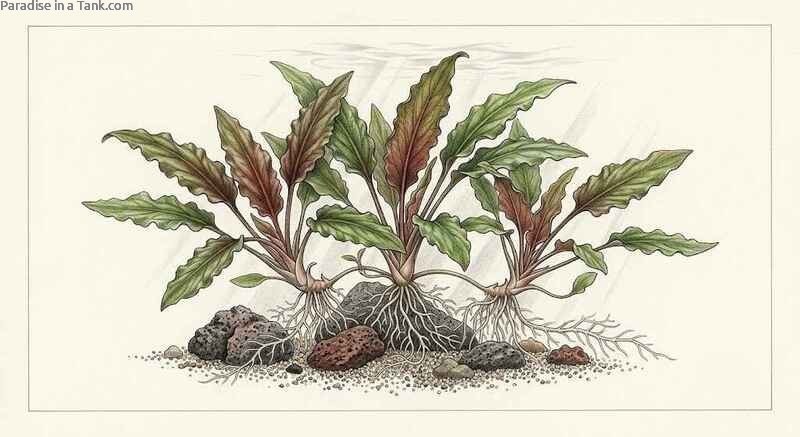
Cryptocoryne Wendtii (Green, Brown, Red): Highly variable 4–8 inch foliage.
No single plant has earned its place in aquascaping history quite like Cryptocoryne wendtii. Growing anywhere from 4–8 inches tall depending on lighting intensity, this species is famous for its incredible morphological variance. Depending on the specific color strain—Green, Brown, or Red—and the conditions in your aquarium, its broad, crinkled leaves can range from crisp lime green to dark chocolate brown and intense bronze-red.
Under higher light, Cryptocoryne wendtii grows outward in a wide, sprawling rosette, staying lower to the substrate. Under lower light, it stretches gracefully toward the surface to capture available rays. To get the absolute best color out of your Wendtii, ensure you review how to plant Cryptocoryne correctly so you do not crush the delicate crown beneath the gravel. Root tabs packed with iron will supercharge its growth and turn dull leaves into rich, striking visual anchors.
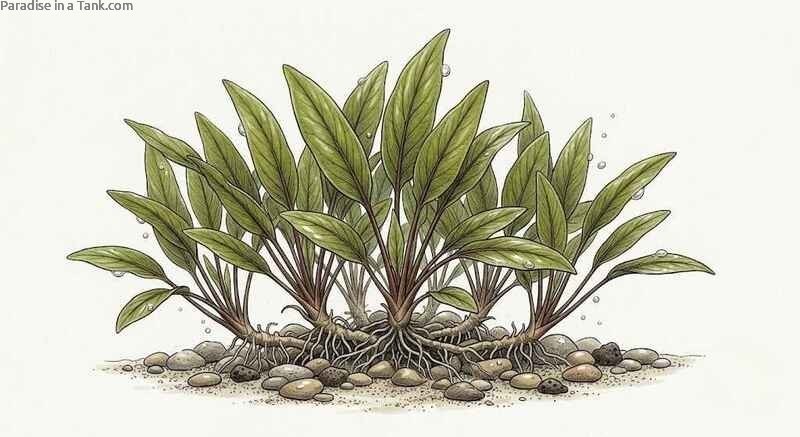
Cryptocoryne Lutea & Undulata: Upright olive and reddish-brown lanceolate leaves.
If you need structure and strong vertical lines in your midground, Cryptocoryne lutea and Cryptocoryne undulata are outstanding choices. Cryptocoryne lutea produces stiff, lanceolate leaves that stand noticeably more upright than the sprawling habit of wendtii. Its foliage remains a clean, glossy olive-green with pale midribs, making it a fantastic contrast plant against darker wood or volcanic stone.
Cryptocoryne undulata, on the other hand, brings dramatic texture with its distinctively wavy leaf margins and mottled, reddish-brown tones. Growing to a height of 6–10 inches, undulata quickly forms a dense, bushy clump that provides vital security for shy fish species like tetras and rasboras. Both species are remarkably stable, rarely shedding leaves once acclimatized, and they adapt quickly to a broad range of water hardness levels from 4–15 dGH.
Background & Tall Varieties
When aquascapers think of background plants, fast-growing stem plants often dominate the conversation. However, stem plants require relentless trimming, topping, and replanting to maintain their shape. Background Cryptocoryne species offer an effortless, stunning alternative. These tall, stately plants produce long, flowing ribbons of foliage that bow gracefully in the water current, creating a dramatic curtain across the back glass of your display.
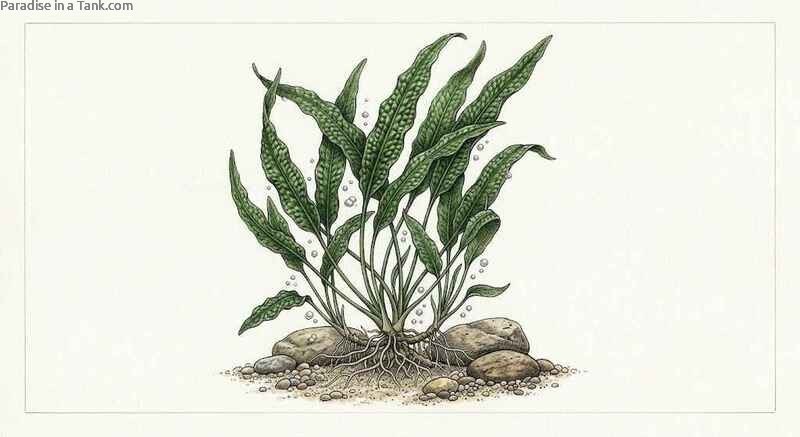
Cryptocoryne Balansae (Crispatula): Slender 12–20 inch ruffled blades.
Cryptocoryne balansae (scientifically categorized under Cryptocoryne crispatula var. balansae) is one of the most breathtaking solitary background plants available to hobbyists. Reaching magnificent heights of 12–20 inches, its defining feature is its long, narrow, hammered or ruffled leaf blades. These puckered indentations—known as bullations—catch the aquarium light from multiple angles, creating a shimmering effect as the leaves sway in the current.
To thrive, Cryptocoryne balansae requires hard water rich in dissolved minerals, particularly calcium, which supports the physical development of those long, crinkled leaf structures. Maintaining a pH range of 7.0–8.0 and a dGH above 8 will keep its foliage crisp and vibrant. If you encounter issues with sudden leaf decay or melting during setup, check out The Complete Cryptocoryne Care Guide to stabilize your water chemistry and protect your substrate ecology.
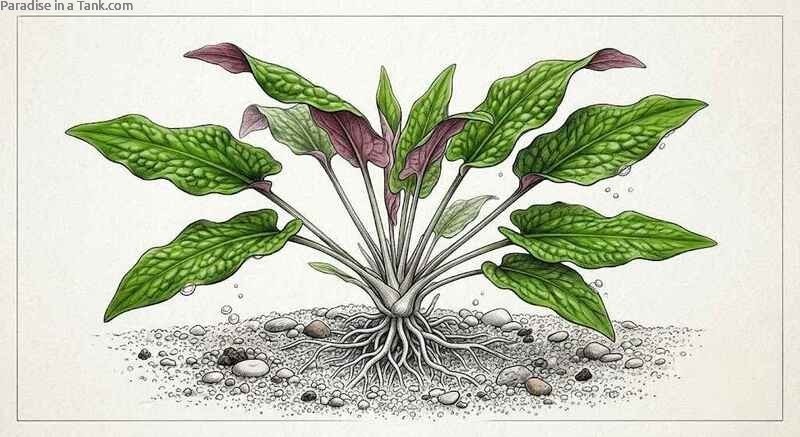
Cryptocoryne Usteriana: Broad-bladed tall background centerpiece.
For massive aquariums needing bold scale and immediate presence, Cryptocoryne usteriana is an absolute titan. Easily growing to lengths of 15–24 inches or more, this species features broad, leather-like leaves that can measure up to 2 inches across. The topside of the leaf presents a deep olive-to-forest green, while the underside reveals a striking, vivid magenta or wine-red hue that creates stunning visual contrast as the leaves arch across the water surface.
Because of its sheer size, Cryptocoryne usteriana acts as a powerful biological sink, drawing massive quantities of nutrients through its extensive root network. Place it in the deepest corners of your tank where light might be shaded by hardscape, as it thrives in low-to-moderate lighting (15–30 PAR). Give it plenty of room; a mature specimen will easily shade smaller plants beneath it, making it an ideal anchor plant for large South American or Southeast Asian biotope setups.
Comparative Species Matrix: Height, Growth Rate, Lighting, and Aquascape Zone
Selecting the right Cryptocoryne species for your specific tank setup requires balancing physical dimensions, growth demands, and placement zones. Use this quick reference matrix to match species parameters to your layout goals:
| Species Name | Average Height | Growth Rate | Recommended Lighting Level | Primary Aquascape Placement |
|---|---|---|---|---|
| Cryptocoryne Parva | 1–2 inches | Very Slow | Moderate (30–40 PAR) | Foreground Carpet |
| Cryptocoryne Willisii / Petchii | 3–5 inches | Slow to Moderate | Low to Moderate (20–35 PAR) | Mid-Foreground Accent |
| Cryptocoryne Wendtii | 4–8 inches | Moderate | Low to High (15–50 PAR) | Midground Bushes |
| Cryptocoryne Lutea | 5–8 inches | Moderate | Low to Moderate (20–35 PAR) | Midground Upright |
| Cryptocoryne Undulata | 6–10 inches | Moderate | Low to Moderate (20–35 PAR) | Midground / Background |
| Cryptocoryne Balansae | 12–20 inches | Slow to Moderate | Moderate (25–40 PAR) | Background Ribbon |
| Cryptocoryne Usteriana | 15–24+ inches | Moderate | Low to Moderate (15–30 PAR) | Background Centerpiece |
Equipped with this species blueprint, you can confidently choose the ideal Cryptocoryne varieties to layer textures, depth, and rich natural color across every square inch of your aquarium.