The Omnivorous Digestion Matrix in the Wild
To safely optimize your Firemouth Cichlid’s vibrant crimson throat and ensure long-term gut health, feed a balanced omnivorous diet consisting of 60% high-quality carotenoid-enriched sinking pellets paired with 40% fibrous plant matter and live or frozen invertebrates like brine shrimp and Mysis. Feed small portions 1–2 times daily, maintaining clean water with nitrate below 20 ppm.
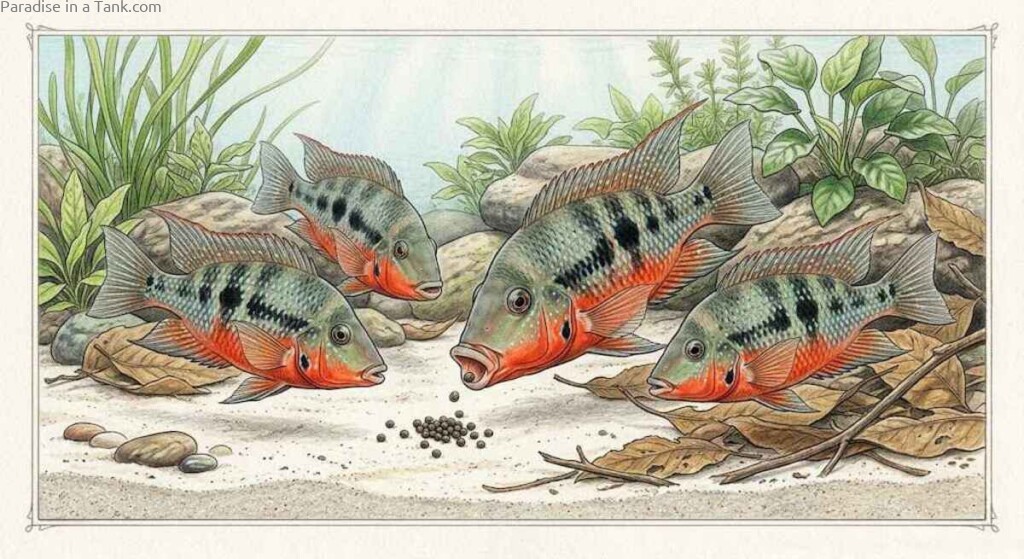
When you look at a wild Firemouth Cichlid (Thorichthys meeki) darting through the river systems of the Yucatán Peninsula, you are looking at a master evolutionary compromise. These fish do not survive on heavy mammalian proteins or continuous carnivore feasts. In their natural habitat, streams and limestone sinkholes present a shifting buffet of organic detritus, microscopic crustaceans, insect larvae, and algae scraping. If you want to keep your fish thriving rather than just barely surviving, you must respect the physical digestive architecture that millions of years of evolution built into their guts.
In the wild, a cichlid’s digestive system is tuned like a delicate balance scale. Their intestinal tract is moderately elongated, perfectly designed to break down a steady stream of fibrous plant materials while extracting nutrients from small aquatic organisms. When home aquarists load these fish up with cheap commercial flakes or heavy bloodworm rations, they trigger internal chaos. Rotting protein sits in the long intestinal loops, gas builds up, and harmful anaerobic bacteria multiply out of control. Understanding how your fish eats in nature is the single most effective way to prevent bloated bellies and premature deaths in your tank.
If you are new to keeping these central American beauties, reviewing our comprehensive Firemouth cichlid care guide will give you a solid foundation on environmental parameter baselines and ideal water chemistry values.
Sand Sifting: The Biomechanical Foraging Method of Central American Cichlids
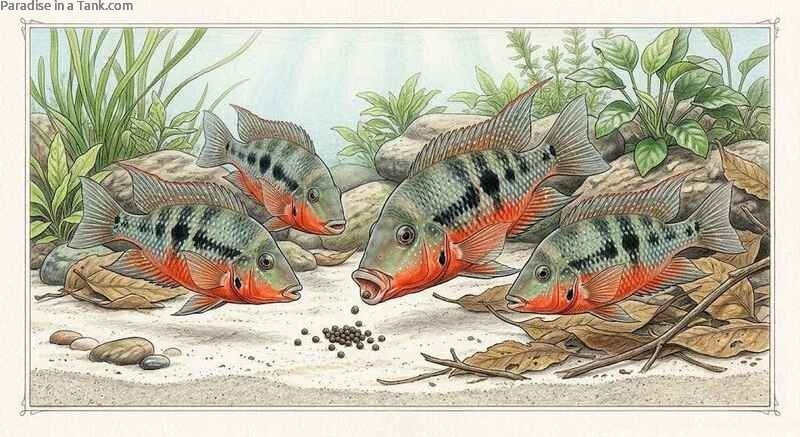
Watch a Firemouth during feeding time, and you will notice a fascinating physical ritual that looks almost violent. They scoop up mouthfuls of soft substrate, plunge their faces deep into the sand, and vigorously pump their gill covers. This is not random play; it is an ancient biomechanical foraging strategy called geophagy, or sand sifting. The fish takes in substrate, uses specialized gill rakers to strain out tiny mysis, worm segments, and organic micro-debris, and then blasts the clean sand out through its gill slits.
When you keep a Firemouth on coarse, sharp gravel, you strip away their ability to perform this natural behavior. Instead of sifting smoothly, they risk swallowing jagged stones or bruising their delicate buccal cavities. Jagged substrate can cause internal abrasions that invite bacterial infection, leading to nasty swelling and mouth rot. Giving them a deep bed of smooth pool filter sand lets them engage their biological drives, clean out their gills naturally, and stay physically stimulated throughout the day.
When sand sifting, they constantly ingest small particles of detritus and benthic algae. This continuous intake of roughage and micro-minerals keeps their gut transit time fast and healthy. Food moves smoothly through the intestinal loops, preventing sluggish digestion. If their substrate prevents sand sifting, they lose that physical churning action, making them far more vulnerable to constipation and internal blockages when fed rich commercial diets.
Nutritional Ratios: Balancing High-Protein Inputs with Plant-Based Matter
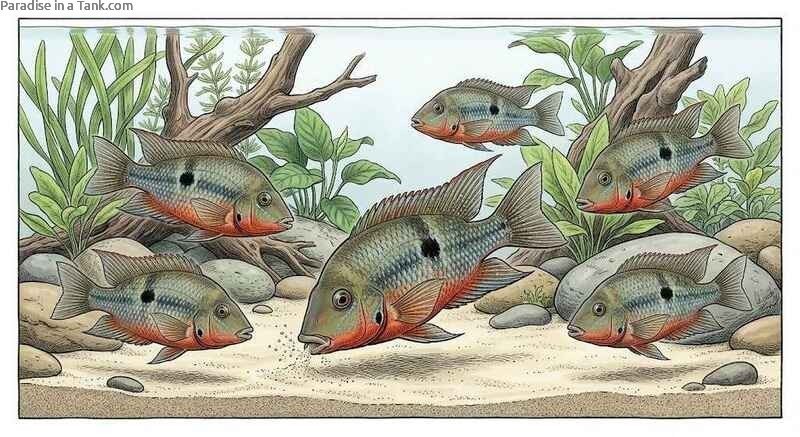
The biggest mistake hobbyists make with Central American cichlids is treating them like obligate carnivores. While a Firemouth will aggressively devour live feeder fish or heavy worms, their internal anatomy cannot handle a diet dominated by pure land-animal fats or high-protein feeder meat. In the wild, their diet naturally hovers at roughly 40% plant matter and algae, balanced with 60% aquatic invertebrates and micro-crustaceans.
If your diet tilts too heavily toward dense animal protein, you create a perfect storm inside the gut. Un-digested protein begins to decompose inside the digestive tract, creating foul odors, gas accumulation, and lethal internal bloat. Conversely, if you feed only cheap terrestrial plant fillers, your fish will suffer from muscular atrophy and faded color. You must hit the sweet spot: high-quality aquatic proteins combined with easily digestible spirulina and vegetable kelp.
| Feeding Category | Biological Function | Primary Source Material | Weekly Target Ratio |
|---|---|---|---|
| Staple Baselines | Essential amino acids and structural growth | High-grade sinking cichlid pellets | 50% to 60% |
| Carotenoid Boosters | Drives vivid fiery red throat pigmentation | Natural astaxanthin and krill meal | 20% to 25% |
| Fibrous Roughage | Maintains gut motility and prevents bloat | Spirulina flakes and blanched zuchinni | 15% to 20% |
| Conditioning Treats | Stimulates natural hunting and spawning instincts | Live or frozen Artemia and Mysis | 5% to 10% |
To ensure your tank setup offers enough physical space for healthy foraging without territorial bullying, check out our detailed guide on Firemouth cichlid tank size and growth to plan your aquarium layout effectively.
Formulating a Premium Captive Diet Regimen
Transitioning your fish from basic survival to peak vitality requires a structured feeding schedule using high-tier ingredients. A premium captive diet does not mean buying the most expensive bottle on the shelf; it means selecting foods that match the biological breakdown of wild Central American ecosystems. Your base food should always be a slow-sinking pellet specifically formulated for omnivorous cichlids, ensuring food reaches the bottom half of the water column where your Firemouth naturally prefers to feed.
Avoid low-quality floating flakes that encourage your fish to gulp air at the surface. Swallowing air pockets during feeding leads to swim bladder distress, floatiness, and excess gas in the digestive canal. Sinking pellets allow your fish to graze naturally near the sand bed, mimicking their wild sifting rhythm while delivering uniform, dense nutrition directly to their digestive system.
Color Optimization: Using Carotenoid-Rich Foods to Drive Throat Vibrancy
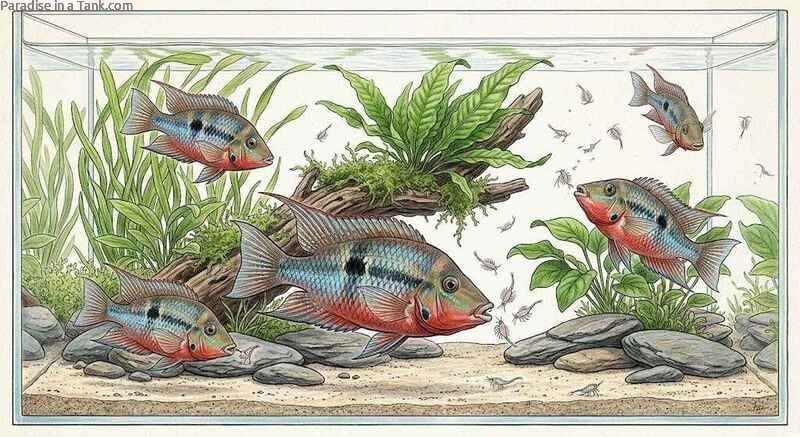
The brilliant, fiery red throat patches of a prime Firemouth are not generated out of thin air. Fish cannot synthesize red and orange pigments internally; they must absorb organic compounds called carotenoids directly from their diet. In nature, they ingest micro-crustaceans packed with natural astaxanthin and beta-carotene derived from wild algae. If your captive fish looks washed out, pale, or dull, the problem is almost always a severe lack of dietary carotenoids.
To safely boost that gorgeous scarlet glow without using harmful synthetic chemicals or hormone additives, incorporate foods rich in natural astaxanthin, krill, and spirulina. Astaxanthin is a powerful antioxidant that lodges directly in the dermal chromatophores, turning pale pink membranes into deep, fiery crimson. Feeding a diet rich in natural pigments also strengthens their immune system, helping them fight off ambient skin pathogens and environmental stress.
Be patient when building up color. Pigment deposition in the skin folds takes 3–6 weeks of consistent feeding to show dramatic results. Avoid cheap “color-enhancing” foods that rely on artificial dyes or synthetic testosterone derivatives. While synthetic hormones might temporarily pop colors, they cause severe liver damage, internal organ failure, and permanent sterility in your fish over time. Always trust natural algae-derived pigments and crustacean meals for safe, long-lasting vibrancy.
When your fish reaches peak color and maturity, identifying their sex and managing breeding dynamics becomes crucial; read our guide on Firemouth cichlid male vs female identification and color variants to spot subtle physical differences easily.
Supplemental Feeds: Introducing Live Artemia, Mysis, and Spirulina
While staple pellets deliver foundational vitamins, live and frozen supplements provide vital enrichment, trace minerals, and natural exercise. Live brine shrimp (Artemia) and frozen Mysis shrimp are absolute powerhouses for Firemouth nutrition. Unlike heavy bloodworms, which can carry parasites and dense chitin, Mysis shrimp provide clean protein along with an exocranium rich in natural calcium and carotenoids that stimulate vibrant coloration.
Spirulina algae is equally critical for keeping the digestive tract running smoothly. Incorporating spirulina-fortified foods provides concentrated chlorophyll and vegetable roughage that sweeps out the intestines. This plant material acts as a prebiotic, nourishing beneficial gut flora while driving out toxic waste buildup before it causes inflammation or bacterial bloom.
Feed supplements 2–3 times per week as a secondary treat rather than a primary food source. Live foods excite the fish’s predatory drives, causing them to flare their opercular gills and chase prey across the sand bed. This kinetic energy burns excess fat, builds lean muscle tissue, and keeps your fish mentally sharp and physically agile within their glass habitat.
Portion Layouts: Daily Ration Limits to Prevent Intestinal Complications
Overfeeding is the number one killer of captive cichlids. A Firemouth’s stomach is roughly the size of its eye. When you dump large piles of dry food into the tank, the compressed pellets absorb water inside the fish’s warm gut, expanding to twice their original volume. This rapid expansion stretches the intestinal walls, blocks food flow, and leads to lethal constipation or swim bladder compression.
Follow a strict portion rule: feed only what your fish can completely clean up within 90 seconds, once or twice per day. If any food falls to the sand bed and sits uneaten for more than two minutes, you have overfed. Promptly siphon out rotting leftovers using a gravel vacuum, or you will trigger an explosive spike in toxic ammonia and nitrite, followed by chronic nitrate buildup that damages your fish’s gills.
| Fish Life Stage | Daily Feeding Frequency | Primary Food Types | Portion Target Size |
|---|---|---|---|
| Juvenile (Under 2 Inches) | 2 to 3 times daily | Small sinking crumbles and baby Artemia | Amount consumed in 60 seconds |
| Sub-Adult (2 to 3.5 Inches) | 1 to 2 times daily | Medium sinking pellets and frozen Mysis | Amount consumed in 90 seconds |
| Mature Adult (4+ Inches) | 1 time daily (fast 1 day per week) | Large omnivore pellets and spirulina flakes | Amount consumed in 90 seconds |
Instituting a regular “fasting day” once every week is one of the best favors you can do for your fish. Skipping food for 24 hours gives their intestinal tract time to completely empty, clearing out lingering debris and resetting digestive enzyme production. This simple habit virtually eliminates intestinal bloat and keeps your fish eagerly sifting the substrate for natural biofilm.
Common Dietary Pitfalls to Avoid in Community Aquarium Settings
Keeping Firemouths in a community aquarium presents unique feeding challenges. Because they are sand sifters and cautious feeders, fast-swimming upper-water species like large tetras or giant danios can easily swoop down and steal food before it reaches the bottom. If your Firemouth is constantly outcompeted, it will suffer from chronic starvation, stress, and faded coloration.
To solve this, scatter sinking pellets across multiple zones of the tank simultaneously. Target-feed your Firemouth by using a long acrylic feeding tube to deposit sinking pellets directly onto their sand sifting territory. This ensures your cichlids get their full daily ration without having to fight off aggressive surface swimmers or thrash around frantically for leftovers.
Another critical pitfall is feeding mammalian or avian meats, such as beef heart or chicken liver. While old-school hobbyists often recommended beef heart for rapid growth, a Firemouth’s digestive tract cannot break down complex mammalian saturated fats. These fats accumulate around the internal organs, causing severe fatty liver degeneration, organ failure, and a sudden, painful death. Stick exclusively to aquatic sources of protein and quality plant matter.
Finally, keep a hawk-eye on water quality after feeding time. Uneaten pellets dissolving under the sand will decompose into toxic ammonia, overwhelming your biological filtration colony (Nitrosomonas and Nitrobacter). High nitrate buildup above 20 ppm causes severe chronic stress, suppressing the fish’s immune system and making them vulnerable to opportunistic pathogens like Hexamita, the parasite responsible for hole-in-the-head disease. Keep your substrate clean, feed disciplined portions, and your Firemouth will reward you with decades of fierce red displays and captivating wild behavior.