What on Earth is an Aquarium Sump?
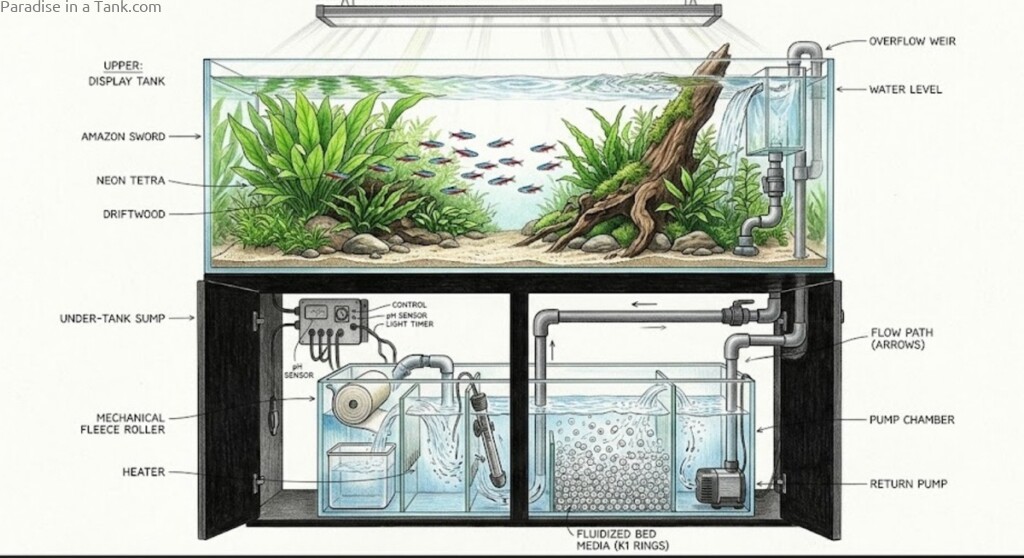
An aquarium sump maximizes total water volume, consolidates bulky life-support equipment underneath the cabinet, and provides superior mechanical and biological filtration. By continuously circulating water through an isolated lower reservoir via a gravity overflow and a motorized return pump, it guarantees unmatched oxygenation, pristine water clarity, and rock-solid chemical stability for your livestock.
An aquarium sump is simply a secondary water container placed neatly below your main display aquarium. Think of it as a hidden utility room or a kitchen sponge blown up to the size of a heavy-duty storage bin. It acts as a dedicated, customized space where your filters, heaters, water pumps, and even extra substrate are kept completely out of plain sight so you can enjoy your fish without looking at a chaotic mess of plastic plumbing and wires.
The way it works is beautifully simple: water gravity-feeds down from your main tank through an inlet pipe, passes through the sump where it gets heavily filtered and heated, and is then pushed right back up to the display tank using a motorized water pump through an outlet pipe. The best part is that you can fully customize and design your own sump from scratch, giving you total freedom over exactly what equipment and media you want to pack inside it. It allows you to master your tank’s environment rather than fighting against the limitations of a standard commercial plastic box.
When you increase the total amount of water spinning through your system, you inherently build a protective wall against toxic spikes. A smaller tank can turn into a toxic graveyard in a matter of hours if a single large fish dies and rots away behind a rock, but a system backed by a massive lower reservoir absorbs these organic blows with ease. To get a complete understanding of how all these individual components fit into your broader environment, you can read our comprehensive walkthrough on freshwater aquarium equipment.
Open Systems vs. Closed Systems Explained
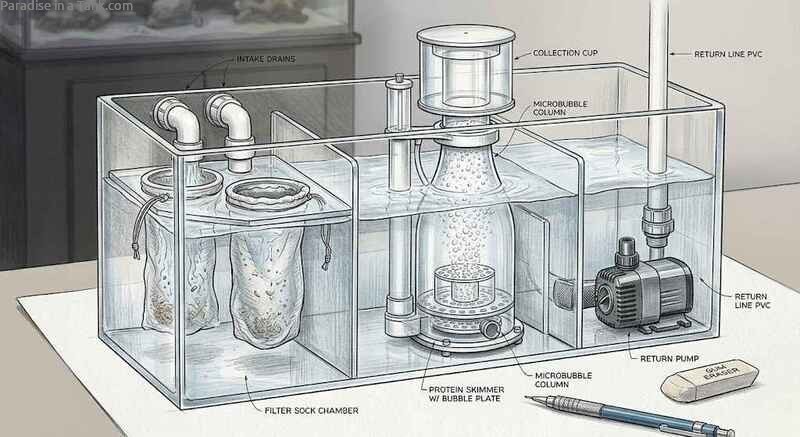
In the fish-keeping hobby, whenever and wherever water flows away from and back into your aquarium, it is called a system. For example, if your aquarium utilizes both a standard hang-on-back filter and a specialized sump underneath, the water will continuously circulate inside the filter as well as the sump before returning home. In this scenario, your tank, the sump, and the filter are all interconnected parts of one single system. When it comes to configuring your setup, you can design your custom sump to operate as either an open system or a closed system, depending entirely on your specific tank requirements.
Closed Systems
A closed system means the flowing water has absolutely no space to leak out or escape from the loop. The water is completely isolated from the outside air and is continuously circulated again and again through tightly sealed pipes and pumps. A great everyday example of this is a canister filter or a specialized fluidized bed filter, which sucks water in through a sealed tube, cleans it, and shoots it back into the tank through another airtight tube. Because it is airtight, evaporation is minimized, but you lose the ability to quickly toss in extra media on a whim or scrape away accumulated debris without shutting down the entire machine.
Open Systems
An open system is a setup where the water is actively open to the air, or there is a physical outlet where water can escape or be manually accessed. A classic example of this is a trickle filter, where you can easily reach in and touch the water or adjust the media even while the filtration process is actively running. Open systems are incredibly popular for sumps because they offer unparalleled gas exchange.
As water crashes down into an open reservoir, it drives off toxic carbon dioxide and saturates the water with oxygen. This creates a highly oxygenated environment that helps support biological filtration and prevents sudden fish losses due to stagnant conditions. This crashing action works exactly like a wild mountain stream.
The relentless turbulence breaks up the slick, oily surface film that often blankets the top of stagnant tanks, exposing the water directly to the air. This gas exchange is critical because your biological filter media requires immense amounts of oxygen to function efficiently. When you use an open system, you are essentially supercharging the air supply to the microscopic workforce living beneath your display tank.
Anatomy of a Basic Sump Design
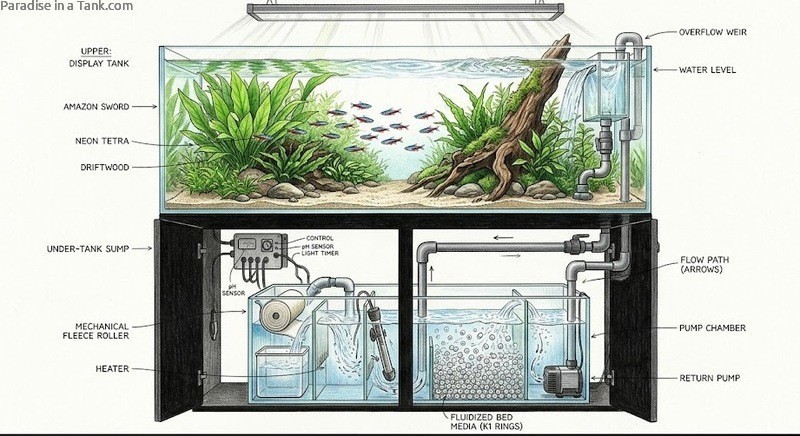
While you can customize your sump however you like, a classic, highly efficient design uses a simple multi-chamber baffle system to move water smoothly without a single risk of a flood. You can design these custom sumps to be incredibly cheap to build, highly economical to run, and shockingly easy to maintain over the years. Here is exactly how a standard three-chamber open sump processes your aquarium water from start to finish.
Chamber 1: The Heating Zone
Water leaves the main aquarium through an overflow pipe (the sump’s inlet pipe) and drops straight into the very first chamber. Your aquarium heater lives right here. The water gets warm, completely fills this first section up, and then safely overflows into the next section.
Keeping the heater down here ensures that even during a heavy water change, your sensitive heating elements stay completely submerged so they do not shatter or trigger a sudden thermal shock. This layout is especially vital when preparing your livestock for seasonal drops; you can find more strategies for temperature management in our guide on aquarium fish care in winter.
Chamber 2: Mechanical Filtration
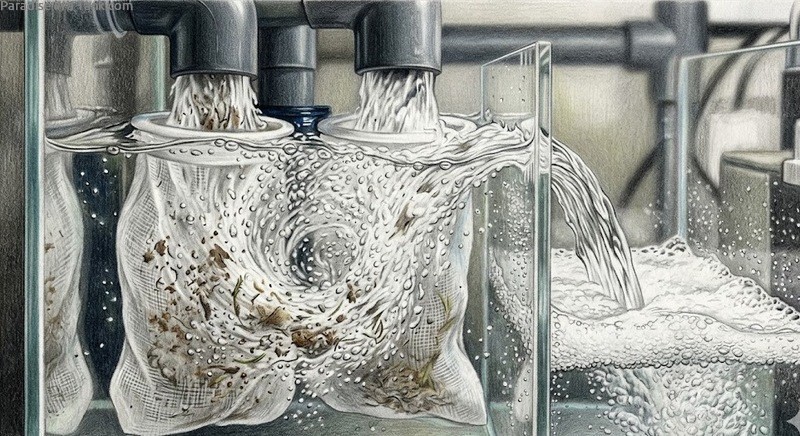
This chamber holds your mechanical filter pads or socks. As the water forces its way through, fish waste, uneaten food, and floating debris are trapped, leaving the water crystal clear before it overflows into the final zone. This physical extraction steps in to arrest the decay of organic material before it can dissolve and convert into invisible pollutants that taint your system. If you neglect this chamber, rotting sludge will rapidly overwhelm your water quality, which is one of the premier reasons why your aquarium fish died suddenly.
Chamber 3: The Biological Engine
The final chamber is packed full of biological filter media like ceramic rings or bio-balls. Once pristine, a water pump grabs the water and shoots it through the outlet pipe back up to your fish. To make this water highway work without spilling, the glass partitions (baffles) between the chambers are cut to staggered heights.
The wall between chamber one and two is shorter than the outer walls of the sump, and the wall between chamber two and three is even shorter. This clever trick guarantees that water cascades perfectly from one step to the next without backing up and overflowing a single chamber.
In the biological engine chamber, billions of beneficial bacteria (specifically strains like Nitrosomonas and Nitrobacter) live on the media, actively breaking down invisible, toxic fish waste into much less harmful substances. This is where the critical nitrogen cycle takes place.
Without this massive biological surface area to digest toxic ammonia and nitrite, your water would quickly turn into a lethal chemical soup that threatens your livestock. Keep in mind, this is just a baseline example—you can expand to as many chambers as your heart desires to fit your personal philosophy.
The Golden Rules of Sump Sizing (Preventing Disastrous Floods)
Sizing your sump correctly is a matter of absolute household safety. If your home experiences a sudden power failure, your motorized water pump will instantly stop working. The second that pump dies, gravity takes over.
All the water currently sitting inside your upright outlet pipe will reverse direction and rush right back down into the sump. Simultaneously, the main inlet pipe will continue draining water from your display tank down into the cabinet until the aquarium’s water level drops completely below the physical lip of the overflow pipe. Your sump container must be large enough to hold every single drop of this extra back-draining water.
If your sump is too small, it will catastrophically overflow all over your floor. Not only is a flood a massive waste of water, but it is also highly dangerous—it creates a massive slip hazard, and because you have high-powered aquarium machinery all around the stand, it introduces a severe risk of electrocution. This baseline volume becomes even more critical when managing heavily populated environments with intense waste accumulation; you can explore these balance metrics in our overview of aquarium bioload.
How to Run a Fail-Safe Power Test
- Step 1: Plumb your entire aquarium and sump system together, fill it up with water, and let it run normally for about one hour to establish a steady equilibrium.
- Step 2: Intentionally shut off the main power strip to simulate a sudden home blackout without warning.
- Step 3: Watch closely as the water level in your sump begins to rise as the inlet and outlet tubes completely empty themselves downward.
- Step 4: Once the draining stops completely, look at the rim of your sump container to evaluate the remaining clearance.
- Step 5: If it held all the water without spilling a single drop onto the floor, your container size is perfect.
- Step 6: Turn the main power back on and let the system run for another hour until the water levels normalize completely.
- Step 7: Take a piece of waterproof tape and place a clear line right at the exact spot where the running water level sits in the sump.
The Maximum Fill Line Rule states that whenever you perform water changes or top off evaporated water in the future, you must never, ever let the water exceed your waterproof tape mark. If you fill the sump past this safety line while the power is on, you won’t have enough empty space left over to catch the back-drain if a power failure hits, causing an immediate spill onto your floors.
Why Every Aquarist Needs a Sump
Moving all of your bulky aquarium gear down into a sump completely transforms the look of your display tank, giving it a beautifully clean, highly professional appearance by keeping large machinery far away from your direct line of sight.
| Standard Tank Hassles | Sump Solution Advantages |
|---|---|
| Ugly heaters and filter pipes clutter your view and ruin your beautiful aquascape layout. | All large equipment is hidden safely below the tank out of sight within the cabinet. |
| Aggressive fish can attack, bite, and smash fragile glass heaters in a standard setup. | Delicate heaters sit safely inside separate filter bays entirely isolated from livestock. |
| Low water volume creates tight margins for error and causes unstable chemical parameters. | The lower reservoir adds dozens of gallons of extra water for massive chemical stability. |
More importantly, a sump keeps both your expensive gear and your beloved pets completely safe from one another. Large, rowdy, or highly aggressive fish—such as massive African varieties detailed in our Lake Malawi cichlid care guide—are notorious for territorial smashing. They can violently attack floating equipment, crack fragile plastic casings, or shatter glass heater elements.
If you keep large predators, you must understand exactly what are tank buster fish? and respect the sheer destructive power they possess. Broken electrical equipment in an aquarium can quickly leak currents, which can easily hurt or fatally electrocute your entire stock of fish. By isolating your equipment downstairs in the sump, your fish stay healthy, your gear stays intact, and you get to enjoy a peaceful, flawless view.
Building your very first sump might seem like a complex plumbing project at first glance, but by breaking it down into simple chambers and ensuring your container can handle a blackout, you will unlock the cleanest, safest, and most powerful filtration system possible. Take it one step at a time, tape your safety lines, and enjoy the incredible benefits of a truly professional aquarium setup!