The Biology of the Giant Aba Aba Knife Fish (Gymnarchus niloticus)
To successfully keep the Aba Aba Knife Fish, you must provide a massive single-specimen aquarium of at least one hundred and eighty gallons, maintain immaculate water quality with heavy filtration, and enforce absolute solitude. This apex predator grows up to five feet long and possesses an aggressive, highly territorial nature.
The African continent holds many biological wonders, but few are as primitive, powerful, and deeply misunderstood as the giant Aba Aba knife fish. Known scientifically as Gymnarchus niloticus, this creature is the sole living survivor of its specific taxonomic family. It is an evolutionary relic that has spent millions of years refining itself into a perfect, undistracted hunting machine in the murky swamplands and river basins of the Nile, Niger, and Congo. When you bring one of these river monsters into your home, you are not simply setting up an aquarium; you are signing an unwritten ancestral contract to serve as the custodian for a creature that refuses to adapt to modern human domestic expectations.
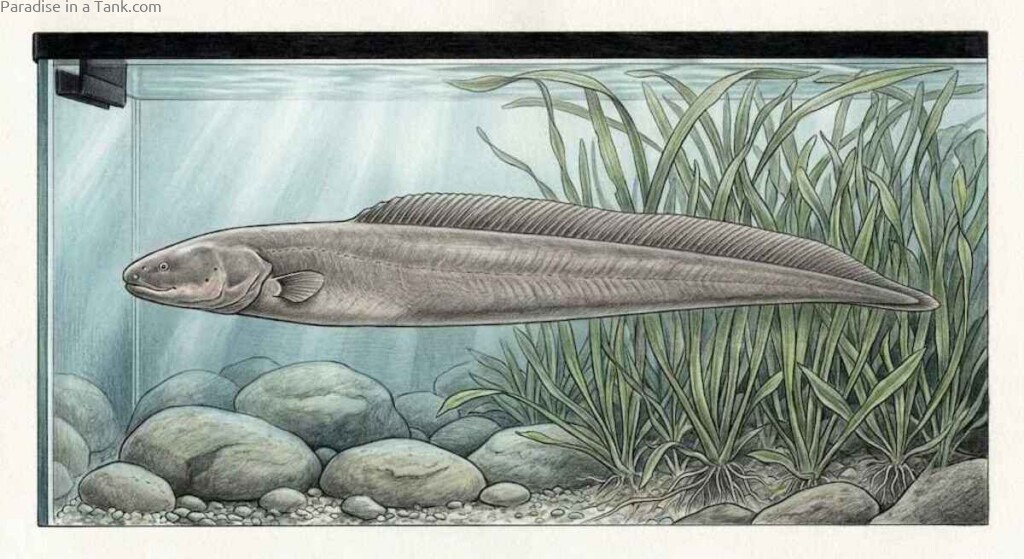
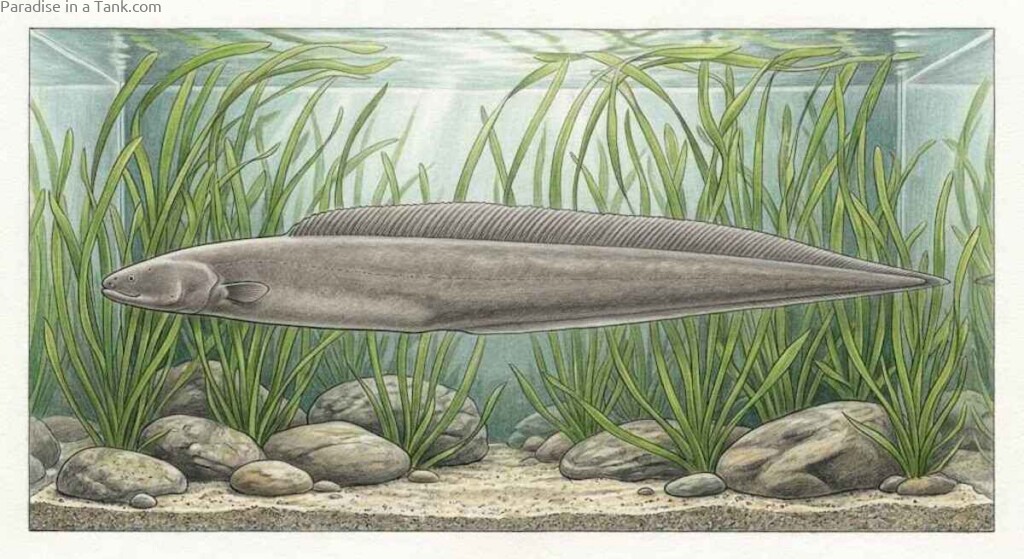
Physically, they look like living weapons. Their bodies are elongated, muscular, and completely devoid of pelvic, anal, or caudal fins. Instead, their entire physical architecture is designed around a single, continuous dorsal fin that runs almost the full length of their spine. In the wild, they thrive in heavily vegetated, low-visibility waters where standard locomotion would cause them to become hopelessly tangled or stranded. Understanding this deep geological history is crucial because it explains why their sensory systems, hunting strategies, and territorial instincts are so profoundly intense compared to typical aquarium inhabitants.
Understanding the Aggressive Nature of the Aba Knife Fish
If you are looking for a gentle, communal pet that will peacefully watch the world go by, you need to turn around immediately. The Aba Aba knife fish possesses a psychological makeup that is hardwired for extreme, unyielding aggression. In their native waters, competition for food and space is brutal, meaning they view any other living organism as either an immediate meal or a direct threat to their survival. This is not behavioral malice or a training issue; it is a primitive survival mechanic that has kept their species alive since the dawn of time.
This hyper-aggressive drive is amplified by a highly specialized anatomical feature: an organic weak electric field. Because they live in muddy, turbid waters where eyes are practically useless, they generate a continuous electrical discharge through specialized muscle tissues in their tail. They use this field like a highly sophisticated underwater radar system to build a perfect three-dimensional map of their surroundings. When another fish enters this electrical grid, the Aba Aba does not just see it—it feels it as a structural intrusion. They will strike with sudden, explosive force, using their powerful jaws and razor-sharp teeth to crush and tear apart the intruder before you even realize a conflict has started.
INSERT IMAGE HERE
The Dorsal Undulation: How the Aba Aba Moves Without Anal Fins
Watching an adult swim is an uncanny, mesmerizing experience that defies standard aquatic expectations. While the vast majority of knife fish species depend on an anal fin running along the bottom of their bellies to glide through the water, the Aba Aba flips this structural blueprint entirely on its head. It relies exclusively on the synchronized, wave-like rippling of its massive dorsal fin. This unique locomotive method is known as dorsal undulation, and it allows the fish to navigate tight spaces with unparalleled agility.
They can move forward, backward, or hover perfectly in place with absolute precision, never shifting the angle of their primary body axis. Think of their dorsal fin as a complex system of interlocking zipper teeth, with each muscle segment firing in a precise, rhythmic sequence to push water exactly where it needs to go. This biomechanical marvel allows them to stalk prey in dense vegetation without sending out massive pressure waves that would alert their target. For a comprehensive overview of how other members of this family navigate their environments, take a look at our ultimate guide to aquarium knifefish to compare these distinct locomotive styles.
The Extreme Tank Requirements for an Adult Aba Knife Fish
When you bring home a juvenile fish that is only a few inches long, it is easy to fall into a false sense of security. (Do not let their small initial size fool you into thinking a standard household aquarium will last long.) These predators grow at an astonishing rate when properly fed, rapidly transforming into thick, heavy-bodied monsters that require specialized structural housing. If you skimp on their living space, the environmental confinement will induce extreme physiological stress, leading to stunted growth, skeletal deformities, and a severely compromised immune system that invites deadly bacterial infections.
Managing a true monster fish requires a total shift in your husbandry mindset. You are no longer just keeping a pet; you are managing a complex, high-volume life support system that must withstand immense physical forces. The sheer amount of organic waste produced by a fish of this mass is staggering, requiring massive mechanical and biological filtration systems to keep the environment from turning into a toxic soup.
Designing a Massive Single-Specimen System (180+ Gallons)
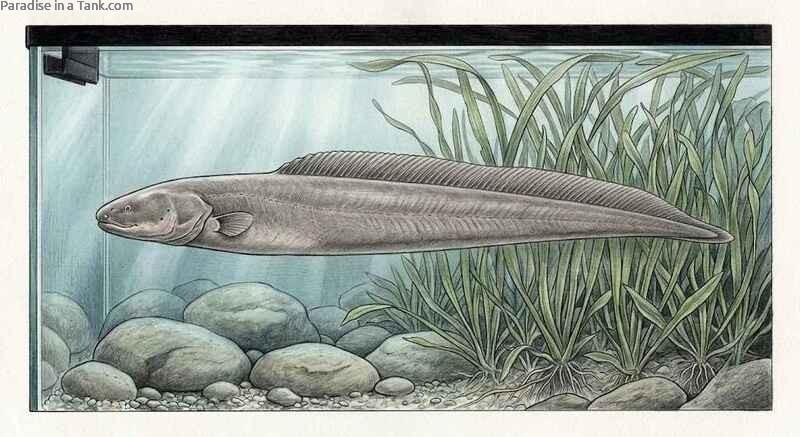
For a fully grown adult, a one hundred and eighty-gallon tank is the absolute bare minimum required for basic survival, but a customized system of three hundred gallons or more is highly recommended for long-term health. The footprint of the tank is far more important than its vertical height. The aquarium must be exceptionally wide and long—ideally at least eight feet long and three feet wide—to allow a four-foot or five-foot fish to turn around naturally without scraping its delicate skin against the glass walls.
When dealing with a system of this immense volume and weight, structural integrity is everything. A standard particle-board aquarium stand will buckle and fail under the thousands of pounds of water, glass, and substrate, leading to a catastrophic structural collapse that will destroy your home and instantly kill your fish. You must utilize a heavy-duty, reinforced steel or solid timber frame stand that is perfectly leveled. The tank itself should ideally be constructed from high-thickness acrylic rather than glass, as acrylic offers superior impact resistance and insulation properties for large-scale setups.
Reinforcing Tank Equipment Against High-Strength Physical Impacts
An adult is a solid muscle cord capable of generating terrifying physical force when startled or during a feeding strike. If a piece of equipment is loose or fragile inside the aquarium, this fish will thrash against it, break it, or weaponize it. Glass heaters, exposed filter intake pipes, and delicate glass thermometers have no place inside a monster predator system. If a fish shatters a glass heater, it risks immediate electrocution, severe lacerations, and lethal chemical exposure from internal thermal components.
To guarantee the physical safety of your animal and your home, you must follow a strict hardware reinforcement protocol:
- Use Heavy-Duty Protective Sleeves: Every single heater must be fully encased in a thick, impact-resistant plastic guard to prevent direct bodily contact and impact damage.
- Secure All Submerged Plumbing: Filter intakes and return lines must be locked down using heavy-duty suction cups or mechanical bulkhead clamps so they cannot be dislodged by a thrashing fish.
- Transition to External Equipment: Whenever possible, completely remove heaters and inline probes from the main display tank by utilizing a large external sump filtration system.
- Install Heavy weighted Lids: The aquarium must be fitted with thick, heavy-duty acrylic or glass lids secured by heavy mechanical latches or weights to prevent the fish from jumping out.
Water Parameters: Ideal Temperature, Hardness, and Pristine Quality
Maintaining the delicate environmental balance for this giant requires absolute consistency. Because they lack standard protective scales, their skin is highly sensitive to dissolved organic pollutants and sudden shifts in water chemistry. You must invest in a massive filtration system—ideally a large sump packed with highly porous biological media—to cultivate the massive colonies of beneficial bacteria needed to process heavy waste.
| Parameter Type | Ideal Target Range | Management Strategy |
|---|---|---|
| Water Temperature | Seventy-five to eighty-two degrees Fahrenheit | Utilize dual titanium heaters controlled by an external digital thermostat. |
| Acidity Level | Six point five to seven point five | Conduct consistent water testing to prevent drastic drops in structural stability. |
| Water Hardness | Five to fifteen degrees of general hardness | Use natural driftwood to gently stabilize mineral content over time. |
| Toxic Compounds | Zero parts per million ammonia and nitrite | Execute large weekly water changes to prevent dangerous nitrate buildup. |
Absolute Solitude: Why the Aba Aba Cannot Have Tank Mates
There is a common, highly dangerous misconception among novice keepers that a massive fish can be house-trained or desensitized to share its space with other large species. (This line of thinking will inevitably lead to a gruesome bloodbath.) The Aba Aba knife fish does not tolerate the presence of any other living thing in its domain, period. They do not care if a tank mate is faster, larger, or heavily armored; their primitive electrical sensory system views all cohabitants as immediate territorial violations that must be eliminated.
Even seasoned hobbyists who specialize in housing massive apex predators often underestimate the sheer ferocity of this species. While you can read about the unique requirements of other larger species in our comprehensive analysis of what tank buster fish are, the Aba Aba stands alone in its refusal to cooperate. They will systematically track down and destroy armored catfishes, large cichlids, and even other aggressive predators during the dark hours of the night when their electrical radar gives them a massive tactical advantage.
If you attempt to introduce another fish, you will eventually wake up to a horrific scene of torn fins, crushed skulls, and dead animals. Even trying to house them with smaller, peaceful species like tetras or barbs is simply providing an expensive, ongoing live food supply. If you wish to keep a knife fish but still want to maintain a diverse community ecosystem, you should look into milder alternatives. For instance, you can check out our detailed guide on clown knife fish care to explore a large species that, while predatory, is far more forgiving regarding large tank companions. Similarly, you can review the specific African knife fish tank requirements to see how a much smaller, nocturnal family member operates in a community setting. For the Aba Aba, absolute solitude is the only ethical choice.
Safe Handling and Feeding Protocols for Large Apex Predators
Feeding a mature giant is a visceral display of raw natural power, but it requires strict discipline from the keeper to prevent severe injury or accidental conditioning. In the wild, their diet consists of live fish, crustaceans, and insects. In captivity, you must break the reliance on live feeder fish, as commercial feeders are notoriously rife with deadly parasites and bacterial pathogens that can instantly ruin your pristine tank system. Instead, train your fish to accept high-quality, frozen, whole foods.
Their diet should be rich, varied, and grounded in whole proteins:
- Whole Fresh or Frozen Shrimp: Feed with the shell completely intact to provide essential roughage and support proper digestive health.
- Clean Earthworms and Nightcrawlers: Source these exclusively from chemical-free, organic environments to avoid toxic pesticide exposure.
- Fresh White Fish Fillets: Use strips of tilapia or cod as an excellent source of lean, easily digestible muscle protein.
- Whole Crabs or Crayfish: Offer these occasionally to allow the fish to use its powerful jaws and mimic natural foraging behaviors.
When introducing food into the tank, you must never use your bare hands. Their electrical radar is incredibly precise, but during the frenzy of a strike, they will snap at anything that alters the electrical conductivity of the water surface. An adult bite can easily lacerate human flesh, sever tendons, or break small bones. Always utilize long, heavy-duty stainless steel feeding tongs to offer food, ensuring your hands remain entirely outside the splash zone.
Furthermore, you must never stick your hands into the aquarium if the fish is startled or if you have open wounds, as this can trigger an immediate defensive attack. Treat this animal with the absolute respect and caution you would show a venomous reptile or a large wild mammal. By maintaining strict handling disciplines, respecting their immense size, and committing to their uncompromising environmental needs, you can successfully guide this incredible river giant through a long, healthy life in your home.