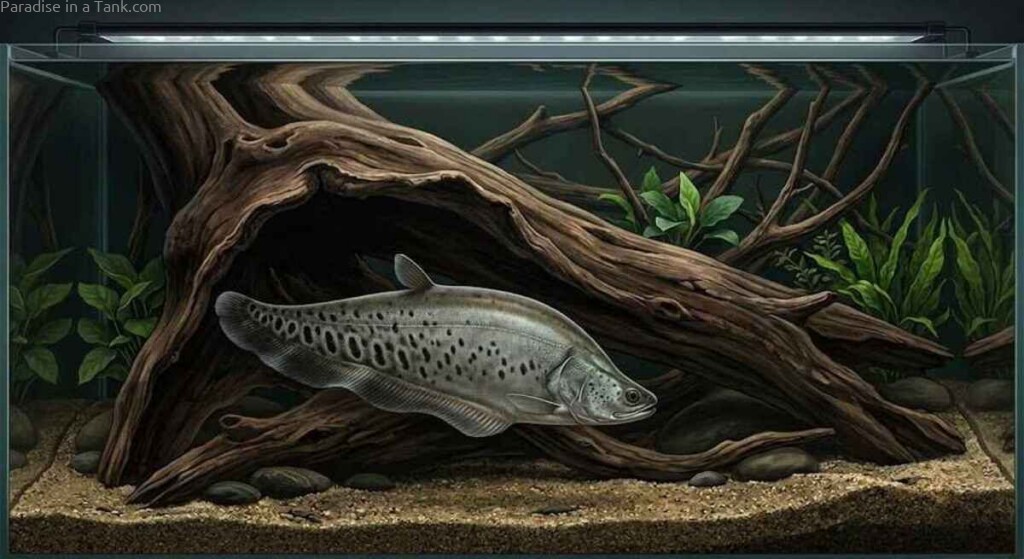
What is a Clown Knife Fish (Chitala ornata)?
The clown knife fish (Chitala ornata) is a massive, predatory freshwater fish requiring an enormous aquarium of at least 250 to 300 gallons. Known for their distinct silvery, blade-like bodies and large spots, these nocturnal carnivores demand pristine water quality, heavy filtration, and a dedicated lifelong commitment from experienced keepers.
When you first spot this creature gliding through the water, it looks almost otherworldly. They possess a long, compressed body that tapers down into a continuous, undulating anal fin that runs along the entire lower half of their frame. This specialized anatomy allows them to swim backward just as easily as they swim forward, making them incredibly agile hunters in the dark. If you are new to this incredible family of subterranean gliders, our comprehensive guide to aquarium knifefish covers the fundamental biological traits shared by these unique nocturnal predators.
In the home aquarium, these fish are not your standard weekend hobbyist project. They are highly intelligent, deeply instinctual apex predators that require an environment tailored to their primitive survival mechanics. If you bring one home, you are signing an evolutionary contract to house a river giant that will quickly outgrow almost every standard glass box sold at your local pet shop.
Distinguishing the Spotted Knifefish from the True Clown Featherback Fish
Walk into five different fish stores, and you will likely hear three different names for this single animal. It is frequently labeled as the spotted knifefish, the clown knifefish, or the clown featherback. While these common names are often used interchangeably by local retailers, they all point back to the same rapidly growing giant from Southeast Asia.
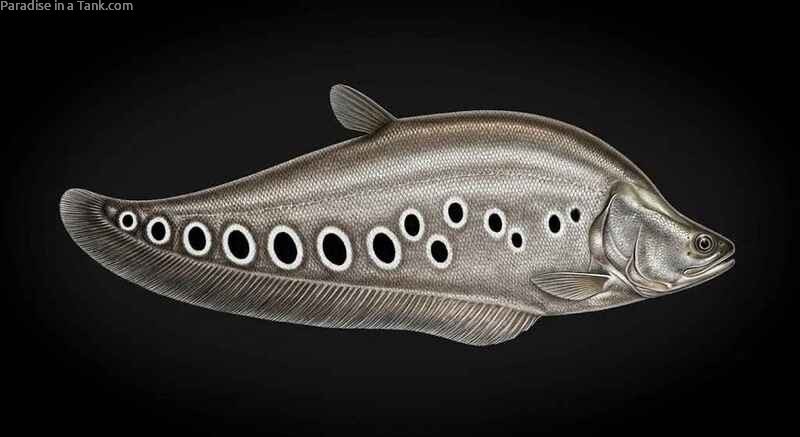
The confusion arises because there are several closely related species within the featherback family. True clown featherbacks possess a tiny, feather-like dorsal fin sitting right on the center of their backs, which acts like a small rudder while their massive lower fin undulatingly propels them through dense river vegetation.
It helps to look closely at their smaller, more manageable relatives to understand the vast differences in size and care within this family. For instance, our deep dive into African knife fish care reveals a species that tops out at a fraction of the size, making it a much more realistic option for keepers who cannot accommodate a multi-foot river monster.
The Taxonomy of the Invasive Asian Clown Featherback Lineage
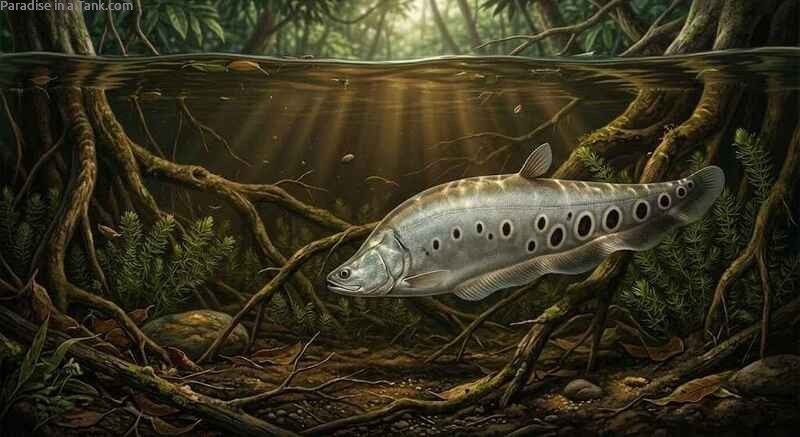
Scientifically classified as Chitala ornata, these fish belong to the family Notopteridae. They are native to the massive, slow-moving river systems of Cambodia, Laos, Thailand, and Vietnam, particularly the Mekong and Chao Phraya basins. In these wild, muddy environments, they hide deep within sunken tree roots and flooded forests during the day, coming alive at night to smash smaller fish, shrimp, and crabs.
Unfortunately, their incredible hardiness and rapid growth have turned them into a major environmental hazard outside their native range. Irresponsible keepers who realized they could no longer house a massive predator frequently dumped them into local waterways.
Today, thriving invasive populations of these Asian featherbacks completely disrupt local ecosystems in places like the Florida Everglades. They devour native species, outcompete local predators, and remind us why we must be disciplined, lifelong custodians of the animals we choose to keep.
Why Casual Aquarists Fall for the Small 3-Inch Clown Knife Trap
It happens the exact same way every single time. A casual aquarist walks into a big-box pet store and spots a group of adorable, three-inch silvery fish hovering beautifully in a display tank. They move with an elegant, ghostly cadence, their row of perfectly round black spots ringed in white looking like a custom paint job. The price tag is cheap, the fish looks peaceful, and the impulse buy is made.
What the store clerk rarely tells you is that you are holding a biological time bomb. In a properly maintained aquarium, a juvenile will easily grow an inch or more every single budget month, quickly outgrowing a standard fifty-five-gallon setup before the year is out.
While they start out looking small and harmless, they are fundamentally different from other specialized predators. They do not stay relatively compact like some oddball species, nor do they possess the absolute maximum aggression found in our overview of Aba Aba knife fish care, but they will absolutely grow into massive, line-snapping brutes that can easily choke out a standard home aquarium setup through pure physical mass.
Setting Up a Tank for a Giant Chitala Ornata
To house an adult safely, you must abandon all standard consumer aquarium mindsets. You are no longer managing a fish tank; you are engineering a miniature indoor river ecosystem designed to contain an absolute powerhouse. These fish belong to the absolute upper echelon of legendary tank buster fish that can easily shatter thin glass, dislodge heaters, and completely overwhelm standard commercial filtration filters within a matter of weeks.
The structural integrity of the aquarium is paramount. A full-grown adult thrashing around during a night hunt can crack thin glass if it gets spooked by a sudden shadow or a loud noise in the room. Acrylic tanks or thick, heavy-duty custom glass tanks with reinforced bracing are mandatory if you want to avoid waking up to a catastrophic structural collapse and hundreds of gallons of water ruined on your living room floor.
Minimum Tank Dimensions: Housing a Multi-Foot Apex Predator
Let us talk straight about the actual physical space required for an adult. An adult can easily reach lengths between twenty-four and thirty-six inches in captivity. Because their spines are relatively flexible but their bodies are incredibly deep, a narrow tank will physically trap them, leaving them unable to turn around without scraping their skin raw against the glass.
The absolute minimum footprint for a lifelong home is eight feet long, three feet wide, and three feet deep. This provides a total volume of roughly three hundred gallons, giving the fish enough physical turning radius to swim naturally without constantly stressing its skeletal structure.
| Growth Stage | Typical Length | Minimum Recommended Tank Size |
|---|---|---|
| Juvenile Stage | Three to Six Inches | Fifty-Five Gallon Grow-Out Tank |
| Sub-Adult Stage | Twelve to Eighteen Inches | One Hundred Twenty Gallon Tank |
| Full Adult Stage | Twenty-Four to Thirty-Six Inches | Three Hundred Gallon Custom Tank |
Designing Nocturnal Hiding Spots for Your Clown Night Fish
Because these fish are highly nocturnal, a bare, brightly lit tank is an absolute psychological torture chamber for them. If they do not have a dark, secure place to retreat to during daylight hours, their stress levels will skyrocket, completely suppressing their immune systems and leaving them wide open to devastating external parasitic outbreaks.
You must provide massive, smooth hiding structures. Large, thick pieces of seasoned driftwood or clean, oversized PVC pipes are ideal choices for their cave systems. Avoid any rocks with jagged edges, sharp protrusions, or rough volcanic textures, as these fish will frequently pace around and bolt when startled, slicing their smooth, scaleless skin open on rough surfaces.
Deep-Water Filtration Layouts for Large Carnivorous Setups
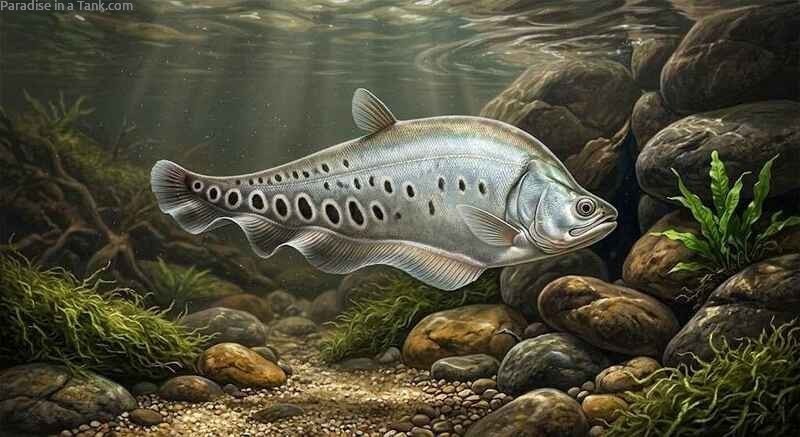
Feeding a massive carnivore massive amounts of meaty protein means one inevitable outcome: an incredible amount of heavy organic waste. Their thick solid waste and heavy respiration will rapidly foul the water column if your filtration is not up to the task. You must design a system that can process massive spikes of raw ammonia and toxic nitrite while keeping overall nitrate buildup completely under control.
A large multi-chambered sump system connected to a heavy-duty surface skimmer is the absolute gold standard for this application. Fill the sump chambers with premium porous biological media to house massive colonies of beneficial waste-processing bacteria. Ensure your mechanical filtration layers are easily accessible, as you will need to physically pull out and rinse the fine pads multiple times a week to remove rotting debris before it breaks down into the water column.
The Predatory Diet: Feeding the Spotted Knifefish
In the wild, these fish are highly specialized ambush hunters that use their advanced lateral line systems to detect the tiny muscular vibrations of passing prey in pitch-black water. They do not graze on plants, and they will completely ignore cheap flake foods or standard floating sticks. Their entire digestive tract is hardwired to process fresh, whole animal proteins.
When they strike, it happens with a sudden, vacuum-like pop. Their mouths expand instantly, pulling in water and the target organism in a split second. As a keeper, you must ensure that this predatory drive is directed toward high-quality, disease-free food sources rather than cheap, contaminated feeder options.
Transitioning Juvenile Fish Away from Live Feeders
Many hobbyists make the critical mistake of raising their young juveniles exclusively on live feeder goldfish or small minnows bought from local shops. This is a fast track to disaster. Commercial feeder fish are packed with dangerous external parasites, internal worms, and systemic bacterial infections that will eventually pass directly into your prize predator, causing sudden, unexplainable death.
To break the live food habit, you must implement a disciplined training routine. Start by offering frozen bloodworms or small pieces of fresh, raw shrimp held gently in a pair of long feeding tongs, moving them slightly to mimic the erratic twitching of live prey. If the juvenile refuses, do not panic; skip feeding for two or three days until their natural hunger overrides their stubbornness, forcing them to accept the dead, safer alternative.
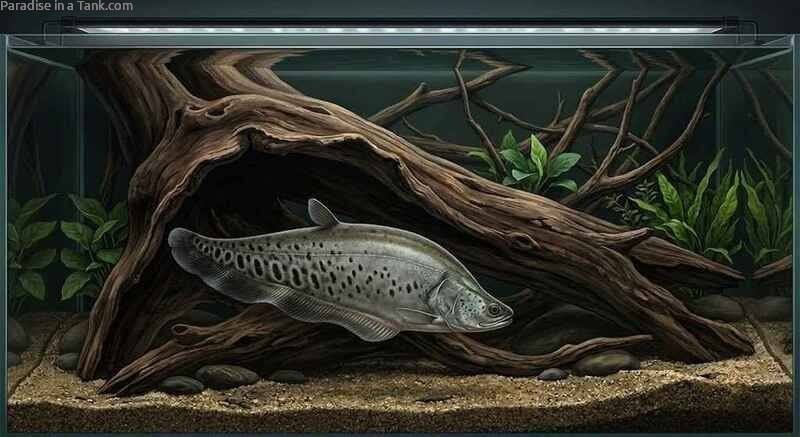
Best Meaty Foods and Sinking Pellets for High Growth Rates
Once your fish is successfully transitioned to dead foods, you can build a highly nutritious, varied diet that promotes massive skeletal growth and brilliant pattern development. The base of their diet should consist of high-quality, market-fresh seafood items cut into bite-sized chunks that match the size of the fish’s mouth.
- Clean Market Seafood: Raw white fish fillets, whole earthworms, fresh krill, and deshelled pieces of market shrimp provide excellent proteins without introducing dangerous freshwater pathogens.
- Massivore Sinking Pellets: High-protein, large-format sinking pellets packed with stabilized vitamins offer balanced nutrition that simple muscle meat lacks.
- Fresh Stripped Earthworms: Cultured nightcrawlers provide a highly stimulating, rich meal that encourages natural foraging behaviors along the substrate.
Safe Tank Mates for the Aggressive Clown Knife
Finding proper companions for a giant predator is a delicate balancing act. They are not overtly aggressive in the way a territorial cichlid is, meaning they rarely go out of their way to hunt down large fish just to fight them. However, they are profoundly opportunistic eaters; if a tank mate can physically fit inside their expanding jaws, it will eventually vanish during the middle of the night.
Keep them only with large, robust, deep-bodied species that can hold their own and tolerate the active nocturnal habits of a massive swimmer. Excellent choices include adult Oscars, large tinfoil barbs, giant gouramis, full-grown silver dollars, and massive bottom-dwelling plecostomus species. Ensure every single companion is large enough to completely nullify the knife’s vacuum strike capability, allowing you to maintain a peaceful, thriving community of river giants for decades to come.