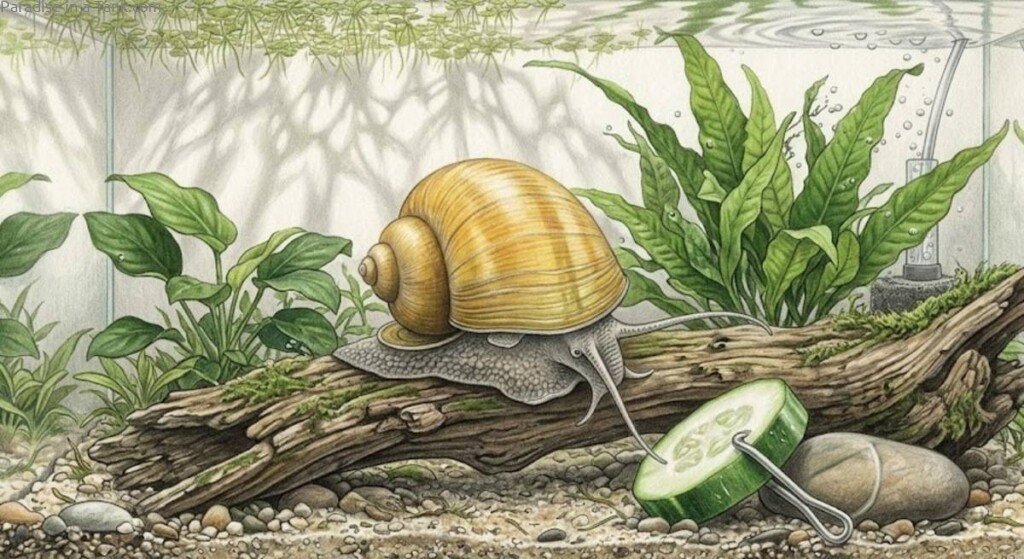
An Honest Overview of the Aquarium Giant
Apple snails, frequently sold under names like mystery snails, golden snails, or ivory snails, are among the absolute largest freshwater mollusks available in the aquarium hobby today. While beginner-friendly and exceptionally peaceful, these ancient creatures require deliberate care, proper tank sizing, and a deep understanding of their unique dual-breathing biology to truly thrive.
Apple snails are hardy, peaceful freshwater scavengers that require a minimum of a ten-gallon aquarium, hard water rich in minerals, and a water acidity level strictly above neutral to prevent shell erosion. They possess a unique dual-breathing system, using both a gill and a lung-like lung cavity to inhale atmospheric air via a siphon.
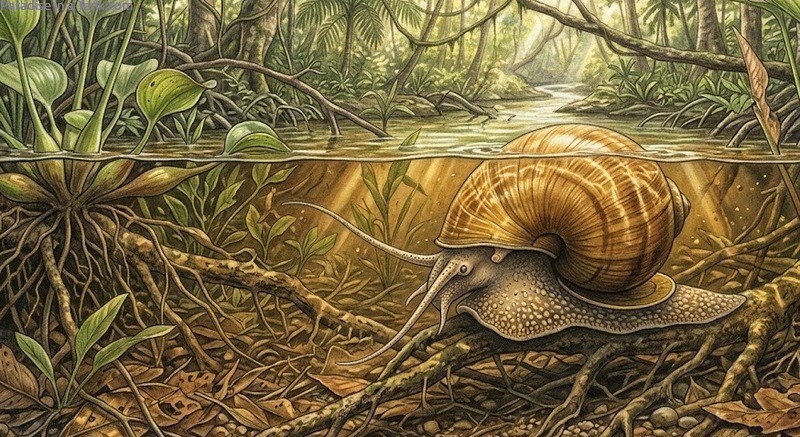
Apple snails are not mindless cleaning machines that you can just toss into a neglected glass box and forget about. In the wild, their ancestral lineage traces back to the slow-moving swamps and dynamic floodplains of the Amazon River basin, before they eventually spread across tropical environments in Hawaii, South-West Asia, and the southern United States. They are evolutionary marvels hardwired with survival mechanics developed over millions of years, and when you bring one into your home, you sign an unwritten contract to honor that ancient programming.
The Ancestral Architecture of the Apple Snail
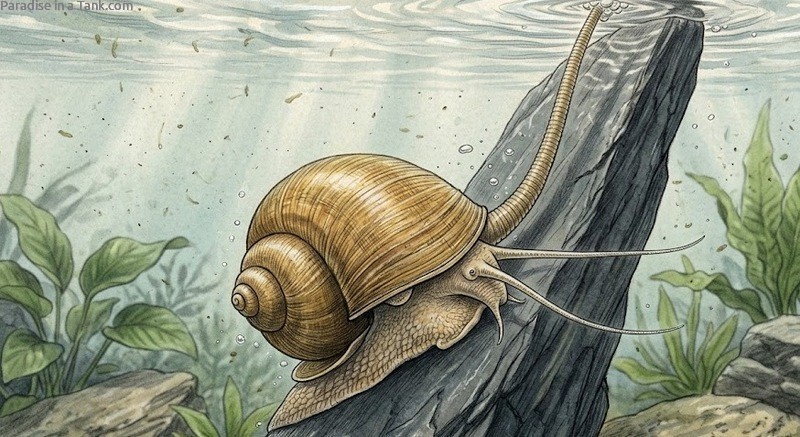
To truly understand your snail, you have to look past the beautiful shell and understand the physical realism of its anatomy. The most mind-blowing feature of these creatures is their respiratory configuration. Unlike most fully aquatic snails, the apple snail possesses a specialized body cavity that is quite literally divided into two distinct biological chambers. One side houses a traditional gill to extract oxygen directly from the water columns, while the other side functions exactly like a primitive human lung, designed to process dry atmospheric air.
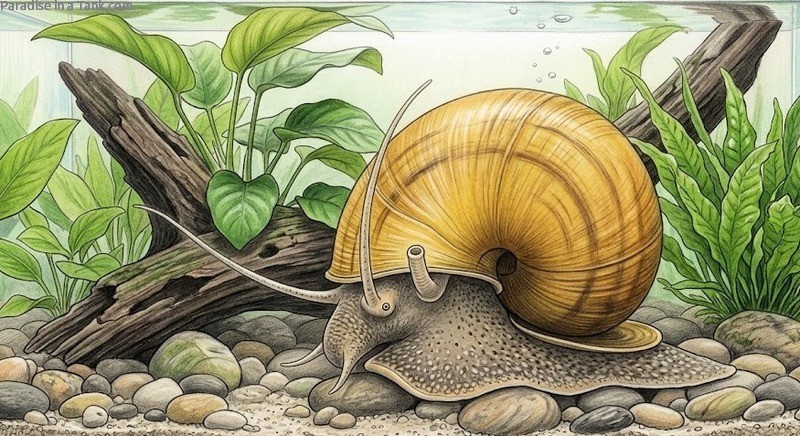
You will routinely watch your snail scale the aquarium glass until it parks itself just an inch or two below the water surface. From there, it will extend a long, fleshy, highly flexible tube known as a siphon. The tip of this muscular straw breaches the surface film, and the snail begins to dump metabolic waste gases while vacuuming in fresh air. If you look closely from the side during this process, you will see the snail’s entire soft body pulsate rhythmically, almost like a exposed, beating heart. It is a stunning display of physical mechanics, but it also means your tank setup must accommodate this behavior without obstruction.
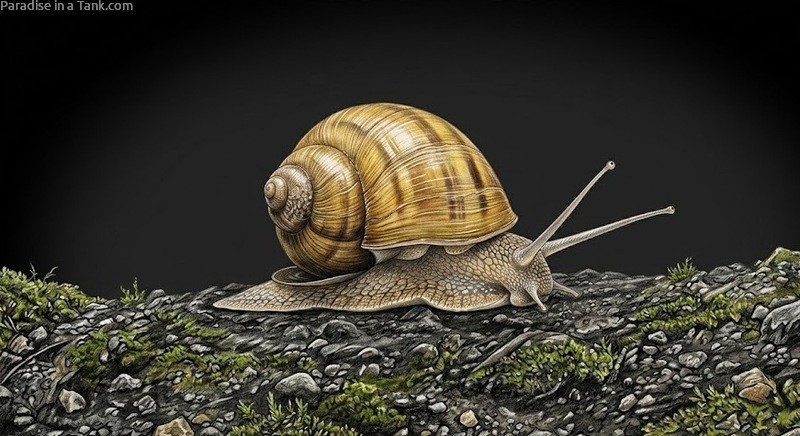
Flanking their mouthparts are two pairs of highly sensitive tentacles. The long, whip-like cephalic tentacles act as their primary radar, constantly waving through the water column to sense physical barriers, shifting currents, and oncoming threats. Beneath these long whips sit tiny eye stalks. Because their eyes match the coloration of their flesh, they can be exceptionally difficult to spot, but they provide the snail with basic light and shadow perception to help them avoid predators lurking above the water line.
Crucial Water Parameters: Building the Shield
Your snail’s shell is its only line of defense against a hostile world, and that shell is entirely dependent on the chemistry of the water it submerses itself in. If you ignore the minerals in your water, you are actively sentencing your animal to a slow, agonizing demise. The absolute golden rule of apple snail husbandry is to keep your water chemistry stable, hard, and alkaline.
| Parameter Type | Optimal Target Range | Biological Consequence of Failure |
|---|---|---|
| Water Temperature | 18 to 28 degrees Celsius | Cold stalls metabolism; extreme heat burns out their lifespan rapidly. |
| Water Acidity Range | 6.5 to 7.5 Target | Anything below neutral eats holes in the shell and dissolves the animal alive. |
| General Hardness | 8 to 15 dH | Soft water starves the shell of essential building blocks, causing structural collapse. |
| Minimum Tank Size | 10 Gallons Base | Small volumes concentrate massive waste loads, triggering toxic bacterial blooms. |
Let’s talk about the physical reality of water acidity. If you let your water acidity drop into the acidic zone below neutral, the water itself becomes hungry for minerals. It will literally start stripping calcium straight out of the living snail’s shell to satisfy its own chemical imbalance. This results in the appearance of pitting, thin spots, and jagged white holes across the shell surface. Over time, these holes expand, exposing the delicate internal organs underneath to infection, parasites, and direct injury.
To prevent this nightmare, your aquarium must feature hard water packed with minerals, particularly calcium. This dissolved mineral wealth acts as an endless supply of building materials, allowing the snail to constantly patch, reinforce, and grow its protective armor. If your tap water is naturally soft, you must take active steps to harden it using natural methods, such as adding crushed coral or cuttlefish bone to your filtration layout.
Furthermore, you must establish an absolute zero-tolerance policy for heavy metals, specifically copper. Copper is an absolute, fast-acting neurotoxin to invertebrates. Even microscopic traces of copper found in standard tap water or cheap fish medications will trigger immediate neurological failure, visible when the snail becomes completely lethargic, fails to retract its body, or spends days completely extended outside the safety of its shell. Always treat every single drop of new water with a high-quality water conditioner that neutralizes heavy metals before it ever touches your aquarium.
Tank Setup and the Reality of Massive Bioload
Do not let their slow, peaceful nature fool you: apple snails are absolute waste-producing factories. They eat constantly, and as a direct result, they poop an incredible amount of dense, solid waste. If you crowd three or four large adult apple snails into a tiny, unmonitored environment, you will quickly find yourself overwhelmed by a massive buildup of raw ammonia and toxic nitrite.
When planning your layout, a standard ten-gallon tank can comfortably house two to three adult snails if they are the sole inhabitants. For every additional snail you want to introduce, you must scale your volume up by at least three more gallons. Because most keepers naturally want to mix their snails with community fish, choosing a larger, long-format tank is always the smarter path.
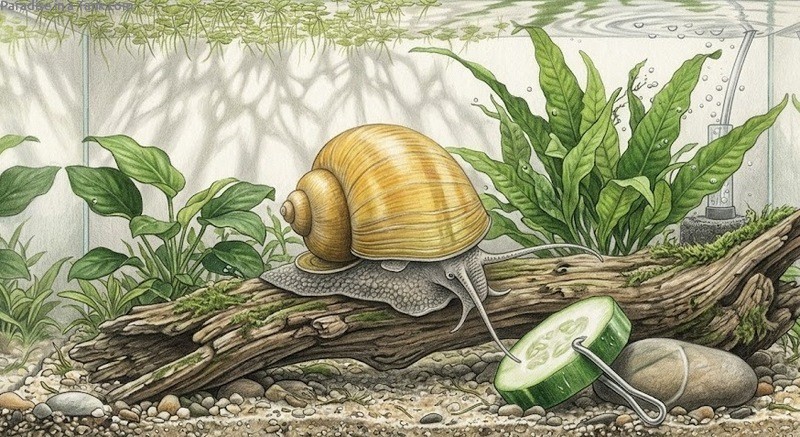
The physical height of your aquarium glass also matters immensely. Because these animals are heavy and rely on climbing to the surface to breathe through their siphon tubes, an excessively deep tank can become an exhausting obstacle course. Keep your maximum water height around two feet or less. If the glass is too tall, a weak, older, or pregnant snail might simply run out of steam, fail to reach the surface atmospheric air in time, and face severe respiratory distress.
You must also leave a deliberate, open air gap of two to three inches between the top of the water line and the absolute highest edge of the aquarium glass. This dry zone is mandatory. Apple snails require this humid, open space to climb out, dry off slightly, and deposit their massive egg clutches. If you fill your aquarium right up to the absolute brim, you leave them no choice but to search for external exit points. They will push past loose lids, squeeze through filter cutouts, and crawl right out onto your living room floor. If they fall and crack their shell, or fail to find their way back to moisture within a few hours, they will dry out and die.
Feeding Dynamics and Environmental Upkeep
Apple snails are highly opportunistic, voracious omnivorous scavengers. In their ancestral river beds, they spend their days acting as nature’s cleanup crew, systematically crawling over decaying plant leaves, rotting organic debris, and the carcasses of dead fish. They possess an incredibly complex digestive system packed with billions of beneficial microorganisms that help them break down tough, fibrous plant matters.
Because of this intense internal biology, their feces are packed with these same microorganisms, known as amoebocytes. If you keep a high concentration of apple snails in a single tank, you might notice the water column takes on a distinct, cloudy, milky appearance. Do not panic. These specific microorganisms are entirely harmless to your fish and shrimp. In fact, if you are a breeder, this microbial cloud acts as an exceptional, nutrient-dense first food source for newly hatched fish fry.
To keep their shells pristine and their bodies strong, you should provide a highly varied diet rather than relying solely on leftover fish flakes. They absolutely thrive on sinking pellets, algae wafers, and fresh, blanched vegetables like spinach, cucumber, squash, and lettuce.
- The Vegetable Rinse Protocol: Always thoroughly rinse every single piece of fresh vegetable under running water to strip away residual agricultural pesticides and chemical sprays that can instantly wipe out an entire invertebrate colony.
- The One-Hour Extraction Rule: Never leave uneaten vegetables in the tank for longer than an hour; they will rapidly break down, souring the water quality and causing catastrophic bacterial spikes.
- The Sinking Anchor Method: Because most vegetables naturally float, use a clean thread to tie them to a heavy rock, or attach them to a suction cup anchored directly to the bottom substrate so your snails can easily crawl over them.
While they will happily graze on the natural green film growing across your glass, their slow movement means they cannot keep up with a massive, exploding algae outbreak. If your tank is completely covered in green sheets, check out our comprehensive guide on getting rid of aquarium algae to fix the underlying light and nutrient issues.
Defending Against Predatory Tankmates
The absolute tragedy of apple snail keeping is placing these gentle giants in a tank filled with aggressive, opportunistic predators. Apple snails have zero defensive weapons; their only response to aggression is to pull their entire body inside their shell and tightly snap their hard trapdoor shut.
If you pair them with aggressive fish, those fish will systematically target the snail’s long, waving tentacles, treating them like a moving buffet of worms. Constant nipping and tearing will force the snail into a state of permanent, defensive lockdown. The animal will refuse to emerge, trapped inside its own shell, eventually starving to death or succumbing to severe systemic stress and infected wounds.
Avoid keeping your apple snails with the following highly unsuitable tankmates:
- All Species of Loaches: Clowns, yoyos, and kuhlis are specialized, highly efficient snail-hunting machines that can easily bypass or shatter a snail’s defenses.
- Puffer Fish: Possess powerful, beak-like teeth explicitly designed by evolution to crush thick invertebrate shells like peanut fragments.
- Most Large Cichlids: Aggressive, territorial predators that will constantly thrash, strike, and pester the snails until they perish.
- Assassin Snails: While small, these carnivorous mollusks hunt in organized, chemical-tracking patterns and will slowly consume an apple snail from the inside out.
The Physical Realities of Reproduction
Unlike the vast majority of aquarium snails that are hermaphroditic and can reproduce entirely on their own, apple snails possess distinct, separate sexes. There are definitive males and definitive females, though telling them apart visually with the naked eye is nearly impossible for the casual keeper. If your goal is to breed them, your best bet is to purchase a small group of four to five individuals to guarantee a natural mixture of genders.
When a female is ready to deposit her genetic legacy, she will utilize that mandatory open air gap you left above the waterline. Under the cover of total darkness, she will scale the glass or climb onto the underside of your aquarium lid. She then begins to meticulously deposit a massive, elongated clutch of eggs that features a striking, distinct light pink coloration.
This clutch is incredibly fragile when first laid, resembling a soft, gelatinous mass that gradually hardens into a rigid, textured protective casing upon exposure to the air. It is absolutely critical that these eggs remain in a highly humid environment but never get directly submerged. If the water level rises and covers the clutch, or if the eggs break away and fall into the water column, the developing baby snails inside will literally drown and die within days.
The parental investment ends the moment the clutch is deposited. If your room is warm and the internal humidity beneath the lid remains high, the eggs will slowly darken over a period of two to three weeks. When they are ready, a small army of tiny, fully formed, self-sufficient baby snails will chew their way through the casing and drop directly into the water below.
Raising Hatchlings and Solving an Overpopulation Crisis
The moment those tiny babies drop into the aquarium, they face an immediate survival race. While they possess the exact same care requirements as their massive parents, their microscopic size means they move incredibly slowly. In a massive, heavily stocked community tank, they will struggle to cover the immense physical distances required to find food before it is completely gobbled up by faster fish.
To ensure their survival, you must actively scatter food across the entire surface of the bottom substrate, ensuring that no matter which direction a tiny hatchling crawls, it encounters a source of solid nutrition. Alternatively, you can systematically harvest the babies and move them into a dedicated, smaller nursery tank.
If you take the route of a separate nursery setup, you must meticulously match the water chemistry to the main display tank. Use a clean container to scoop water directly from the main environment, blend it with treated, dechlorinated fresh water, and utilize a reliable heater to keep the temperature perfectly stable.
However, if your snails are thriving, they can easily produce a new egg clutch every four to seven days for weeks on end. This intense reproductive drive can quickly turn a beautiful display into a crawling, chaotic nightmare. If your environment is completely overrun and your filtration system is buckling under the weight of thousands of tiny waste-producers, you need to step in as a disciplined custodian. Read our detailed breakdown on how to get rid of aquarium snails safely and humanely to regain complete control over your home ecosystem.
Diagnostic Checklist: Did My Apple Snail Die?
Because apple snails frequently engage in long periods of completely motionless rest, every single keeper will eventually face a moment of intense anxiety, wondering if their animal has crossed the rainbow bridge. A large, dead snail left to rot inside a warm aquarium will collapse your water quality with terrifying speed, triggering massive bacterial outbreaks that can wipe out your entire fish population overnight. You must know how to diagnose life versus death instantly.
Run through this precise inventory if your snail has been motionless for more than twenty-four hours:
- The Trapdoor Resistance Test: Gently pick the snail out of the water and examine the hard operculum door. If the door is pulled tightly and rigidly shut against the shell, the animal is alive and simply resting or hiding. If the door hangs completely loose, open, or flaccid, the internal muscles have failed, and the snail has died.
- The Sniff Evaluation: Hold the snail close to your nose. A living snail smells like clean, organic aquatic water. A dead snail produces an immediate, overwhelmingly foul, pungent, and unmistakably putrid odor of rotting flesh. If it offends your senses, discard it immediately.
- The Empty Shell Check: Look deep into the shell opening. If the entire muscular body is completely missing, the snail has passed, and your fish or shrimp have already finished the process of consuming the organic tissue.
- The Floating Phenomenon: Do not assume a floating snail is a dead snail. Apple snails routinely trap air inside their lung cavities to intentionally bob along the surface currents like a biological raft. Always remove the floating snail and use the trapdoor and sniff tests before making a final judgment call.
Caring for these prehistoric giants is an incredibly rewarding journey that forces us to pay close attention to the invisible chemistry of our water. Treat them with the structural respect their ancient lineage demands, keep their water hard and clean, protect them from aggressive tankmates, and you will enjoy a fascinating, active, and highly effective clean-up companion for years to come.