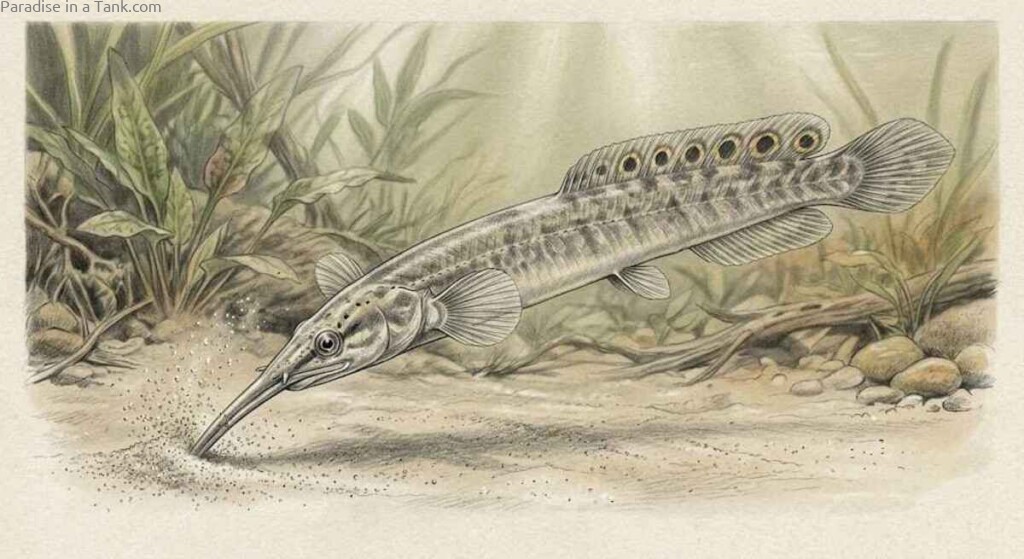
Introduction to the Exotic Peacock Eel
Peacock eels are among the most fascinating oddball fish you can introduce to your home aquarium. They look incredibly exotic with their elongated bodies and intricate patterns, yet they remain relatively inexpensive and highly accessible for hobbyists who want something unique. This immediate appeal drives many fish keepers to buy them the second they spot them swimming in a local pet shop.
However, because these creatures are deeply hardwired with ancient evolutionary instincts, they have highly specialized care requirements that differ wildly from standard community fish. Neglecting these primitive biological needs will inevitably lead your peacock eel to a slow, miserable decline. To be a successful custodian of this remarkable species, you must adapt your tank environment to mirror their wild ancestral habitats.
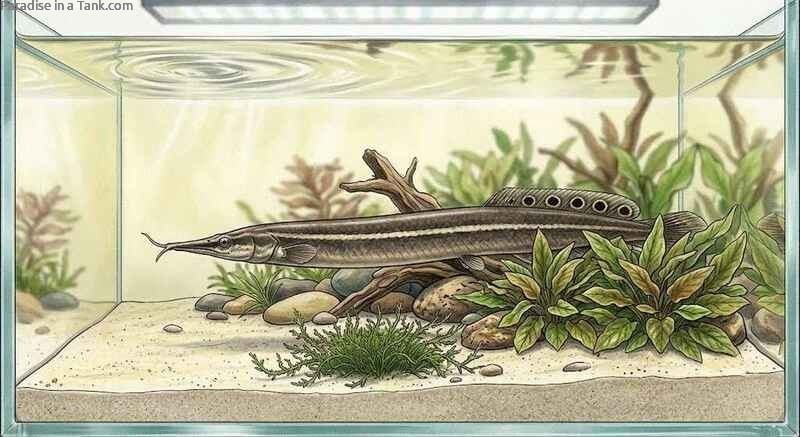
To successfully keep a peacock eel, you must provide a minimum thirty-five-gallon long tank featuring a soft sandy substrate for natural burying behavior. Maintain strict water oxygenation, keep the water temperature between seventy-three and eighty-two degrees Fahrenheit, offer live prey, and establish plenty of dim, dark hiding places to prevent lethal stress.
Tank Setup: Crafting the Perfect Ancestral Habitat
When setting up an aquarium for this species, ignore the common misconceptions often spread by misinformed storefronts. Like any active, deep-dwelling fish, a peacock eel requires a large, wide footprint with ample space to stretch out, glide along the bottom, and turn freely without any physical restrictions. Constricting their movement in a cramped environment compromises their muscular health and causes severe mental stagnation.
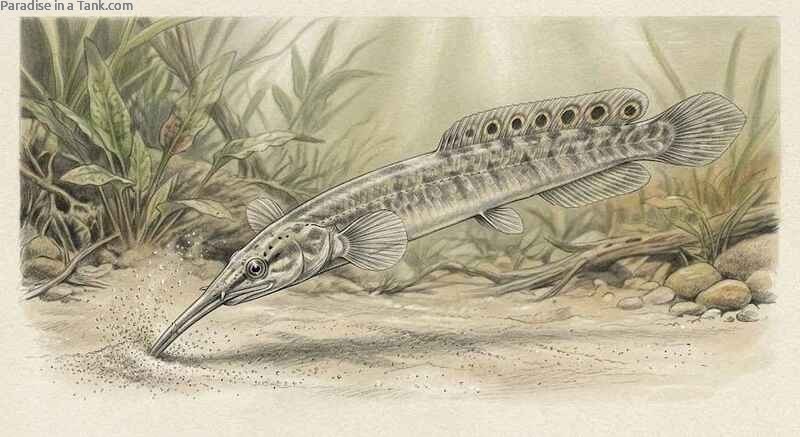
Your choice of base material is the single most critical factor determining whether your eel thrives or suffers. In the wild, these fish survive by burrowing deep into loose riverbeds to hide from predators and ambush prey. For this reason, a soft, fine sandy substrate is absolutely mandatory. If you force them onto sharp gravel or coarse gravel stones, their delicate skin will scratch, strip away their protective slime coat, and open up horrific pathways for deadly bacterial infections.
Beyond the sand, you must construct dedicated sanctuaries where the eel can completely escape your line of sight. These nocturnal animals experience intense anxiety when exposed to bright, open water during daylight hours. You can easily build secure havens by arranging dense clusters of live plants, smooth river rocks, and natural driftwood, particularly along the rear corners of the glass.
Critical Equipment: Oxygenation and Filtration
Once your tank is physically arranged, installing robust hardware to support the eel’s high metabolic needs is paramount. You must equip the system with a high-output air pump connected directly to a porous air stone. This setup drives continuous surface agitation, forcing fresh oxygen into the water column so your eel can respire effortlessly.
In tandem with an air pump, choosing a high-capacity canister or power filter tailored to your tank size is essential to keep the environment pristine. Many modern filters are designed to provide a steady stream of fresh air alongside mechanical filtration. To build an optimal community around these parameters, consult a comprehensive aquarium fish compatibility guide to ensure any prospective tankmates enjoy identical flow rates and calm conditions.
Severe Suffocation Risk Inventory
- Rapid Gill Flaring: The eel’s mouth opens and closes at an accelerated, erratic pace.
- Heavy Labored Breathing: The throat expands visibly as the fish struggles to extract oxygen from stagnant water.
- Surface Gulping: The eel completely abandons the substrate, darts to the top of the tank, and desperately swallows atmospheric air.
- Loss of Equilibrium: The fish begins rolling onto its side or drifting limply due to advanced oxygen deprivation.
If you ever witness these alarming symptoms and cannot fix your mechanical air source immediately, you must act instantly to save their life. Drain twenty to thirty percent of the foul tank water right away and replace it with cool, fresh, conditioned water. This emergency influx delivers an immediate boost of dissolved oxygen, allowing your suffocating eel to stabilize and regain its breath within minutes.
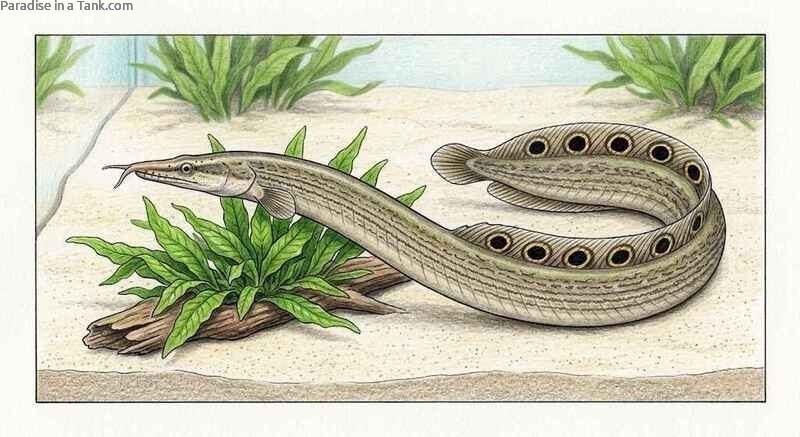
Water Chemistry and the Nitrogen Cycle
Maintaining crystal-clear water involves an unseen biological ecosystem that every keeper must master. When organic material like fish poop, dropped scales, and uneaten food rots at the bottom of the tank, it releases highly toxic raw ammonia into the water column. Without beneficial colonies of specialized bacteria to break down this waste, the accumulating invisible toxins will quickly burn your fish’s gills and cause widespread organ failure.
Understanding this biological breakdown is the single most important factor in preventing sudden fish mortality worldwide. Cultivating these beneficial bacterial colonies within your filter media takes several weeks of preparation before your fish even arrive. To safely prepare your water and prevent toxic nitrite or nitrate buildup from reaching lethal levels, you should study the mechanics of the aquarium nitrogen cycle before introducing any livestock.
Because peacock eels lack the heavy protective scales of standard fish, they are exceptionally sensitive to shifting chemical baselines. You must invest in a reliable liquid testing kit to monitor your water parameters on a rigid weekly schedule. If your testing reveals that your water acidity or general water hardness has drifted outside the safe zone, you can utilize proven methods for adjusting water parameters to steer the chemistry back into a safe, stable equilibrium.
| Critical Water Parameter | Scientifically Ideal Target Range |
|---|---|
| Water Temperature | Maintain consistently between 73 and 82 degrees Fahrenheit. |
| General Water Hardness | Keep the mineral density stable between 6 and 25 dGH. |
| Water Acidity Level | Ensure the baseline stays balanced between 6.0 and 8.0. |
| Minimum Base Tank Size | Provide at least 35 gallons of volume for a single specimen. |
Choosing and Acclimatizing a Healthy Eel
Protecting your aquarium from devastating disease outbreaks starts at the pet store. Purchasing a compromised, sickly animal will almost certainly result in its death if you are a beginner, and it can introduce virulent pathogens that wipe out your entire existing tank community. Carefully inspect the physical condition of the eel before allowing the store clerk to bag it up.
A perfectly healthy peacock eel will display fully expanded, pristine fins that extend naturally away from its muscular body. Avoid any specimen whose fins are tightly clenched against its skin or covered in tiny, white, powder-like spots. Because these fish spend hours buried in the sand or tucked inside caves, tracking down a sick individual in a shared retail tank can be incredibly difficult. For long-term biosecurity, wise hobbyists always utilize a dedicated quarantine tank to isolate all new arrivals for several weeks before introducing them to the main display.
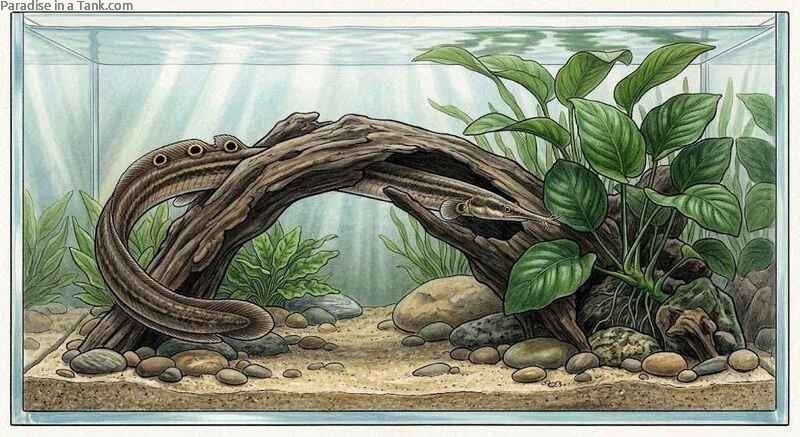
When you finally bring your new eel home, never dump the store’s travel water directly into your aquarium. The chemical profile and temperature of the retail water will be completely different from your home system, and exposing the fish to an abrupt shift will cause severe, often fatal osmotic shock. Instead, carefully pour the travel water and the eel together into a clean, chemical-free bucket.
Slowly add half a cup of water from your main display tank into the bucket, then wait exactly five minutes. Repeat this identical process every five minutes until the bucket contains far more water from your home system than the store. This patient, gradual transition allows the eel’s internal organs to adjust smoothly to your water’s specific hardness and temperature. Once the transition is complete, gently lift the eel out with a soft net, place it into your aquarium, and discard the contaminated bucket water down the drain.
Feeding Dynamics and Waste Management
Peacock eels are highly specialized carnivores that possess an intense evolutionary drive to hunt. They are notoriously stubborn and will routinely ignore processed flakes, dry pellets, or freeze-dried formulas. To stimulate their predatory instincts and prevent starvation, you must supply them with high-quality live foods like bloodworms, brine shrimp, and small earthworms that they can actively track down in the sand.
Providing the proper nutrition requires patience, as these fish hunt primarily by scent under the cover of darkness. If you are struggling to get a new addition to strike at food during the day, you must learn how to troubleshoot an eel that refuses food to prevent nutritional deficiencies. Feeding them right before you turn off the room lights for the night ensures they can forage peacefully without being outcompeted by faster tankmates.
Actionable Feeding and Substrate Maintenance Toolkit
- Targeted Night Feeding: Use a long aquarium pipette to deposit live worms directly into the sand near the eel’s favorite hiding spot after dark.
- Routine Food Scrap Removal: Use a gravel vacuum to siphon away dead, decomposing worms from the sand bed every single morning.
- Weekly Water Replenishment: Drain and replace a minimum of twenty percent of the total tank volume every week to dilute lingering organic wastes.
- Dechlorinator Application: Always treat fresh tap water with a premium conditioner to neutralize toxic chlorine before it touches your tank.
Because live foods and frozen worms break down incredibly fast if left uneaten, these fish can create a massive amount of hidden pollution. If you are overly generous with your portions, the excess meat will quickly rot beneath the sand, causing a massive spike in your aquarium’s organic waste load. To prevent these invisible toxic plumes from fouling your water, you must focus on strictly managing the tank bioload through disciplined feeding portions and rigorous mechanical filtration.
Proactive Disease Prevention and Tank Hygiene
Because a peacock eel’s skin is highly porous, the species is exceptionally vulnerable to chemical poisoning from everyday household products. You must never allow synthetic detergents, soaps, or glass cleaners to contaminate your aquarium equipment. When scrubbing out your maintenance buckets, algae sponges, or nets, utilize nothing but hot water and physical elbow grease to ensure zero toxic residues remain behind.
Furthermore, you must remain hyper-aware of the surrounding air quality in the room where your aquarium sits. Airborne contaminants like synthetic air fresheners, harsh cooking fumes from the kitchen, and chemical bug sprays can easily dissolve into the water surface and poison your fish. Always keep the aquarium hood tightly sealed, position scent diffusers far away from the intake pumps, and completely cover the top of the tank with a thick towel if you must spray insecticides inside the room.
Immediate Illness Warning Symptoms
- Lethargic Bottom Drifting: The eel lies completely limp on top of the sand for hours without attempting to bury itself.
- Severe Abdominal Bloating: The stomach swells outward unnaturally, indicating a serious internal blockage or bacterial infection.
- Sticky Stranded Feces: The fish trails thick, pale, mucous-like waste that remains attached to its body.
- Erratic Tilted Swimming: The eel loses its balance, swimming completely upside down or listing hard to one side.
If you observe any of these critical warning flags, you must take corrective action before the underlying pathology becomes irreversible. Depending on the exact diagnosis, you may need to gradually raise the water temperature, introduce specific aquarium salts, or move the fish into a bare hospital tank for targeted medication. Catching these symptoms in their infancy is the absolute key to saving a compromised oddball fish.
Tank Scaling and Long-Term Space Requirements
While a young peacock eel might look small and manageable in a retail display, they are capable of growing up to twelve inches in length as mature adults. As their physical frame expands over the years, their territory must expand proportionally to prevent chronic crowding. Failing to upscale their environment causes severe muscle atrophy, stunting, and heightened territorial aggression.
While a single twelve-inch adult can survive in a thirty-five-gallon long aquarium, keeping these highly intelligent fish in complete isolation is never recommended. They thrive much better and display far more natural, confident behaviors when kept in small groups of their own kind. However, adding more heavy-bodied eels means you must dynamically scale your water volume to handle the increased physical waste and prevent territorial clashes over prime burying spots.
For every single additional twelve-inch peacock eel you want to introduce alongside your original fish, you must increase the base size of your aquarium by an additional twenty gallons. For example, if you wish to keep a thriving, social colony of four mature adult peacock eels, you must house them in a long aquarium that holds at least ninety-five gallons of water. By providing this expansive, beautifully tailored space, you will guarantee your eels the rich, long life they deserve while securing the ultimate peace of mind for yourself. Good luck!