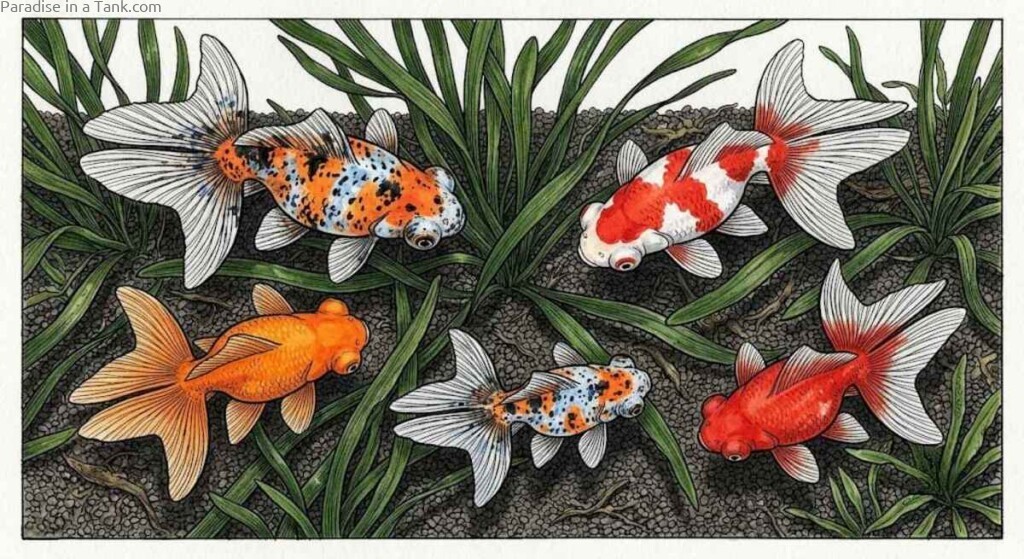
What is a Butterfly Tail Goldfish (Carassius auratus)?
The butterfly tail goldfish is a premium fancy goldfish variant defined by its dramatic, horizontally spreading caudal fin that mimics a butterfly’s wings when viewed from above. Thriving in water temperatures of 65–75°F, a pH of 7.0–8.0, and 0 ppm ammonia, this variety requires specialized, low-flow husbandry to protect its delicate fin structure.
If you have ever stood over a shallow pond and seen a flash of living art glide beneath the surface, you have likely encountered the sheer majesty of the butterfly tail goldfish. Belonging to the ancient lineage of Carassius auratus, these fish are not your standard hardy pond dwellers that can be thrown into a muddy puddle and left to fend for themselves. They are the product of centuries of meticulous selective breeding, resulting in an animal that trades raw swimming speed for breathtaking aerial aesthetics. The ancestral evolutionary contract has been rewritten here; these fish have been deliberately shaped by human hands to be admired from above, making their care a disciplined exercise in environmental management.
When you bring one of these beauties home, you are stepping into the role of a custodian responsible for an incredibly specialized organism. Their bodies are deep, compact, and egg-shaped, which unfortunately compresses their internal organs and leaves them prone to swim bladder issues if their environment or diet goes sideways. They possess a double caudal fin that, rather than drooping down like a standard tail, flares outward horizontally toward the head. It is a stunning visual, but it acts like a massive parachute in the water, turning even the slightest current into an exhausting physical battle for the fish.
Understanding this variety means accepting that they are slow, clumsy, and completely defenseless against aggressive tank mates or rough water conditions. If you treat them like standard comets or common goldfish, you will quickly face disaster in the form of torn fins, fungal infections, or severe stress that shuts down their immune systems. They require a keeper who pays attention to the subtle physical feedback of the aquarium, from the accumulation of organic debris in the corners to the precise calibration of water flow.
The Taxonomy of the Butterfly Telescope and Butterfly Demekin Morphologies
To truly understand the butterfly lineage, we have to look closely at the anatomical mutations that define its primary sub-varieties. The term “Demekin” is the traditional Japanese designation for telescope-eyed goldfish, characterized by large, protruding ocular globes that push outward from the skull like spherical searchlights. When you combine this distinct cranial mutation with the horizontal spread of the caudal fin, you get the classic Butterfly Telescope or Butterfly Demekin. These bulging eyes are not just for show; they drastically alter how the fish interacts with its world, reducing its forward visual acuity and making it highly vulnerable to physical trauma.
In contrast, there are butterfly variants that retain normal, flat eyes while showcasing the spectacular tail structure, though the telescope-eyed variety remains the historical standard for show-quality fish. The biological development of these features begins early in the juvenile stage, where fry start out looking remarkably like standard fancy goldfish types before their eyes begin to telescope and their caudal stalks widen. As a keeper, you must realize that these bulging eyes are filled with fluid and covered by a thin, delicate layer of tissue that can easily rupture if scraped against a sharp rock or sucked into a filter intake.
Maintaining this specialized morphology requires an environment completely free of sharp edges or abrasive surfaces. The telescope mutation also compromises the fish’s ability to locate food quickly, meaning they rely heavily on their sense of smell to forage along the bottom. If they are forced to compete with fast-moving, normal-eyed fish, they will simply starve while their tank mates gobble up every morsel. It is a biological trade-off that demands a dedicated setup tailored specifically to their physical limitations.
The 180-Degree Rule: How Show Judges Grade Perfect Tail Symmetry
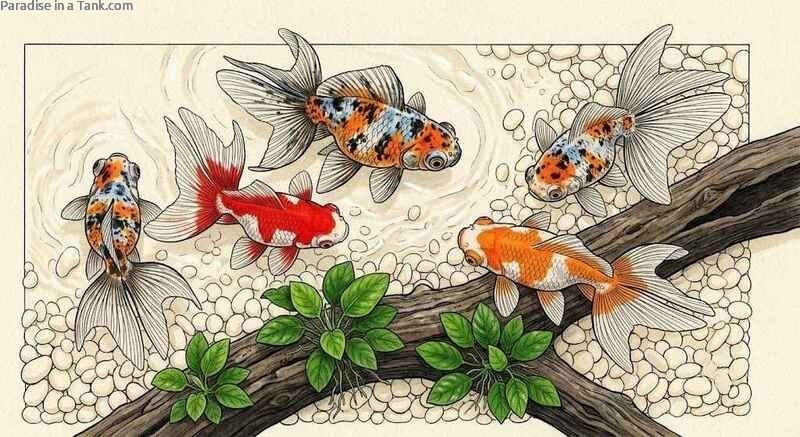
In the competitive world of fancy goldfish exhibition, the evaluation of a butterfly tail is governed by a strict geometrical standard known as the 180-degree rule. When a judge looks down at the fish from a top-view perspective, the ideal caudal fin must flare perfectly flat and perpendicular to the body axis, creating a flawless horizontal line across the base of the tail stalk. Any drooping, downward angling, or asymmetric twisting of the lobes immediately disqualifies the fish from top-tier ranking. The tail must split cleanly down the center, creating two perfectly balanced, mirrored halves that ripple gracefully as the fish propels itself forward.
Achieving and maintaining this structural perfection is an ongoing battle against genetics and environmental gravity. The caudal fins are supported by delicate bony rays that can easily bend or break if the fish is subjected to excessive water currents or poor water quality. If the water accumulates too much dissolved organic waste, leading to a nitrate buildup beyond 20–30 ppm, the edges of these magnificent fins will begin to fray, curl, and lose their rigid symmetry.
Show judges also look at the shape of the individual lobes; they should be broad, rounded, and resemble the wings of a swallowtail butterfly. The forward edges of the tail should ideally curve slightly toward the head of the fish without overlapping the pectoral or dorsal structures. For the everyday keeper, understanding these grading metrics helps you appreciate the physical health of your fish, as a drooping or clamped tail is the absolute first sign that your water chemistry is deteriorating or that the fish is suffering from underlying systemic stress.
Replicating the Ideal Habitat for a Butterfly Tail Variant
Top-View vs. Side-View: Setting Up Your Tank or Shallow Pond for Maximum Visual Appeal
Deciding how to house your butterfly tail goldfish requires a fundamental choice between a classic side-view aquarium and a specialized top-view setup. Because these fish were specifically engineered to be viewed from above, traditional deep aquariums often fail to showcase the true geometric beauty of their caudal fins. In a standard deep tank, you mostly see a compressed, egg-shaped body struggling against gravity, while the magnificent butterfly flare is hidden from sight. A shallow, wide tank or a dedicated indoor pond provides the ultimate viewing angle, allowing you to appreciate the full 180-degree spread every time the fish swims upward to investigate the surface.
Shallow environments also provide a massive advantage in terms of gas exchange and water pressure. Deep water creates higher hydrostatic pressure that can put undue stress on a fancy goldfish’s delicate swim bladder, increasing the risk of flip-over syndrome where the fish floats helplessly upside down. A water depth of 12–18 inches is the absolute sweet spot for these creatures, mimicking the shallow rearing ponds used by elite breeders in Asia. Whether you choose a wide rimless glass tank or a structured fiberglass pond tub, prioritizing surface area over vertical height ensures your fish have plenty of room to roam horizontally without exerting excessive energy to dive.
| Housing Parameter | Side-View Aquarium | Top-View Shallow Pond/Tank |
|---|---|---|
| Primary Visual Asset | Showcases body depth and eye protrusion clearly. | Reveals full 180-degree caudal fin symmetry perfectly. |
| Swim Bladder Risk | Higher due to deep water column pressure. | Significantly lower due to shallow 12–18 inch depth. |
| Gas Exchange Rate | Moderate, relies heavily on surface agitation. | Exceptional due to massive surface-to-volume ratio. |
| Maintenance Access | Requires deep reaching, prone to scratching glass. | Extremely easy to siphon debris from the floor. |
Protecting Delicate Fin Elements: Selecting Smooth Decor and Substrates
When designing the interior of a butterfly tail habitat, you must ruthlessly eliminate anything that could snag, tear, or puncture their delicate anatomy. This means traditional aquarium decorations like jagged dragon stone, rough lava rock, and plastic faux-plants are completely off the table. A single collision with a sharp edge can slice through a butterfly’s caudal ray like a razor blade, leaving an open wound that invites opportunistic bacteria like Flexibacter to take hold and cause systemic fin rot.
Instead, look to the natural environment and choose large, water-worn river stones that have been polished smooth by centuries of current. If you want to include wood, stick exclusively to smooth pieces of mopani or driftwood that have had any sharp twigs or splintered sections carefully sanded down. For substrate, you have two excellent paths: a bare-bottom setup or a layer of fine, cosmetic sand. Bare-bottom tanks are incredibly easy to clean, preventing the accumulation of rotting debris and fish poop in the substrate layer, though some keepers find them visually sterile.
If you prefer sand, choose a smooth, rounded grain size that won’t scratch the fish’s sensitive underbelly or irritate their mouths as they sift through it looking for food. Avoid coarse gravel entirely; these clumsy fish will inevitably pick up gravel pieces during foraging, and because of their compressed oral anatomy, the stones can easily get securely wedged in their throats, leading to sudden suffocation if you aren’t home to perform emergency extraction with tweezers.
Flow Control: Preventing Caudal Fin Damage from High-Powered Filters
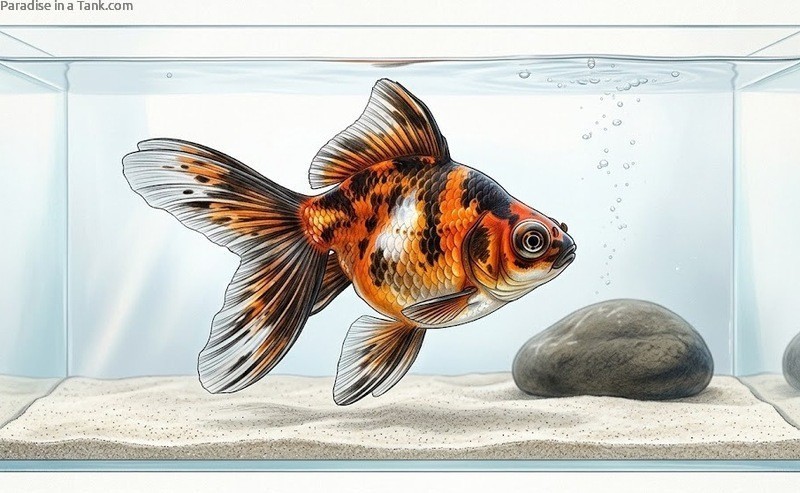
Filtering a butterfly tail tank is a delicate tightrope walk. On one hand, these fish are absolute waste production factories, producing massive amounts of solid poop and liquid ammonia that will rapidly spike your water parameters if your biological filtration isn’t robust. Your colony of Nitrosomonas and Nitrobacter bacteria must be massive to handle the load. On the other hand, the massive, sail-like fins of the butterfly tail mean that a standard high-output canister filter or hang-on-back power filter will create a washing-machine effect that pushes your fish around relentlessly, tearing their fins and exhausting them to the point of physical collapse.
To solve this, you must master the art of flow diffusion. Sponge filters driven by air pumps are an incredible choice for shallow setups, providing excellent biological filtration and gentle surface agitation without creating directional currents that force the fish to constantly swim for their lives. If you are using a canister filter, you must install a multi-directional spray bar along the back wall and spin the outlets toward the glass to completely shatter the force of the water column.
Keep your water turnover rate high but the velocity low. You want to see your butterfly tail gliding effortlessly through the water, not thrashing its body wildly just to stay in one place. Regularly check the mechanical intake tubes of your filters as well; always cover them with a pre-filter sponge to prevent a curious telescope eye or a trailing caudal fin from getting sucked into the slats and severely bruised or amputated.
Dietary Needs for Maintaining Premium Scale Pigmentation
Feeding your butterfly tail goldfish isn’t just about keeping them alive; it is about fueling their intense metabolic needs while actively preserving the brilliant red, orange, and calico pigments in their scales. Because of their highly compressed digestive tracts, these fish are incredibly prone to constipation and intestinal gas blockages, which immediately disrupts their buoyancy and causes them to float or sink like stones. To prevent this, completely avoid cheap, dry floating flakes that force the fish to gulp down air at the surface, which fills their digestive tracts with gas bubbles and triggers acute swim bladder distress.
Instead, base their diet on high-quality, sinking pellets that have been formulated specifically for fancy goldfish. Look for ingredients rich in natural carotenoids, such as spirulina algae, krill meal, and astaxanthin, which naturally enhance the depth and richness of their coloration without bleeding artificially into the water. Supplement this pellet staple with regular feedings of fresh, fiber-rich vegetables to keep their digestive systems moving smoothly.
- Actionable Dietary Toolkit for Fancy Goldfish:
- Blanched Shelled Peas: The ultimate natural laxative for clearing intestinal impactions and resetting buoyancy.
- Frozen Bloodworms: A clean, protein-dense treat that mimics ancestral foraging and boosts juvenile growth phases.
- Live Brine Shrimp: Stimulates hunting instincts and provides essential amino acids for strong caudal ray development.
- Blanched Spinach & Zucchini: Excellent sources of raw minerals that support overall scale health and structural integrity.
Remember to feed them in small, controlled amounts two to three times a day, only giving them what they can completely consume within 2–3 minutes. Because their telescope eyes limit their vision, drop the food in the exact same spot every day so they can learn to find it by smell and touch without wasting precious energy scrambling across the tank floor.
Slow-Moving Tank Mates: The Ideal Community Matrix
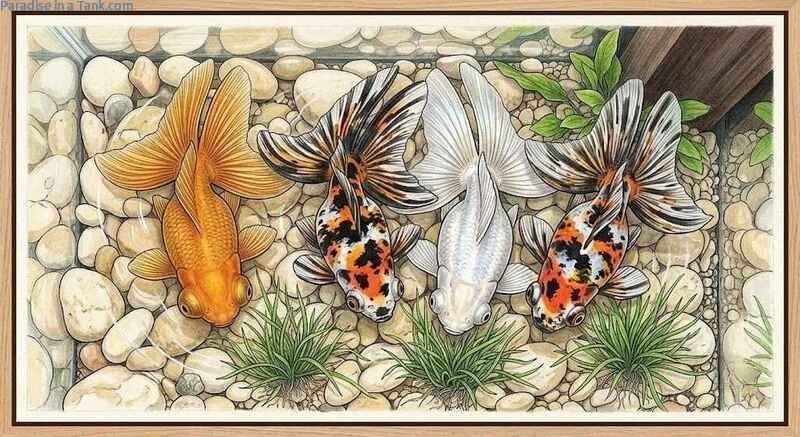
Choosing companions for a butterfly tail goldfish requires a strict commitment to the slow-moving, peaceful lifestyle. You cannot mix these specialized creatures with fast, streamlined fish like comets, shubunkins, or common goldfish. Those faster varieties will relentlessly outcompete your butterflies for every single pellet of food, leaving your prize fish malnourished and chronically stressed. Furthermore, you must completely avoid notorious fin-nippers like tiger barbs, serpae tetras, or even aggressive livebearers, which will see those trailing, butterfly-like caudal fins as a giant invitation to nip and chew, leaving your fish with shredded fins and open wounds.
The absolute best tank mates for a butterfly tail are other varieties of slow-moving fancy goldfish that share the exact same physical limitations. If you want to keep things running smoothly, check out our comprehensive guide to fantail goldfish care, as they make phenomenal, similarly paced companions. You can also successfully introduce other round-bodied varieties, such as black moors, orphelins, or the equally elegant veiltail variant.
To explore how to manage these other long-finned varieties alongside your butterflies, dive into our expert veiltail goldfish care setup analysis to ensure your entire aquatic community thrives in perfect, stress-free harmony. Keep the stocking density low—ideally providing at least 20–30 gallons of water for the first fish and 10–15 gallons for each additional fancy goldfish. By keeping the community restricted to slow, gentle giants, you create a peaceful ecosystem where your butterfly tails can display their ancient, elegant evolutionary heritage without fear of harassment or starvation.