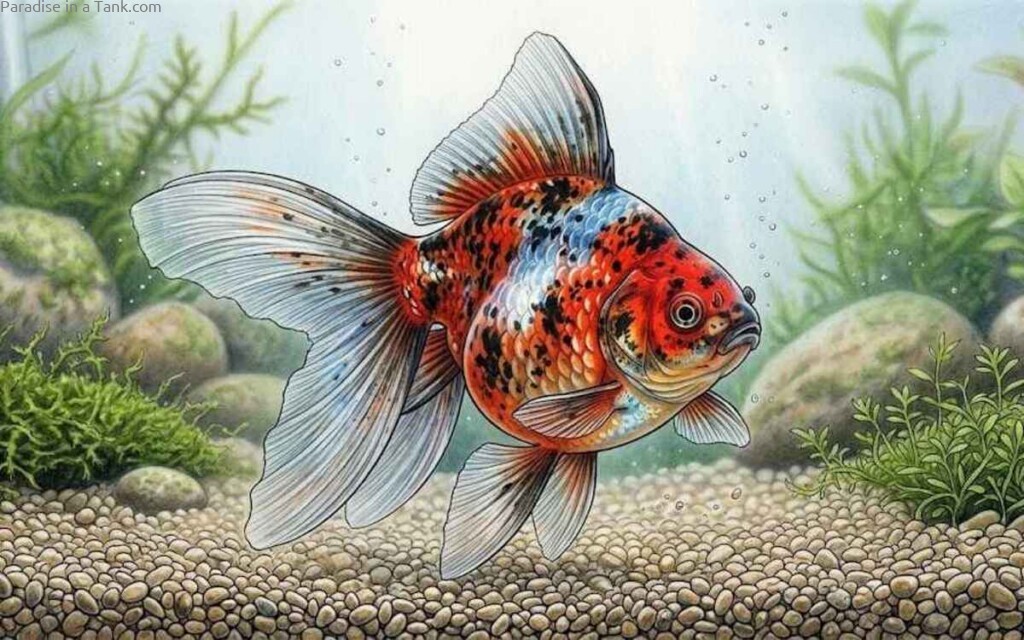
Understanding the Rare Veiltail Goldfish Variant
Veiltail goldfish care requires a strict minimum tank size of 30 gallons for a single specimen, maintaining a stable temperature between 65–72°F and a clean pH level of 7.0–8.0. Due to their extreme double caudal fins and spherical body anatomy, keepers must strictly utilize gentle filtration and highly specialized sinking pellet diets to prevent swim bladder dropsy.
The veiltail goldfish is not a creature built for the frantic currents of a wild river, nor can it tolerate the reckless, rough-and-tumble environment of a generic community tank. It is an exquisite, highly modified masterpiece of selective breeding that demands a disciplined custodian who understands the delicate balance between beauty and biological vulnerability. When you bring a veiltail into your home, you are accepting an unwritten contract to protect an animal whose very anatomy leaves it entirely at the mercy of its keeper.
These fish possess deep, egg-shaped bodies that pack their internal organs into an exceptionally tight physical space, making them highly susceptible to environmental shifts. Their glorious fins act like massive sails in the water, creating immense hydrodynamic drag that turns simple swimming into a high-energy workout. Without precise water management and intentional husbandry choices, these gorgeous living tapestries can quickly succumb to stress, fin rot, or swim bladder collapse.
History: The Origins of the Philadelphia Veil Tail Gold Fish Lineage
The storied lineage of the veiltail goldfish dates back to the late 19th and early 20th centuries, rooted deeply in the dedicated efforts of selective breeders in the United States, specifically around Philadelphia. This distinct variety originally arose from careful crossings involving imported Japanese fringe-tail varieties, where hobbyists meticulously selected for elongated, undivided fins and perfectly balanced, deep-bodied geometry. The goal was to establish a strain that exhibited unparalleled elegance, moving far beyond the standard traits found across other fancy goldfish types that were becoming popular globally at the time.
Maintaining the integrity of the true Philadelphia line proved to be an uphill battle, as the genetics governing these extreme fin traits are notoriously unstable. Uncontrolled crossbreeding frequently caused the majestic fin traits to degrade, resulting in shortened, split, or structurally weak fins that lacked the signature drape. Today, the true veiltail remains one of the rarest variants in the global hobby, requiring generations of isolated, intentional selection to keep the lineage pure and free from aesthetic regression.
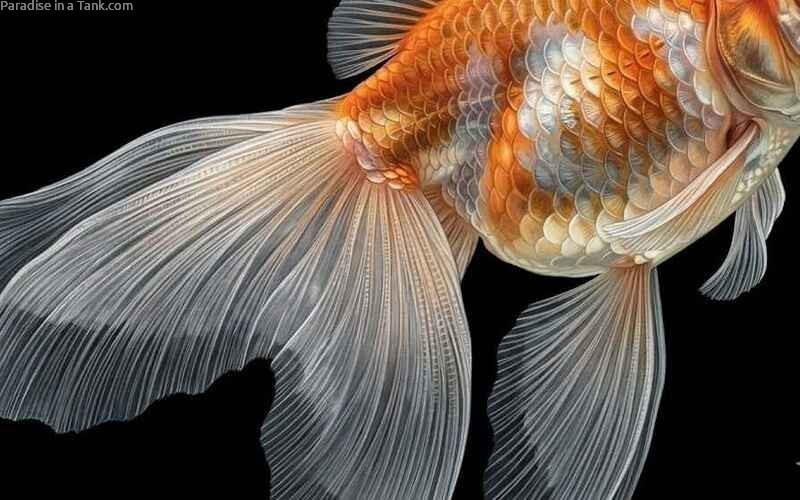
Fin Anatomy: Identifying the Long, Unforked Ribbon Caudal Fin Conformation
To correctly identify a true veiltail, you must closely examine the structural layout of the caudal fin, which sets it apart from more common variants like the standard fantail goldfish. The caudal fin must be entirely double, hanging down in a long, seamless ribbon that shows absolutely no indentation or forking along the trailing edge. When the fish is resting, this magnificent fin cascade should drop straight down like a heavy piece of silk fabric, completely free of any structural ripples or stiff, horizontal splits.
Beyond the tail, a show-quality veiltail must display a perfectly upright, tall dorsal fin that matches or exceeds the depth of the fish’s own spherical body. The anal, pectoral, and ventral fins must also be elegantly elongated and perfectly paired, creating a balanced silhouette that coordinates seamlessly during movement. Any sign of webbed fusion, asymmetry, or a visible fork in the tail trailing edge immediately disqualifies the specimen from being a true anatomical veiltail, pointing instead to a lower-grade cross.
Advanced Aquarium Care for the Sensitive Veiltail
Swim Bladder Vulnerabilities: How Compact Spherical Bodies Affect Buoyancy
The compact, highly compressed body shape of the veiltail comes with a severe biological trade-off: its internal organs are tightly packed into a severely compressed abdominal cavity. This structural compression forces the intestinal tract and the dual chambers of the swim bladder into an unnaturally cramped configuration where even minor issues cause trouble. When a veiltail ingests air or experiences slight constipation, the resulting intestinal swelling exerts immediate, direct physical pressure on the swim bladder chambers.
This internal pressure disrupts the delicate balance of gas regulation within the organ, causing the fish to lose its equilibrium almost instantly. You will notice your fish thrashing wildly to stay upright, tilting precariously to one side, or floating upside down at the surface like a cork. If left unaddressed, this constant physical compression leads to permanent organ damage, leaving the fish chronically disabled and highly vulnerable to secondary skin infections from surface air exposure.
Preventing Congested Fins: Water Quality Maintenance and Temperature Troughs
Because the flowing fins of a veiltail are packed with delicate, tiny blood vessels, they act as an immediate indicator for poor water quality and environmental stress. When waste products build up in the water column, these thin tissue membranes are the very first areas to suffer damage, manifesting as bloody streaks and ragged edges. You must maintain an absolute zero-tolerance policy for toxic spikes by implementing rigid water testing protocols using precise liquid testing kits.
- Ammonia Threshold: Must be maintained at exactly 0 PPM; any detectable level causes immediate chemical burns on the fin tips.
- Nitrite Threshold: Must remain strictly at 0 PPM to prevent lethal methemoglobinemia and profound tissue hypoxia.
- Nitrate Target: Keep consistently below 20 ppm through scheduled, routine water changes to prevent long-term immune system suppression.
- Water Temperature Range: Maintain a stable trough between 65–72°F; sudden temperature drops or spikes shatter the fish’s metabolic stability.
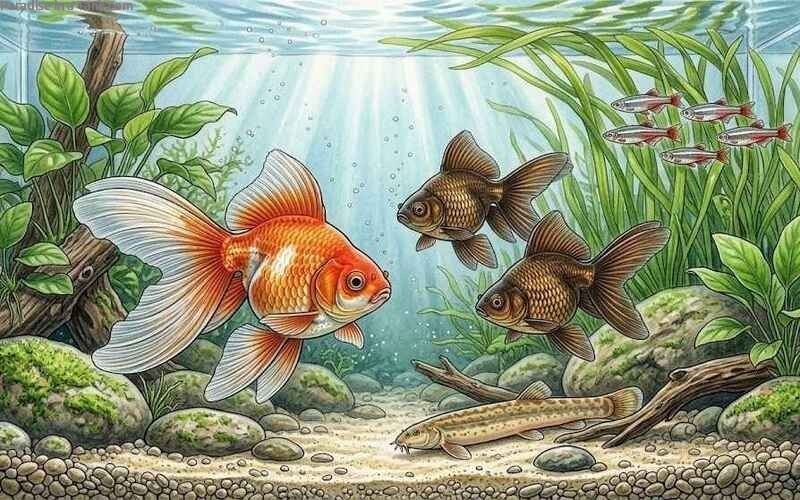
Tank Size Realities: Optimizing Horizontal Swimming Space for Heavy Fin Loads
Keeping a veiltail in a standard small aquarium or an un-filtrated bowl is an absolute death sentence that guarantees a painful, lingering demise. The immense weight of their trailing fin arrays requires ample room to move, meaning they need maximizing horizontal space rather than deep, vertical water columns. A single adult veiltail demands a absolute minimum of 30 gallons of open horizontal swimming space, with an extra 10–15 gallons added for every additional fancy roommate you introduce.
When selecting your filtration system, you must avoid high-output hang-on-back filters or powerful powerheads that create a chaotic, turbulent current throughout the tank. The heavy fin load makes it incredibly exhausting for a veiltail to battle strong water movements, forcing them to burn through vital energy reserves just to stay stable. Utilize large, dual-sponge filters driven by reliable air pumps or diffuse your filter output using wide spray bars to ensure thorough bio-filtration without creating a disruptive, exhausting current.
Sinking Diet Protocols to Prevent Intestinal Gas Crises
Feeding a veiltail requires an intentional rejection of standard floating flake foods, which force the fish to gulp down ambient air at the surface of the aquarium. Gulping air is a direct trigger for devastating buoyancy crises, as the trapped gas pockets cannot easily escape their compressed digestive tracts. Instead, you must rely exclusively on high-quality, rapidly sinking pellet formulations that allow your fish to graze naturally along the substrate.
| Dietary Parameter | Ideal Target Percentage | Primary Biological Function |
|---|---|---|
| Crude Protein | 35%–40% | Supports steady muscle development and continuous tissue repair across large fin surfaces. |
| Crude Fat | 5%–7% | Provides clean, easily accessible energy without causing dangerous fatty degeneration in the liver. |
| Dietary Fiber | 4%–6% | Keeps the packed digestive tract moving smoothly to prevent dangerous swim bladder impaction. |
To further safeguard your fish from dangerous blockages, make it a habit to pre-soak all dry pellets in a small cup of aquarium water for 2–3 minutes before dropping them into the tank. This allows the food to expand fully before ingestion, preventing it from swelling up inside the fish’s tightly packed stomach. Supplement this sinking pellet regimen twice a week with blanched, skinned garden peas and fresh daphnia to act as a natural, fiber-rich sweep for their delicate digestive systems.
Companion Selection: Keeping Aggressive Fin-Nippers Away from Your Veiltail
The slow, drifting movement of a veiltail makes it an incredibly tempting target for faster, more competitive tankmates looking for something to pick on. You must completely avoid fast-moving, streamlined fish like barbs, large tetras, or aggressive danios, which will relentlessly nip at the trailing fin tissues. These injuries open the door to devastating fungal infections and systemic fin rot that can quickly spread down to the caudal peduncle.
The most successful tankmates are other slow-moving, similarly handicapped fancy variants that share the exact same environmental and dietary needs. Consider housing them alongside elegant butterfly tail goldfish, as their similar swimming limitations ensure that no single fish can outcompete the others during feeding time. By keeping the social dynamics perfectly balanced, you eliminate feeding anxiety and create a peaceful, low-stress sanctuary where your rare veiltail can comfortably live out its full lifespan.