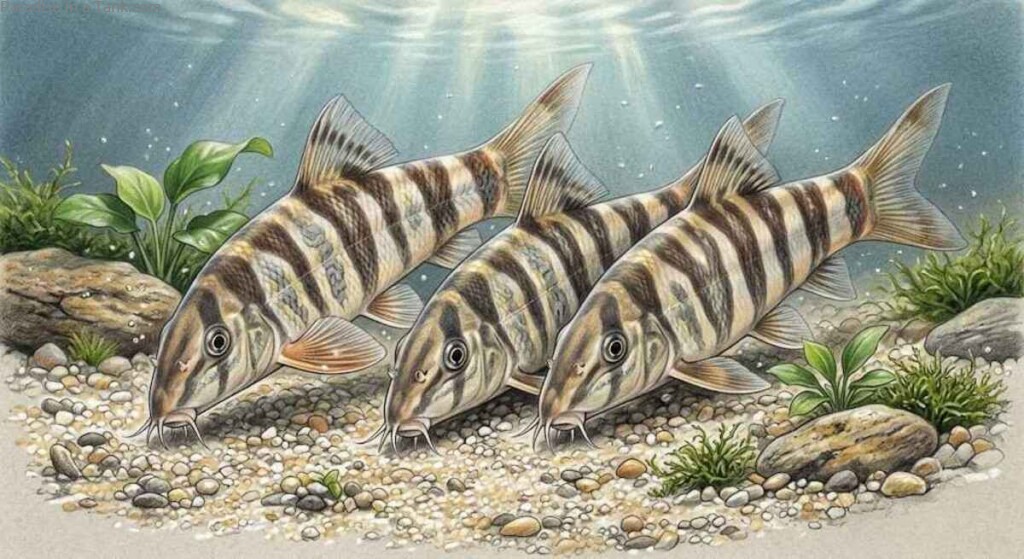
Fueling the Striped Hunter: An Overview of Zebra Loach Nutrition
Zebra loaches are opportunistic omnivores that require a diverse rotation of sinking commercial pellets, live foods like snails and mosquito larvae, and nutrient-dense freeze-dried options. To maintain their health and prevent them from rejecting food, you must frequently vary their diet with high-protein items, mimicking their natural predatory hunting instincts in the wild.
Zebra loaches are absolutely stunning creatures that easily become the vibrant centerpiece of any freshwater community aquarium. But let me give you a quick reality check: these beautiful fish can be incredibly picky eaters. It is heartbreakingly common for a keeper to watch their prized loaches suddenly refuse food altogether.
Often, this sudden hunger strike happens right after they are shifted to a new tank, or when they experience sudden fluctuations in water temperature and unexpected shifts in water parameters. If you feed your fish the exact same meal day after day, they will get bored of it. They will start consuming smaller quantities, pick at their food half-heartedly, or just stop eating entirely.
To honor the evolutionary contract you made when bringing these wild-hearted animals into your home, you must mix up their diet frequently. Providing a varied menu ensures your striped companions never grow bored of a single food item, while guarantees they receive a perfectly balanced, nutrient-dense diet. If you are currently dealing with a stubborn fish that refuses to look at its regular food, you should investigate why your Zebra Loach is not eating to quickly identify the underlying environmental stressors or behavioral issues before they starve.
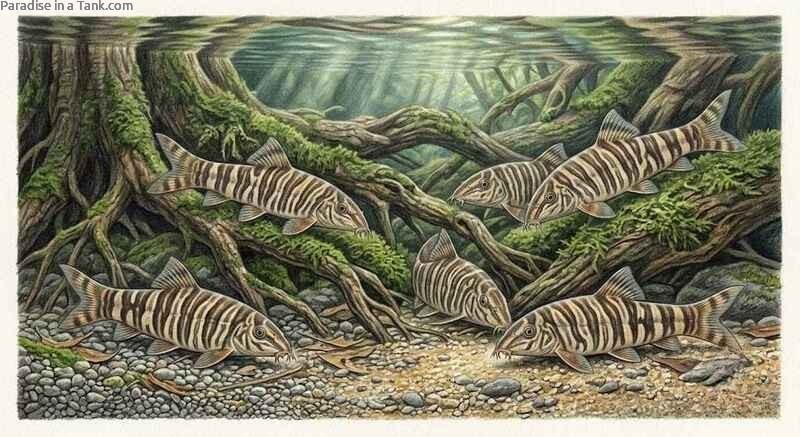
Commercial Base Diets: Sinking Pellets and Wafers
While live prey brings out their natural instincts, high-quality commercial foods form the predictable foundation of their daily nutrition. Because of their bottom-dwelling anatomy, standard floating fish flakes are completely useless. You need to rely on commercial flakes and specialized pellets that sink rapidly to the aquarium floor.
It is even better if you can source specific brands that are tailored explicitly for bottom-feeding loaches. These targeted formulations provide a dense concentration of essential vitamins and minerals that keep their immune systems firing.
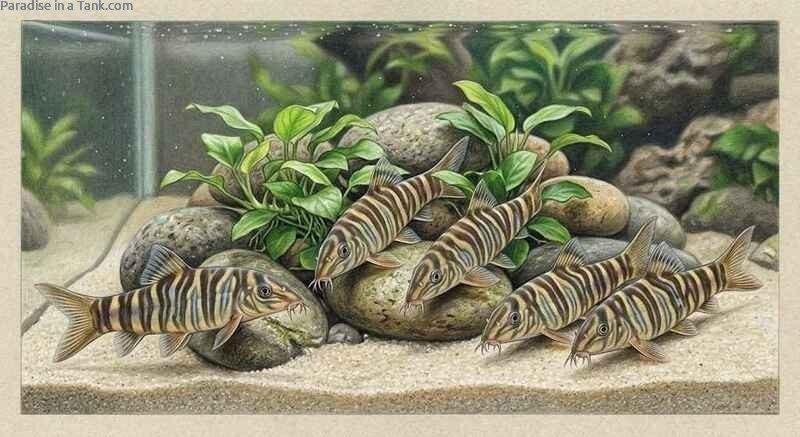
Healthy zebra loaches will readily accept sinking pellets and premium algae wafers. Watch them closely during feeding time; they should eagerly hover over the substrate, using their sensitive sensory barbels to locate the morsels before gobbling them up whole.
The Thrill of the Hunt: Live Foods for Wild Instincts
In the wild, these fish are active predators. They do not graze lazily on passing plant matter; they actively hunt, track, and destroy their food. When you introduce live, wriggling food into an aquarium, their ancient survival programming immediately kicks in, causing them to thrash and hunt the live food down exactly as they would in nature.
However, live food carries an inherent, dangerous catch. Cultured live prey can easily carry internal parasites inside their bodies, which can introduce devastating infections to your aquarium. If you are careless, you might wake up to find your entire loach population suddenly dead from a completely preventable outbreak.
Always maintain disciplined husbandry. Keep incoming live animals in a completely separate quarantine tank or a clean bucket for a few days, treating them with a broad-spectrum anti-parasite medication before offering them to your prized loaches.
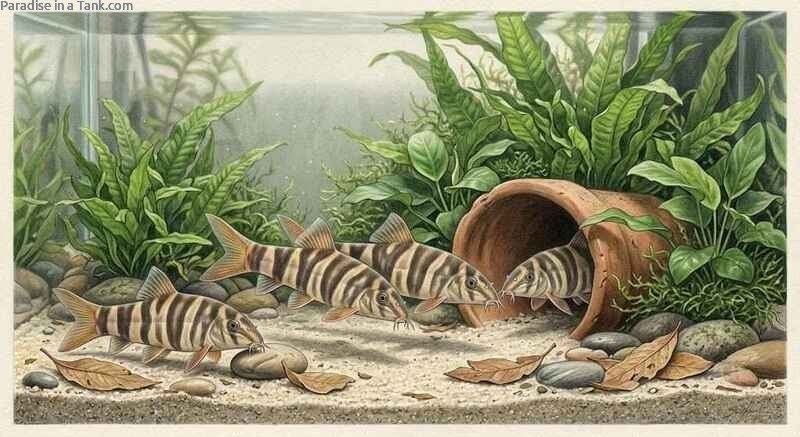
1. Snails: The Natural Infestation Solution
Zebra loaches absolutely love to eat snails. In the aquarium hobby, they are legendary snail executioners and are highly recommended for clearing out tank infestations. They will aggressively hunt down pond snails, ramshorn snails, and even small apple snails.
Because the loaches themselves remain relatively small throughout their lives, they are highly unlikely to go after large, mature snails. If you are struggling with an explosion of unwanted pests, learning how to safely remove snails from an aquarium will help you balance their natural hunting behavior with manual removal methods.
2. Mosquito Larvae: The Free Backyard Harvest
Catching fresh mosquito larvae requires practically zero financial investment on your part. All you need to do is place a clean bucket filled with water in an appropriate outdoor location and let nature take its course. It is an incredibly rewarding process that helps reduce the local backyard pest population while providing your fish with prime, active food.
While collecting these wrigglers is remarkably easy, you must exercise strict caution. Ensure the collection bucket is placed far away from areas where chemical runoff, pesticides, or other environmental contaminants can enter the water. If the outdoor water source becomes contaminated, the larvae will absorb those toxins, creating a lethal health hazard for your fish. If you want to master this sustainable food source safely, reading about how to properly culture mosquito larvae will ensure your harvest remains pristine and toxin-free.
3. Bloodworms: The Irresistible Wiggling Ball
Bloodworms are exceptionally high in protein and serve as an incredible conditioning tool for your loaches. In their natural state, these larvae curl up tightly against one another to form a dense, writhing ball. A single ball just an inch wide can contain well over a thousand tiny individual worms.
A hungry loach simply cannot resist the frantic wiggling movements of a bloodworm ball on the aquarium floor. You can easily find them online, at local fish stores, or through live bait suppliers. Just ask your supplier where they get them; commercial breeders offer a reliable supply all year round, whereas wild-harvested bloodworms from local water bodies are highly seasonal.
4. Earthworms: The Purged Garden Bounty
You can easily pick up fresh earthworms from local plant nurseries or harvest them from organic garden soil. Your loaches will instantly go after them the second they hit the water. However, if the earthworms are too large for your small loaches to swallow whole, you will have to chop them into manageable pieces first.
Be aware that chopping the worms kills them instantly, halting their movement. If you have an exceptionally stubborn loach that only responds to live, crawling prey, it might turn its nose up at a motionless, chopped worm. Additionally, earthworms are naturally coated in soil and slime. You must thoroughly rinse them under clean running water, then let them sit in a shallow bowl of clean water for a day or two. Change this purging water three to four times a day until it remains completely clear. Do not worry about them drowning; earthworms can easily survive underwater for a couple of days and will remain perfectly fresh and active.
5. Microworms: Tiny Fuel for Growing Fish
Microworms are a specialized type of tiny roundworm that require almost no maintenance to culture at home. They can be bred rapidly in massive batches using simple household containers. Their frantic, continuous wriggling movements make them completely irresistible to your fish, making them an excellent choice for stimulating sluggish bottom-dwellers.
Dehydrated Nutrition: Mastering Freeze-Dried Foods
Freeze-dried foods are essentially live prey items that have been rapidly preserved through a specialized freezing and drying process. They offer the exact same exceptional nutritional benefits as fresh, live food without any of the associated parasite risks.
Unlike unpredictable live cultures, freeze-dried options require no complex maintenance and can be safely stored in your freezer for weeks on end. However, because these foods are completely dehydrated, you must be incredibly disciplined with your portion sizes.
When foods are dehydrated, they lose water weight and reduce in overall mass by roughly three times. This means that if you feed your fish five grams of freeze-dried food, you are actually giving them the nutritional equivalent of fifteen grams of fresh food. Furthermore, these dehydrated items will rapidly absorb water and expand inside the loach’s stomach. If you are careless and overfeed, the expanding food can cause fatal bloating or internal blockages.
1. Tubeworms
Freeze-dried tubeworms are readily available at almost any local pet shop or online retailer. They typically arrive tightly packed into small, rigid cubes. To feed them safely, place a cube into a small cup of tank water for a couple of minutes to soften and partially rehydrate the worms before letting your loaches gobble them up. Alternatively, you can use your thumb to firmly press and squish the dry cube directly against the inside glass of the aquarium below the water level, allowing the loaches to pick at it as it slowly hydrates.
2. Bloodworms (The Fiber Warning)
Much like tubeworms, freeze-dried bloodworms are sold in convenient, compressed cubes. While they are packed with pure protein, they are naturally very low in dietary fiber. Because of this structural imbalance, you should never feed bloodworms as a daily staple diet, as doing so can easily trigger severe digestive issues and constipation.
3. Brine Shrimp: The Resilient Saline Snack
Brine shrimp, often referred to as artemia, are highly resilient primitive crustaceans that thrive in harsh coastal waters with up to twenty-five percent salinity. They are a staple of the aquarium hobby, widely available in freeze-dried forms, and boast an incredibly high protein profile. If you enjoy watching your fish hunt live prey, learning how to safely hatch and raise brine shrimp at home will give you a continuous, self-sustaining supply of clean, parasite-free live snacks.
4. Krill: The Ultimate Color Enhancer
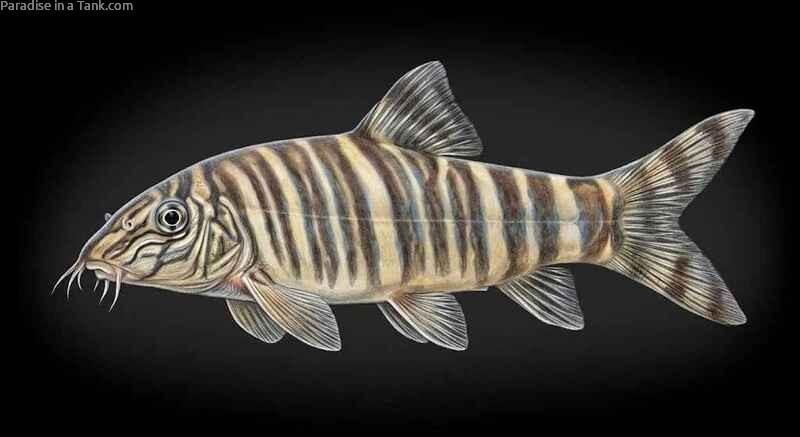
Krill are another specialized species of crustacean packed with natural vitamins and essential minerals that directly enhance the brilliant black-and-gold coloration of your zebra loaches. In a fascinating twist of biological scaling, the famous Antarctic krill actually represents the single largest creature on earth by sheer biomass.
If you were to gather and weigh every single human, whale, and land animal on earth, the global population of Antarctic krill would heavily outweigh them all, totaling an astonishing three hundred and seventy-nine million tonnes. This is an absolutely remarkable feat for a tiny creature that barely grows to two and a half inches in length.
5. Daphnia: The Secret Weapon for Juvenile Loaches
Daphnia are minuscule freshwater crustaceans that top out at a tiny five millimeters in length. They are almost invisible to the naked eye but provide a massive burst of vital vitamins. They are an absolute lifesaver if you are caring for small, young zebra loaches.
Because of their tiny size, daphnia are incredibly easy for juvenile fish to swallow compared to large snails or tough earthworms. Keeping young fish on daphnia is also the absolute best strategy for acclimating them to dried foods. A loach that is raised exclusively on wild live prey until adulthood will often stubbornly refuse freeze-dried options for the rest of its life.
The Carnivore’s Kitchen: Fresh Meats and Market Seafoods
If you want to step away from commercial pet products, you can explore fresh, human-grade meats from your local market. While these options can sometimes be a bit more expensive, the dramatic boost in dietary variety is absolutely worth the occasional extra cost.
1. Beef Heart: Pure Protein and Minerals
Fresh beef heart is not only a fantastic source of dense protein, but it is also packed with rich quantities of natural folate, zinc, and iron. To prepare it safely for your fish, thoroughly rinse the raw meat under clean water, use a sharp knife to completely remove every trace of attached fat, and chop the muscle tissue into tiny, bite-sized pieces that your loaches can comfortably swallow whole. Fat from warm-blooded mammals is incredibly difficult for fish to digest and can ruin their internal organs. You can easily prepare a large batch of chopped beef heart and store it safely in your freezer for up to three months.
2. Market Shrimp: Safe Shelling and Preparation
Fresh, raw shrimp purchased from your local seafood market is an absolute delicacy for bottom-dwelling loaches. When preparing raw shrimp, you must completely strip away the heads, legs, and sharp tail shells, as these rigid pieces can easily puncture the soft mouthparts or digestive tracts of your fish. Thoroughly rinse the deshelled meat under cool water and chop it into tiny pieces. Shrimp is naturally packed with essential minerals like selenium and phosphorus. Raw shrimp can stay perfectly fresh in your freezer for up to three months, whereas deshelled, boiled shrimp can remain safe to feed for up to ten months.
3. Fresh Fish: A Variety of Fatty Acids
You can experiment with almost any fresh, raw fish available at the market counter. You must carefully scrape away all scales, clip off the sharp fins, and remove any hidden bones before rinsing and dicing the meat. Different fish species offer unique nutritional profiles; some are heavily loaded with beneficial omega-three fatty acids, while others provide lean, clean proteins. Alternating between white-fleshed and red-fleshed fish is a brilliant way to ensure your loaches receive a truly balanced diet. While certain fatty fish can last for up to six months in a deep freeze, others spoil much faster. If you are ever unsure of a fish’s specific freezer lifespan, play it safe and feed it out completely within two months.
4. Crab Meat: Low-Fat High-Phosphorus Rules
Fresh crab meat is naturally low in fat and exceptionally high in bone-building phosphorus. However, your loaches lack the specialized crushing jaws needed to break open heavy armor, so you must manually extract every shred of meat from the hard shell before offering it to them. Raw crab meat can sit safely in the freezer for up to six months. However, you must never refreeze crab meat once it has been thawed, as this immediately invites rapid, toxic bacterial growth that will make your fish incredibly sick. To prevent waste, freeze the crab meat in tiny, individual portion packets meant for a single feeding, and always thaw them safely inside a bowl of cold water to keep bacterial growth at bay.
5. Mussels: The Cooked Superfood Formula
Fresh mussels are widely considered a true aquatic superfood. Their dense meat contains immense quantities of clean protein along with an unparalleled array of vital vitamins and minerals that far outclass standard livestock meats. However, unlike the other fresh options on this list, mussels require a very specific, disciplined cooking process to make them safe for storage.
You must first boil a pot of water, drop the fresh mussels in, cover the vessel tightly, and let them steam continuously for exactly five minutes. When you lift the lid, immediately discard any mussels that remain tightly closed, as they are completely bad. The good mussels will have opened wide, leaving the rich meat loosely attached to the inner shell. Drain them thoroughly, place the meat into an airtight container, and freeze them immediately. When prepared using this exact method, they will stay perfect for up to four months. Just like crab meat, never refreeze thawed mussels; only thaw what you need immediately before a feeding using cold water.
Mastering the Rotation: A Weekly Feeding Matrix
To ensure your zebra loaches maintain peak vitality and never experience dietary boredom, use the structured feeding guide below to plan a balanced weekly rotation.
| Food Category | Primary Nutritional Benefit | Ideal Feeding Frequency | Critical Preparation Step |
|---|---|---|---|
| Sinking Pellets & Wafers | Balanced daily vitamins and trace minerals. | 3 to 4 times per week as a clean baseline. | Drop directly into the tank; ensure it sinks to the floor. |
| Live Snails & Larvae | Stimulates natural predatory hunting instincts. | 1 to 2 times per week for enrichment. | Quarantine live items to prevent dangerous parasite outbreaks. |
| Freeze-Dried Cubes | High protein density without parasite risks. | 1 to 2 times per week as a safe treat. | Pre-hydrate in tank water to prevent fatal stomach bloating. |
| Fresh Market Meats | High concentrations of iron, zinc, and phosphorus. | Once a week for supreme dietary variety. | Completely strip away all mammal fat, bones, and sharp shells. |
By committing to this disciplined variety of fresh, live, and high-quality commercial foods, you are doing far more than just keeping your fish fed. You are actively replicating the dynamic, predatory landscape their wild ancestors evolved to navigate, ensuring your striped companions remain active, colorful, and healthy for years to come.