The Core Nutritional Requirements of Lake Malawi Peacocks
Peacock Cichlids are opportunistic omnivores requiring a carefully balanced diet rich in high-quality vegetable matter and clean aquatic proteins. To maintain their dazzling colors and prevent fatal digestive blockages, you must feed them specialized African cichlid pellets alongside carefully prepared fresh vegetables, while strictly avoiding mammal or poultry meats.
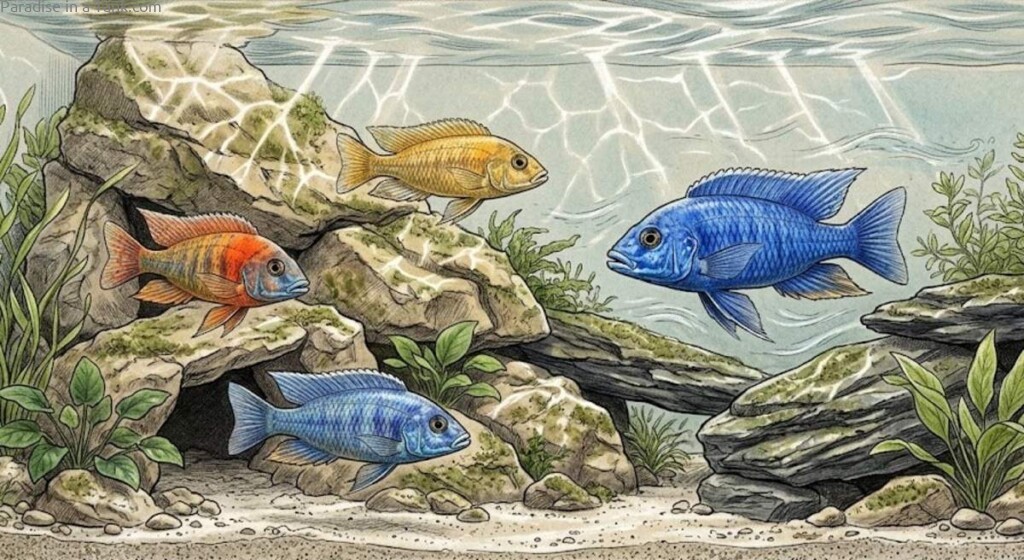
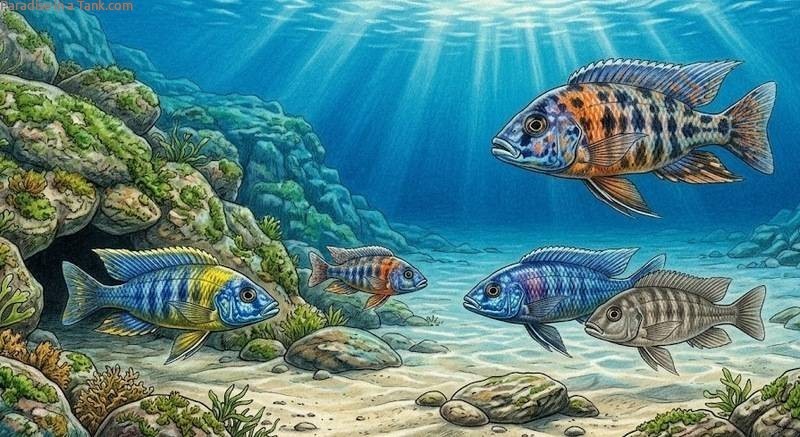
To understand what happens inside your aquarium, you must first look at the evolutionary history written into the anatomy of these magnificent fish. Hailing from the pristine, mineral-rich waters of Lake Malawi, Peacock Cichlids have spent millions of years adapting to a specific wild diet. In their natural habitat, they cruise over sandy substrates and rocky transitions, snapping up tiny invertebrates, insect larvae, and picking at nutrient-dense algae formations. They possess a highly specialized, elongated digestive tract designed to process high-fiber plant matter alongside highly digestible aquatic proteins.
When you trap these dynamic predators inside a glass box, you inherit the responsibility of matching that ancient biological blueprint. If you feed them heavy, dense fats or inappropriate proteins, their digestive tracks stall out entirely. The food rots inside their guts, producing foul gasses and triggering an opportunistic bacterial explosion. Understanding their native environment is crucial, so referencing a comprehensive Lake Malawi cichlid care guide helps replicate these parameters in your home aquarium.
The Danger of Monotony: Why a Fixed Diet Will Stall Your Fish
One of the most common traps beginner keepers fall into is the comfort of the single-food routine. You find a commercial pellet that your fish rush toward, and you decide to feed it to them morning and night, week after week. For a short time, everything seems perfect. Then, seemingly out of nowhere, your once-greedy Peacocks will strike against their food. They will look at the falling pellets, turn their noses up, and retreat into the back corners of the tank.
This sudden hunger strike triggers massive anxiety in keepers, leaving you wondering if a catastrophic disease has wiped out your filtration system. In reality, the fish have simply hit a wall of absolute dietary boredom. A monotonous diet causes nutritional deficiencies and slows down their metabolic drive.
To break this cycle before it starts, you must implement a strict rotational schedule. Mixing up their diet frequently ensures their digestive systems stay active and dynamic. By rotating fresh greens, specialized commercial staples, and clean proteins, you guarantee that your fish receive a complete spectrum of vitamins while keeping their predatory hunting instincts fully engaged.
Specialized Commercial Foods: The Staple Foundation
While fresh and live foods are incredible for conditioning, high-quality commercial flakes and pellets remain the indispensable backbone of your daily routine. However, you cannot simply walk into a big-box pet store and grab a generic jar of tropical fish food. Generic community fish foods are loaded with cheap fillers, land-based starches, and low-grade fish meals that will wreck the delicate digestive balance of your tank inhabitants.
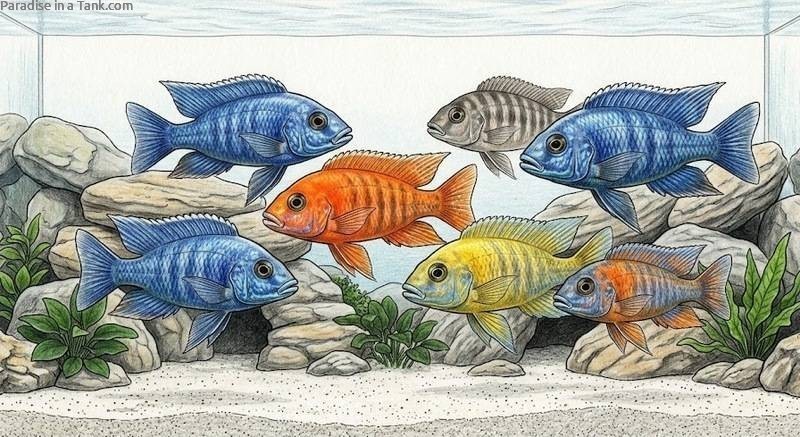
Your staple commercial food must be explicitly engineered for African rift lake inhabitants. High-quality brands formulate their feeds to perfectly mirror the precise plant-to-meat ratios required by these specific species. These specialized blends keep the water acidity and digestion optimal, ensuring the fish can extract nutrients efficiently without producing massive amounts of heavy, polluting poop.
While their rock-dwelling neighbors have slightly different needs, looking into what do Mbuna cichlids eat shows how specialized Lake Malawi diets truly are. Flakes work beautifully for juvenile fish, while slow-sinking pellets force adult Peacocks to hunt through the water column, mimicking their natural mid-water feeding behaviors.
The Essential Green Inventory: Safe Vegetables and Preparation Secrets
Vegetable matter must form a massive portion of your Peacock Cichlid’s long-term diet. Fresh greens are packed with natural antioxidants, vital trace minerals, and raw plant fibers that act like a broom through the fish’s long intestinal tract, sweeping out waste and keeping the immune system functional. However, you cannot just toss raw garden scraps into your tank; only a select handful of vegetables are safe for consumption, and they require meticulous preparation.
| Vegetable | Primary Nutritional Benefit | Preparation Method Required | Tank Safety Warning |
|---|---|---|---|
| Spirulina | Loaded with blue-green algae proteins and intense color-boosting pigments. | Feed as a pre-made commercial powder or pressed pellet. | None; highly digestible staple. |
| Green Peas | High fiber, iron, and protein; cures and prevents dangerous constipation. | Boil until soft, strip off the clear outer shells, and chop finely. | Uneaten fragments will sink and rot quickly. |
| Broccoli | Rich in Vitamins C and K; powerfully boosts the immune system. | Steam or boil until tender, then mince the florets into bite-sized pieces. | Can create a strong odor if left in the tank. |
| Cucumber | Excellent hydration and trace minerals; high water content. | Peel the tough outer skin completely and slice into small sections. | Extremely high water content; fouls tank water rapidly if overfed. |
| Zucchini | Rich in essential nutrients; highly engaging for natural nibbling behaviors. | Peel the skin entirely, boil until soft, and slice into chunks. | Must be removed within a few minutes to prevent intense water cloudiness. |
| Lettuce | Packed with Calcium, Potassium, Folate, and Vitamins A, C, and K. | Use Romaine or Iceberg; blanch in boiling water to soften the fibers. | Secure to a veggie clip and remove remaining leaves after feeding. |
| Sweet Corn | High in Thiamine, Magnesium, and plant-based proteins. | Boil thoroughly and crush the individual kernels to remove tough skins. | Feed in highly restricted, small quantities only. |
Among these greens, garlic deserves a special mention as a therapeutic powerhouse. While it shouldn’t replace actual medication during a severe outbreak, fresh garlic acts as an unmatched natural appetite enhancer and parasite deterrent. If you have a stubborn fish refusing a new food, mincing a tiny piece of fresh garlic and mixing its juices into the feed will almost always trigger a aggressive feeding response, while simultaneously helping the fish expel internal pests.
The Risks and Rewards of Live Foods: Parasite Protocols
Introducing live food to your Peacock Cichlids is the fastest way to trigger their wild predatory drives and watch them thrash across the aquarium in a natural hunting display. However, wild-caught or poorly managed live foods present a massive biological risk. Live organisms frequently act as vectors for devastating internal parasites, nasty flukes, and bacterial infections that can quickly turn your display tank into a zone of sudden death.
To shield your aquarium from catastrophic failure, you must establish a strict live-food quarantine protocol. Never dump live food straight from the pet shop bag into your aquarium. Instead, place the live animals into a separate, dedicated bucket or holding tank for several days. Treat this holding enclosure with a reliable anti-parasitic medication to purge the food items of any hidden hitchhikers before they ever get near your prized Peacocks.
Mosquito larvae are an incredible, cost-free option that you can harvest right in your backyard by placing a clean bucket of water in a shaded area. If you want to try this at home, mastering the art of how to culture mosquito larvae ensures a clean harvest. You must place the collection bucket in an area completely free from chemical runoff, lawn fertilizers, or flying insect sprays. Contaminated water creates toxic larvae that will poison your fish instantly upon ingestion.
Bloodworms are another wildly popular live food that Peacocks absolutely adore. These tiny organisms naturally cluster together on the aquarium floor, forming a tight, wiggling ball of intense protein. A hungry Peacock Cichlid cannot resist slamming into this ball of worms. Because bloodworms are incredibly dense and low in fiber, you must feed them very sparingly as an occasional treat to prevent metabolic bloat. Always source them from reputable commercial breeders rather than stagnant local ditches, as wild seasonal pools are often swimming with hidden biological contaminants.
If you prefer an earthier option, small earthworms sourced from organic plant nurseries make an excellent treat. If the earthworms are large, you must manually chop them into bite-sized pieces to prevent your fish from choking. Be warned that dead, unmoving worm pieces lose some of their visual appeal to predatory fish. Furthermore, earthworms are naturally coated in thick soil and internal mud. You must thoroughly rinse them under clean water, place them in a bowl of fresh water for twenty-four to forty-eight hours, and change that water three to four times a day until it stays completely clear before feeding. Do not worry about them drowning; earthworms can easily survive this purging process, leaving you with a clean, mud-free meal. For smaller or juvenile cichlids, tiny, easily cultured microworms offer an easy-to-swallow, low-maintenance alternative that triggers an instant feeding frenzy.
The Science of Freeze-Dried Feeds: The Dehydration Trap
Freeze-dried foods—including bloodworms, brine shrimp, krill, and daphnia—offer an exceptional middle ground for busy keepers. They preserve the raw nutritional integrity, vital minerals, and natural proteins of live food without any of the hassle of keeping live cultures alive in your home. You can simply stash them in your cabinet or freezer for weeks on end.
However, freeze-dried options carry a hidden physical danger known as the dehydration trap. The manufacturing process extracts almost all moisture from the organism, causing the food to reduce in physical mass and weight by roughly three times. This means that if you casually drop five grams of freeze-dried treats into your tank, you are actually introducing the nutritional and volume equivalent of fifteen grams of raw food.
The real danger occurs after the fish swallows the dry item. The moment the dehydrated food hits the moisture and gastric juices inside the Peacock Cichlid’s stomach, it acts like a sponge, rapidly expanding back to its original size. If your fish has gorged itself on dry treats, this internal expansion stretches the stomach wall, leading to severe constipation, internal tissue tearing, or fatal bloat.
To completely eliminate this risk, you must always pre-soak freeze-dried foods in a small cup of aquarium water for ten minutes before feeding, allowing them to expand fully outside the tank.
- Freeze-Dried Bloodworms: Packed with protein but completely lacking in essential fiber; must be strictly rationed to avoid gut blockages.
- Brine Shrimp: Tiny, highly digestible crustaceans that survive in waters with up to twenty-five percent salinity. Learning how to hatch and raise brine shrimp gives you a constant supply of this high-protein delicacy.
- Krill: A phenomenal crustacean bursting with natural carotenoid pigments that actively bring out the deep, radiant blues, reds, and yellows in your Peacock’s skin.
- Daphnia: Micro-crustaceans measuring a mere five millimeters; their tiny size makes them the absolute perfect introductory protein for fragile juvenile cichlids.
The Seafood Delicacies: Fresh Market Treats
When you want to give your Peacocks a premium conditioning boost, you can look directly to the fresh seafood market. However, you must adhere to a strict biological boundary: Peacock Cichlids cannot handle meats derived from warm-blooded mammals or land-based poultry. Feeding your cichlids beefheart, chicken, or pork is an absolute death sentence. Their ancestral digestive tract completely lacks the specific enzymes needed to break down mammalian fats, causing the meat to solidify in their gut, block their digestive highway, and trigger a fatal case of Malawi bloat.
Clean, raw market shrimp is an outstanding substitute. To safely prepare it, you must meticulously strip away the sharp head, spindly legs, and stiff tail fan. These rigid, calcified parts are razor-sharp and can easily puncture the throat or stomach lining of your fish. Once shelled, rinse the raw meat under brisk running water and mince it into tiny, swallowable pieces. Raw shrimp is highly concentrated in selenium and phosphorus, and it can be safely stored in your freezer for up to three months.
You can also offer your fish fresh market whitefish or redfish fillets. Always strip away the coarse scales, tough fins, and every single sharp bone before rinsing and chopping the meat. Different fish species offer varying levels of beneficial omega-three fatty acids, making this an incredible way to inject vital variety into their routine. If you are uncertain of a specific fish’s freezer lifespan, ensure you feed it out entirely within two months to prevent the breakdown of beneficial oils.
Crab meat is another low-fat, phosphorus-heavy option that your Peacocks will eagerly tear apart. You must manually extract the sweet meat from the hard shell, as the fish cannot break through the armor themselves. Crab meat keeps beautifully in the freezer for up to six months, but you must follow one golden rule: never refreeze crab meat once it has been thawed. Refreezing invites rapid bacterial colonization that will spoil the meat and foul your tank. To keep things safe, portion the fresh crab into tiny, single-feeding packets before freezing, and always thaw them slowly in cold water to keep bacterial growth completely halted.
Finally, fresh green-lipped or blue mussels are widely recognized as an aquatic superfood. Mussel meat boasts an incredibly dense profile of natural proteins, vitamins, and trace minerals far exceeding standard market meats. However, mussels require a highly specific preparation method to guarantee long-term safety.
You must first boil a pot of clean water, drop the whole mussels in, close the lid tightly, and boil them for exactly five minutes. When you open the lid, inspect the batch immediately and throw away any mussels that have remained tightly closed. The safe, healthy mussels will have popped wide open, leaving the meat loose and easily accessible. Drain the good mussels, pack the meat into an airtight container, and freeze them immediately for up to four months. Always thaw them in cold water right before a feeding session to keep your tank clean, safe, and thriving.
Summary Toolkit: Dietary Threats and Contaminants Inventory
- Mammalian and Poultry Meats: Beefheart, chicken, and pork fat will solidify inside the long intestinal tracts of rift lake cichlids, inducing fatal blockages and rapid bacterial bloat.
- Unquarantined Live Foods: Organisms sourced directly from unverified pet store tanks or stagnant wild pools frequently introduce parasitic flukes and internal worms.
- Dry Freeze-Dried Foods: Feeding un-soaked dehydrated treats leads to rapid expansion within the fish’s stomach, causing severe internal pressure and swim bladder distress.
- Sharp Shell Fragments: Shrimp tails, crab armor, and fish bones can easily lacerate the soft internal throat tissues of your fish during aggressive feeding thrashes.
- Refrozen Seafood Items: Thawing and refreezing market seafood allows dangerous bacterial blooms to coat the meat, leading to severe tank water contamination.
- Generic Filler Flakes: Cheap community fish foods containing heavy terrestrial grains create massive amounts of physical waste and lack the proper plant-to-meat ratios.