The Ancestral Gut: Why Mbuna Nutrition Can Make or Break Your Tank
Mbuna cichlids require a high-fiber, plant-based diet primarily consisting of algae and specialized leafy greens to survive in captivity. Because their exceptionally long digestive tracts are built exclusively to process low-calorie aquatic vegetation, feeding them heavy mammalian meats, dense land proteins, or improper vegetables causes catastrophic blockages, toxic internal decay, and fatal Malawi bloat.
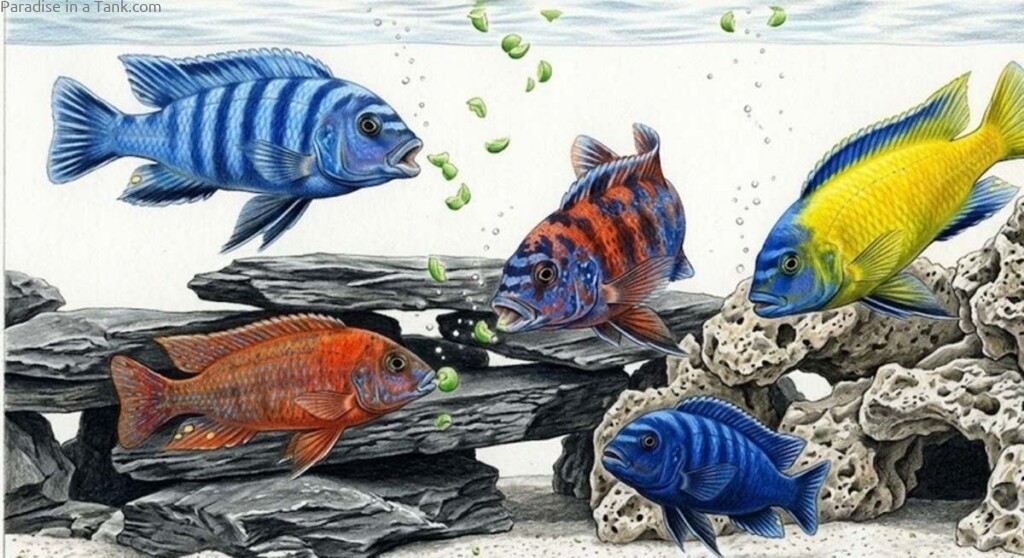
To successfully keep these remarkably vibrant African cichlids, you must first throw out everything you think you know about standard community fish nutrition. In their native home of East Africa, these rock-dwelling behaviorally intense fish are highly specialized grazers. They spend their entire lives scraping tough, fibrous mats of blue-green algae and microscopic organisms off the sheer underwater rock faces. Evolution equipped them with an exceptionally long, winding intestinal tract to slowly extract nutrients from this low-calorie roughage over a continuous feeding cycle.
When you introduce rich fats or dense animal proteins into this ancient plumbing system, the entire mechanism grinds to a sudden halt. The food cannot pass through the elongated gut fast enough, stalling out and beginning to rot inside the living fish. This stagnation suffocates the beneficial gut flora and triggers an explosive overgrowth of opportunistic protozoans and harmful bacteria. Before you know it, you are looking at a full-blown case of Malawi bloat, which is devastatingly difficult to reverse once the physical swelling begins.
You must adapt your feeding strategy to their ancient instinctual programming rather than forcing them to adapt to convenient human domestic fish foods. If you pester them with standard tropical flakes day after day, you are actively asking for trouble. Understanding the specific differences between these fish and other species is key, which is why checking out a comprehensive Lake Malawi cichlid care guide is an excellent way to ground your foundational husbandry knowledge.
The Core Staples: Engineering the Daily Pellet and Algae Rotation
While raw ingredients are fantastic for long-term vitality, high-quality commercial foods provide the necessary daily vitamin profile your fish need to truly thrive. However, walking into a local pet shop and grabbing the first generic jar of tropical fish flakes you see is a direct one-way ticket to a ruined aquarium.
Specially Formulated African Cichlid Pellets
You must select commercial pellets or flakes specifically engineered for herbivorous African cichlids. These formulations mimic the exact nutrient ratios of the wild lake environment, packing the food with aquatic plant matter rather than cheap fish meal fillers that cause severe intestinal impaction. Look for brands that list kelp, whole aquatic plants, and natural fibers as the primary ingredients.
Preventing Diet Boredom and Sudden Hunger Strikes
If you feed your colony the exact same dry pellet morning and night, week after week, they will experience sensory burnout. They will suddenly refuse to eat, leaving you panicking that a major disease outbreak has hit your display tank. To prevent this frustrating situation, you must rotate their menu frequently. A varied menu ensures complete nutrient coverage while keeping their aggressive hunting and grazing instincts incredibly sharp.
Cultivating Living Algae Blankets for Natural Grazing
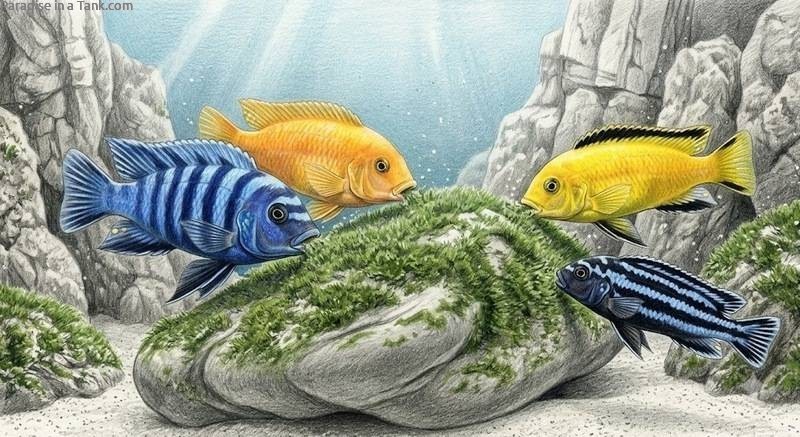
Instead of scrubbing your hardscape clean during every weekly maintenance session, you should actively encourage a thick layer of green algae to blanket your rocks. This acts as a permanent, living buffet for your inhabitants. Mbuna are hardwired to graze constantly throughout the day, and having a natural source of algae allows submissive or outcompeted fish to fill their bellies safely without stepping into the line of fire. When these territorial fish are left hungry because they missed a quick scheduled feeding, their ancient aggression kicks in, and they will start attacking and ripping into each other with deadly results.
The Safe Green List: Preparing Kitchen Vegetables for Immune Support
Fresh vegetables provide an abundance of raw fiber, essential minerals, and crucial antioxidants needed to keep your colony’s immune system functioning at peak capacity. However, you cannot just toss raw greens straight into the aquarium water. They must be prepared meticulously to prevent severe water column contamination and physical gut impaction.
Spirulina Algae
Spirulina is a nutrient-dense blue-green algae that perfectly matches what these fish scrape off the rocks in the wild. Available as a concentrated powder or compressed sinking pellets, it is packed with clean proteins, essential minerals, and potent antioxidants that ward off systemic infections. It is arguably the single most important dietary additive you can offer to keep their colors remarkably intense.
Boiled and Shelled Peas
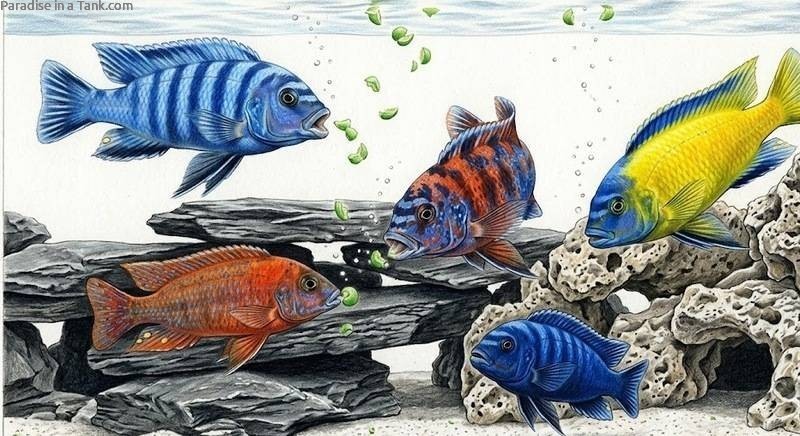
Peas are the ultimate preventative medicine for an African cichlid’s digestive tract. They act as a natural laxative, sweeping out lingering debris and preventing the dangerous constipation that leads to fatal swim bladder disorders. To prepare them, drop the peas in boiling water until soft, peel off the tough outer skin completely, and chop the soft inner core into tiny, easily swallowable pieces.
Steamed Broccoli Florets
Broccoli is an absolute nutritional powerhouse containing high levels of Vitamin C, Vitamin K, and potassium while containing virtually zero fat. Steam or boil the broccoli until it is tender, then finely mince the soft green heads before scattering them into the filter current.
Peeled Cucumber Disks
Cucumbers offer a refreshing, hydrating treat, but because they are overwhelmingly made of water, you must exercise extreme caution. Completely peel away the tough outer skin and offer only a tiny amount at a time. If you leave large chunks of cucumber rotting in the tank, it will quickly dissolve into a mushy mess and ruin your water clarity overnight.
Raw Garlic as an Appetite Stimulant
Garlic works absolute miracles in an African cichlid aquarium. If you are dealing with stubborn, stressed fish that refuse to accept a new food type, finely mince raw garlic and mix its juices directly into the meal. The intense aroma acts as a powerful appetite enhancer. Additionally, garlic contains natural compounds that help the fish fight off internal parasites, speeding up their recovery when paired with proper aquarium husbandry.
Blanched Zucchini Slices
Zucchini must be completely peeled and boiled until soft before serving. You can drop a couple of small pieces into the tank and watch your fish happily nibble away at the soft flesh. Never leave zucchini in the water for more than a few minutes after they finish eating, as it breaks down rapidly and fouls the water column.
Crisp Lettuce Leaves
Romaine and Iceberg lettuce are highly accessible options packed with Calcium, Potassium, and Vitamin A. Secure a fresh leaf to a vegetable clip or weigh it down with a clean rock so the fish can easily tear off bite-sized sections without sending the leaf floating into your overflow box.
Soft Corn Kernels
Boiled corn can be offered as an occasional treat in very small quantities. It delivers an abundance of Thiamine, Folate, and Magnesium, but its high natural starch content means it should never become a daily staple.
| Vegetable Target | Preparation Steps | Primary Health Benefit |
|---|---|---|
| Spirulina Algae | Feed directly as a commercial powder or specialized pellet form. | Replicates ancestral wild diets, boosting color and systemic immunity. |
| Green Peas | Boil thoroughly, strip away the outer skin, and chop the core. | Clears out intestinal blockages and prevents swim bladder issues. |
| Broccoli Florets | Steam until soft and mince the heads into tiny pieces. | Delivers large doses of Vitamin C and K with zero dangerous fat. |
| Fresh Cucumber | Remove all outer skin and slice into highly controlled portions. | Provides trace mineral hydration but requires strict portion control. |
| Raw Garlic | Mince into tiny bits or press juices directly onto pellet mixes. | Acts as a powerful appetite enhancer and fights off internal parasites. |
| Zucchini Slices | Peel the skin, boil until tender, and remove leftovers quickly. | Encourages natural communal grazing behaviors without heavy proteins. |
The Meaty Reality: Handling High-Protein Treats Without Triggering Bloat
While these fish are primarily herbivores, they are opportunistic and will snap up passing protein sources in the water column. However, land-based animal meats like chicken or beef are strictly toxic to their digestive systems and will bring on a rapid bout of fatal bloat. Any supplemental meat must come exclusively from clean aquatic sources and must be spaced out as rare, controlled treats rather than daily meals.
The Hidden Parasite Threat in Live Prey
Live foods can carry dangerous internal pathogens directly into your clean aquarium. If you choose to use live prey, it is vital to quarantine the live animals in an isolated bucket or separate tank for several days, treating them with prophylactic anti-parasitic medications before offering them to your prized cichlids. Utilizing dedicated quarantine tanks for anything entering your primary ecosystem is a golden rule of high-level aquarium keeping.
Mosquito Larvae
An excellent, zero-cost live food option that you can harvest using an outdoor bucket of fresh water. You can easily master the process by reading about how to culture mosquito larvae to ensure your harvest remains free of environmental toxins. Ensure the collection bucket is hidden away from areas where lawn chemicals, fertilizers, or urban pollutants can contaminate the water, as these toxins will pass directly into your fish.
Live Bloodworms
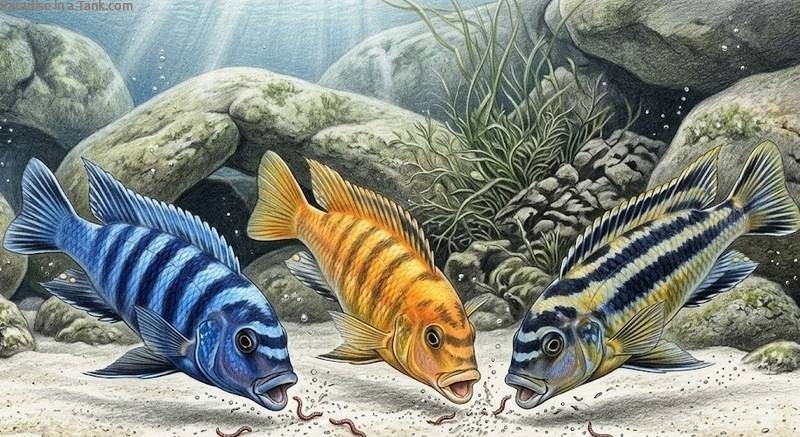
These deep red midge larvae are intensely rich in pure protein and must be fed with extreme restraint. They naturally ball up on the aquarium floor in wriggling clusters that hungry fish cannot resist. Only drop a tiny pinch into the tank to prevent your fish from gorging themselves and crashing their guts.
Purged Earthworms
Mbuna love earthworms, but they must be prepared meticulously to remove external dirt. Avoid large worms unless you chop them up into bite-sized pieces. Because earthworms are coated and filled with soil, you must rinse them thoroughly and submerge them in a clean bowl of water for a day or two. Change this water three to four times a day until it remains completely clear, allowing the worms to fully purge their digestive tracts before you feed them to your fish.
Cultured Microworms
These tiny, wriggling roundworms require almost zero maintenance to propagate at home. Their rapid, jerky movements stimulate the hunting instincts of your cichlids, making them an excellent high-protein snack when used in strict moderation.
Freeze-Dried Options: Rules for Safe Rehydration
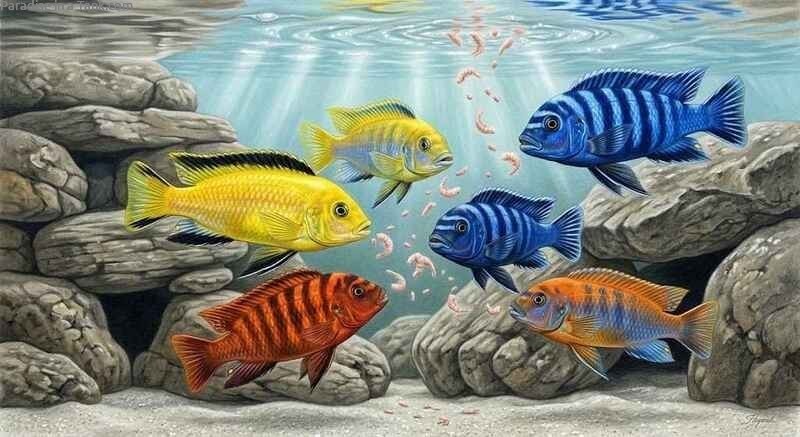
Freeze-dried foods are exceptional because they offer the exact same nutritional benefits as live food without the associated risk of introducing live pathogens or active parasites. You can safely store them in your cabinet for weeks at a time without worrying about spoilage.
However, the freeze-drying process completely dehydrates the food, shrinking its physical mass and weight by approximately three times. This means if you carelessly toss five grams of freeze-dried food into the tank, you are actually giving your fish the equivalent of fifteen grams of raw food. Even worse, once the fish swallow these dry chunks, the food will aggressively absorb moisture and expand inside the stomach. This rapid swelling can cause intense internal pressure, severe constipation, or structural damage to the gut wall.
Expert Custodian Warning: You must always pre-soak freeze-dried foods in a small cup of aquarium water for a few minutes before adding them to the tank. Let the food fully expand in the cup, not inside your fish’s stomach.
- Freeze-Dried Bloodworms: Sold in convenient, compact cubes. They provide an intense protein boost but lack the structural fiber these fish require, so restrict their use to a rare monthly luxury.
- Brine Shrimp (Artemia): Tiny, salt-tolerant crustaceans that offer an exceptional balance of protein and essential amino acids. Learning how to culture brine shrimp at home can provide a spectacular, clean alternative to dry commercial variants.
- Antarctic Krill: These small marine crustaceans are naturally loaded with vibrant carotenoid pigments, vitamins, and minerals that help bring out the brilliant, glowing blues, yellows, and oranges in your cichlids’ scales.
- Tiny Daphnia: Measuring a mere five millimeters in length, these microscopic water fleas are incredibly easy to digest. They are the ultimate protein source for young, growing juvenile fish that lack the mouth capacity to swallow larger prey items.
Fresh Seafood Market Treats: Preparation and Storage Protocol
If you want to supplement your fish’s diet with fresh ingredients from the local seafood market, you can use select marine meats as highly controlled treats. Never buy seasoned, pre-cooked, or chemically preserved seafood from the store counter.
Preparing Raw Shrimp
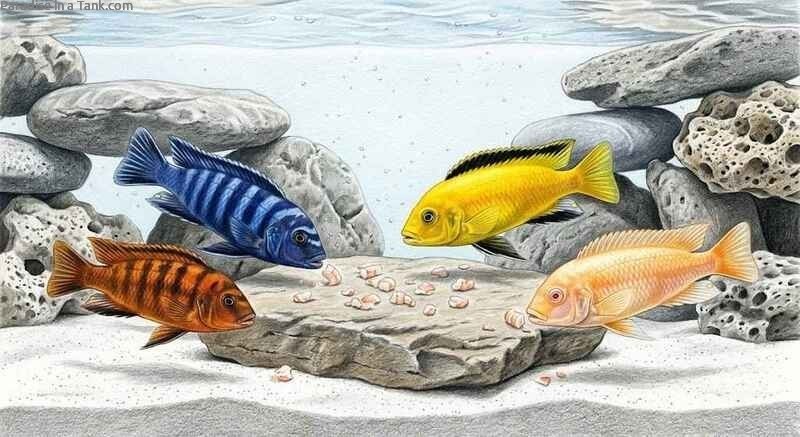
Fresh shrimp are highly nutritious, but you must remove the sharp heads, stiff legs, and pointed tails before feeding. These rigid, armored parts can easily puncture the delicate mouth lining or cause internal lacerations inside the fish’s throat. Rinse the raw white meat under clean running water, chop it into minuscule, bite-sized fragments, and freeze the rest. Raw shrimp will remain perfectly safe to use in your freezer for up to three months.
Market Fish Selections
You can use a wide array of white or red marine fish fillets to diversify your feeding regimen. Always strip away the scales, tough skin, and any hidden, sharp bones. Slice the raw flesh into small portions and use them up within two months to avoid the onset of freezer burn, which destroys the essential omega-3 fatty acids. If you ever experience a sudden disaster where your inhabitants display uncharacteristic mortality, reviewing the common reasons why aquarium fish died suddenly can help you pinpoint if a feeding mistake or water quality crash was the true culprit.
Crab Meat Storage Trick
Fresh crab meat is naturally low in fat and packed with bone-building phosphorus. You must extract the meat completely from the hard, crushing shell before feeding, or your fish won’t be able to process it. Because crab meat spoils rapidly and should never be refrozen once thawed, you should freeze it using a smart portioning trick. Divide the raw crab meat into tiny individual packets, with each packet containing just enough food for one single feeding session. When you are ready to feed, thaw the single packet quickly using cold water to prevent dangerous ambient bacterial growth.
Boiling and Storing Mussels
Mussels are a genuine aquatic superfood, holding far higher concentrations of pure protein, bioavailable vitamins, and trace minerals than almost any other meat source. However, unlike other seafood options, fresh mussels require a precise cooking and sterilization process before they can be safely stored in your freezer.
First, bring a pot of clean water to a roaring boil and drop the whole mussels inside. Cover the pot with a tight lid and let them boil continuously for exactly five minutes. Remove the lid and inspect the batch; if you find any mussels whose shells have remained tightly closed, throw them directly into the trash, as they were dead before cooking and are highly toxic. The safe mussels will have popped wide open, leaving the meat loosely attached to the shell. Pluck the soft meat out, drain away any excess water, seal them inside an airtight container, and place them into the freezer immediately where they will stay fresh for up to four months. Never refreeze them after thawing, and always thaw them in cold water right before a feeding session.
By maintaining a strict focus on high-fiber greens, choosing specialized commercial foods, and exercising extreme discipline with rich proteins, you will protect your colony from the agony of intestinal distress and enjoy a thriving, behaviorally dynamic aquarium for years to come.