Introduction to the Fascinating World of the Knifefish
Aquarium knifefish are specialized, nocturnal freshwater predators that require large tanks, dim lighting, high-quality filtration, and specific structural caves to thrive. Keeping these prehistoric, weakly electric creatures healthy means maintaining pristine water conditions, preventing raw ammonia spikes, and matching their unique predatory behaviors with compatible tankmates rather than treating them like standard community fish.
Entering the world of knifefish means stepping away from the predictable rhythms of typical community tanks and signing an unvarnished evolutionary contract with true masters of the freshwater underworld. These are not delicate ornaments that coast lazily through bright aquascapes; they are highly specialized, ancient survivors hardwired for darkness, structural cover, and stealthy predation. When you bring one into your home, you are forcing yourself to adapt to a lifestyle governed by millions of years of riverbed evolution. Neglecting their specialized requirements will not result in a slow decline—it will end with a catastrophic failure where you wake up to find your prize specimen suddenly dead from stress or a massive biological shock.
For the disciplined custodian of nature, however, keeping these creatures offers an unparalleled look into the raw, visceral reality of aquatic adaptation. They move through the water column with an eerie, ghost-like grace that looks almost supernatural to the untrained eye. But there is nothing supernatural about it; every movement is driven by hyper-engineered musculature and sensory networks that allow them to hunt, navigate, and dominate the absolute dark. If you are ready to ditch the sterile, entry-level assumptions of the hobby and step up to serious husbandry, you must understand exactly how these creatures function from the inside out.
The Evolution of the Fused Anal Fin Architecture
To understand how a knifefish maneuvers, you have to look at the massive, undulating ribbon running along the bottom of its body. This structure is a masterclass in biological engineering, representing a complete evolutionary overhaul of standard fish anatomy. While typical fish rely on their caudal fin—their tail—to slap the water and drive themselves forward, knifefish have completely decoupled their propulsion from their tail. Instead, their anal fin has elongated and fused along the entire length of their ventral profile, moving independently through rhythmic wave-like contractions.
This architectural shift gives them a terrifyingly efficient method of locomotion known as amiiform swimming. By undulating this single fin, they can reverse their direction instantly without turning their bodies, sliding backward into tight rock crevices or striking prey with surgical precision. Because their spine remains rigid during this process, their forward-facing sensory organs stay perfectly stabilized in the water column. They do not thrash or sway like a frantic trout; they slide through the shadows like a living blade, utilizing minimal energy to execute complex, multi-directional maneuvers that leave standard tankmates completely outclassed.
Understanding Weak Electrolocation and Nocturnal Habits
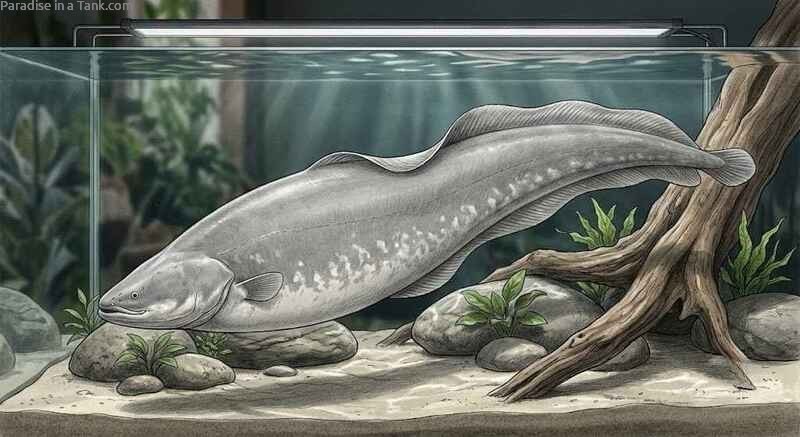
Living in the muddy, silt-heavy riverbeds of South America and Africa means relying on sight is a quick path to starvation. To survive, knifefish have evolved an active, weak electric field generated by specialized muscle tissues near their tail, creating a continuous sensory bubble around their entire body. They use these weak electric discharges to scan their environment, mapping out the physical landscape, tracking down hidden prey, and communicating with other members of their species in total darkness.
This electro-sensory grid makes them incredibly sensitive to their surroundings, meaning sudden environmental disruptions hit them like a physical blow. A poorly grounded aquarium heater, stray voltage from a cheap powerhead, or an uncontrolled surge of organic waste will overwhelm their internal receptors and drive them into states of severe, chronic stress. Because they are strictly nocturnal, their systems are programmed to hunt when the sun goes down, meaning they will spend daylight hours pacing around anxiously or hiding away if your lighting is too bright. If you do not provide them with absolute sanctuary during the day, their immune systems will crash, opening the door for devastating skin parasite outbreaks and lethal fungal infections.
Common Types of Ghost Knife Fish in the Aquarium Hobby
Navigating the marketplace for these animals requires a sharp eye and a total rejection of casual pet store labeling. Too many hobbyists walk into a shop, see a small, six-inch black ribbon swimming beautifully in a display tank, and buy it without realizing they are holding a biological time bomb that will eventually outgrow their setup. The hobby lumps many diverse species under the casual banner of “knifefish,” but their actual care requirements, adult sizes, and aggression levels vary wildly across different scientific families.
Before you commit your financial resources and tank space, you must know exactly which evolutionary lineage you are bringing home. Treating a massive, aggressive predator like a mild-mannered community resident is the fastest way to turn your aquarium into a scene of absolute carnage. Let us break down the underlying biological divisions so you can make an informed, responsible choice for your home system.
The Family Apteronotidae vs. Notopteridae Explained
The two primary families dominating the aquarium trade originate from completely different sides of the planet and possess vastly different anatomical setups. The family Apteronotidae represents the true ghost knifefishes of South America, characterized by their lack of a dorsal fin and their reliance on a continuous, high-frequency electric organ discharge. These fish are generally elongated, highly sensitive to water conditions, and rely on pristine, fast-flowing water that mirrors the oxygen-rich tributaries of the Amazon basin. They are vulnerable to shifts in water chemistry, meaning any buildup of toxic nitrite or raw ammonia will quickly damage their skin and shut down their electric organs.
On the other side, we have the family Notopteridae, commonly known as the featherbacks or feather knifefishes, native to Africa and Southeast Asia. These fish possess a small, distinct, feather-like dorsal fin and are structurally much more robust, heavy-bodied, and deeply compressed. Unlike their South American counterparts, many featherbacks possess a modified swim bladder that acts as an accessory breathing organ, allowing them to gulp atmospheric air when their water becomes stagnant or low in oxygen. This makes them incredibly tough, but it also matches a much more predatory, territorial, and aggressive mindset that can easily overwhelm unprepared keepers.
An Overview of the Popular Ghost Knifefish Variants
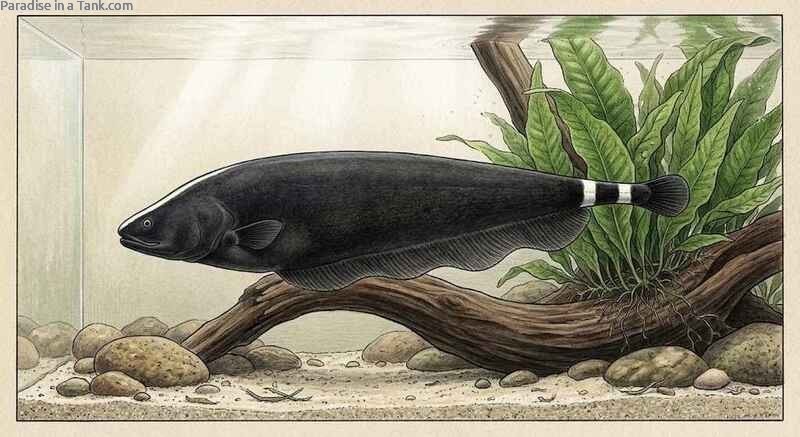
When keepers talk about the quintessential ghost variants, the conversation always centers on the Black Ghost Knifefish (Apteronotus albifrons). With its velvety black body, two distinct white rings on its tail, and a white stripe running down its nose, it is an undeniable showstopper. However, this species is notorious for its intolerance of its own kind; putting two of them in the same medium-sized tank will result in a relentless territorial war where they use their electric fields to pester and stress each other until one eventually dies. They require immaculate water care and should be viewed as a long-term commitment for keepers who can maintain a stable, well-filtered environment.
For those looking for something even more exotic, the Brown Ghost Knifefish (Apteronotus leptorhynchus) offers a slightly smaller, more cryptic alternative, though its husbandry demands remain practically identical. There are also rarer imports like the Glass Knifefish (Eigenmannia virescens), which features a semi-translucent body that allows you to see their internal organs working in real-time. The key takeaway here is that none of these variants are simple, beginner-friendly additions; they are complex organisms that demand a disciplined, proactive approach to tank management.
Choosing the Right Variant for Your Tank Setup
Selecting your fish is an exercise in cold, hard realism—you must balance your actual physical space against the biological reality of the species you want to keep. You cannot wish away an animal’s adult size, nor can you train a predatory beast to ignore its ancient hunting instincts. Your tank choice will dictate every aspect of your daily maintenance routine, your filtration choices, and your budget for years to come.
| Knifefish Category | Adult Size Potential | Minimum Tank Volume | Primary Behavioral Trait |
|---|---|---|---|
| Predatory Chitala Giants | 30 to 40 Inches | 250 to 300 Gallons | Aggressive apex hunters that swallow large tankmates whole. |
| Manageable African Featherbacks | 8 to 12 Inches | 75 to 90 Gallons | Secretive cave-dwellers that become highly territorial at night. |
| South American Ghosts | 12 to 18 Inches | 100 to 125 Gallons | High-strung electro-communicators requiring pristine water flow. |
To make sure you do not buy a species that will outgrow your home or destroy your current community, let us look closer at how these distinct lineages fit into specific aquarium configurations.
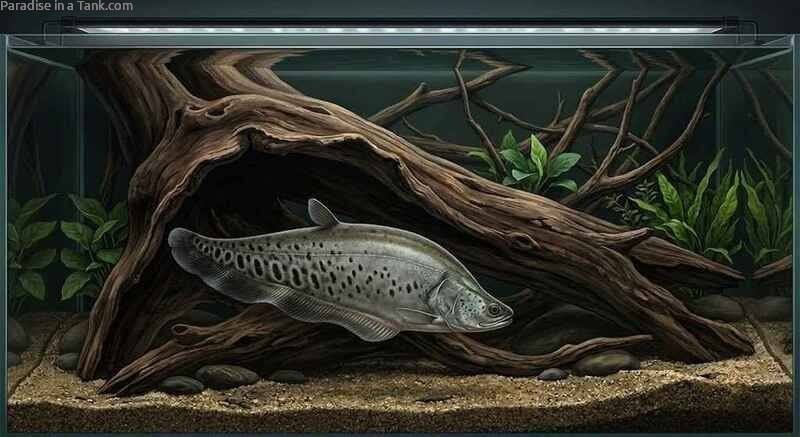
- The Massive Giants: A high-level introduction to the predatory Chitala lineages. If you walk into a store and see a Clown Knife Fish looking cute at four inches long, do not be fooled. This species belongs to a group of true what are tankbuster fish that can easily crush the thirty-inch mark in captivity. They are built like solid silver blades, possessing massive mouths capable of snapping up large goldfish, cichlids, and deep-bodied tankmates without breaking a sweat. Unless you have the space and budget for a massive system of several hundred gallons, you must completely avoid these predatory giants, as keeping them in cramped quarters will stunt their spines and lead to early organ failure.
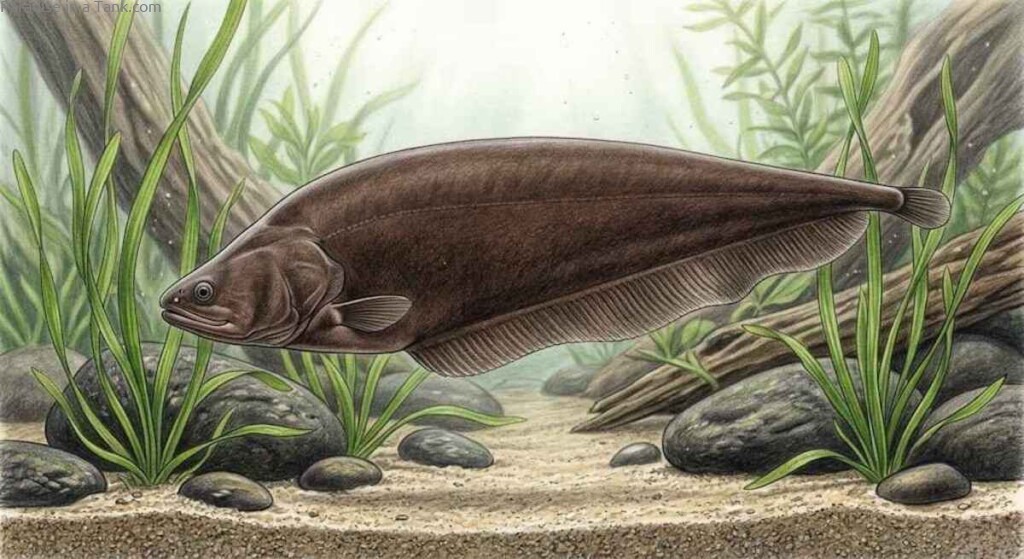
- The Medium Community Pick: Introducing the more manageable African freshwater species. If you want a knifefish but do not have the space for a massive indoor pond, the African knife fish care guide is your best path forward. Maxing out at a very reasonable eight to twelve inches, these dark brown featherbacks are perfectly suited for medium-sized systems. They lack the intense electric output of the South American variants, making them much more cooperative in diverse community setups, provided their tankmates are too large to be gobbled up as a midnight snack. They will spend their days tucked inside hollow logs, coming out at night to patrol the substrate for worms and small pellets.
- The Solo Apex: Replicating riverbed biotopes for massive single-specimen tanks. For the ultimate display of prehistoric power, many advanced aquarists choose to set up dedicated, single-specimen systems designed to showcase a single large black ghost or a specialized predator like the Aba Aba. Reading through the Aba Aba knife fish care guide reveals a creature that demands an unyielding approach to isolation, given its intense predatory nature and absolute intolerance of tankmates. This approach allows you to tailor the water chemistry, water flow, and aquascaping elements directly to the animal’s ancient instinctual programming without worrying about tankmate compatibility. By using heavy driftwood roots, fine river sand, and zero bright overhead lights, you create an unvarnished slice of the wild where the solo apex can hunt and explore with absolute confidence.
General Tank Maintenance, Dim Lighting, and Caves
Keeping your knifefish healthy over the long haul comes down to establishing a bulletproof maintenance schedule and respecting their evolutionary need for darkness. Because these fish lack heavy, protective scales like standard cichlids or goldfish, their skin is directly exposed to every chemical fluctuation in the water column. You cannot allow organic waste to accumulate in the substrate, or you will quickly trigger a devastating bacterial outbreak. This means a high-volume canister filter or a well-designed sump system is non-negotiable for handling their heavy protein diets.
To keep your biological filtration running at peak efficiency, you must allow your system to complete a thorough aquarium nitrogen cycle before adding these sensitive predators to the water. Any sudden spike in waste levels will burn their skin and compromise their immune systems. Alongside pristine water quality, you must cater to their physical comfort by heavily dimming your aquarium lights or using floating live plants to diffuse the glare. If your tank is blasted with intense, high-output light, your fish will hide in a state of absolute terror, pacing frantically against the glass and refusing to eat until their energy reserves are completely spent.
Finally, you must provide your knifefish with physical sanctuaries where they can completely break their silhouette from view. They are classic examples of aquarium fish that like caves, requiring long, smooth structures like ceramic pipes, hollow logs, or specialized clear acrylic tubes to feel secure. When a knifefish can back its long body into a tight, dark refuge where its sensory receptors tell it it is safe from all sides, its stress levels plummet, its natural colors deepen, and its appetite remains incredibly strong. Take the time to build a dark, structurally sound, and chemically stable underworld for your knifefish, and you will be rewarded with a healthy, mesmerizing window into ancient evolutionary history.