Popular Pet Gecko Species for Glass Tanks
Choosing between leopard geckos (Eublepharis macularius) and crested geckos (Correlophus ciliatus) comes down to habitat design and climate: leopard geckos are ground-dwelling desert insectivores needing dry 30–40% humidity and 88–92°F belly heat, whereas crested geckos are climbing rainforest omnivores thriving in vertical glass enclosures kept at 60–80% humidity and 72–78°F ambient temperatures.
Stepping into reptile keeping can feel overwhelming when you are staring at rows of glass tanks and trying to decide which small lizard belongs in your home. You want a rewarding pet that fits your daily routine, but you also want to avoid catastrophic setup mistakes that end in costly emergency visits or a sick animal. Leopard geckos and crested geckos represent two of the absolute finest entry points into reptile guardianship, yet their biological blueprints could not be more distinct. Understanding how millions of years of evolution shaped these two species is the only way to build a habitat that keeps them thriving rather than merely surviving.
When you bring a gecko into your living room, you are signing an ancestral evolutionary contract. You are taking a wild creature hardwired with primitive survival mechanics, specialized scale anatomy, and strict microclimate thresholds and dropping it into an artificial glass box. Expecting a tropical forest climber to live in a dry desert tank—or forcing a terrestrial desert dweller to navigate damp vertical foliage—will crush the animal’s immune system. By matching your physical terrarium setup directly to your gecko’s anatomical evolution, you guarantee a confident, active pet that displays its full range of natural behaviors.
Leopard Geckos (Eublepharis macularius)
Leopard geckos originate from the arid, rocky grasslands and desert regions of Afghanistan, Pakistan, northwestern India, and parts of Iran. Unlike many other gecko species, leopard geckos possess fully functional eyelids, allowing them to blink and sleep with closed eyes. They also lack adhesive toe pads, which means they cannot scale smooth glass walls or vertical branches. Instead, they feature specialized tiny claws perfectly engineered for gripping dry soil, digging burrows, and scrambling over rugged rock formations. Their heavy, thick tails serve as primary fat-storage organs, designed by nature to carry them through periods of prey scarcity in dry, harsh wild environments.
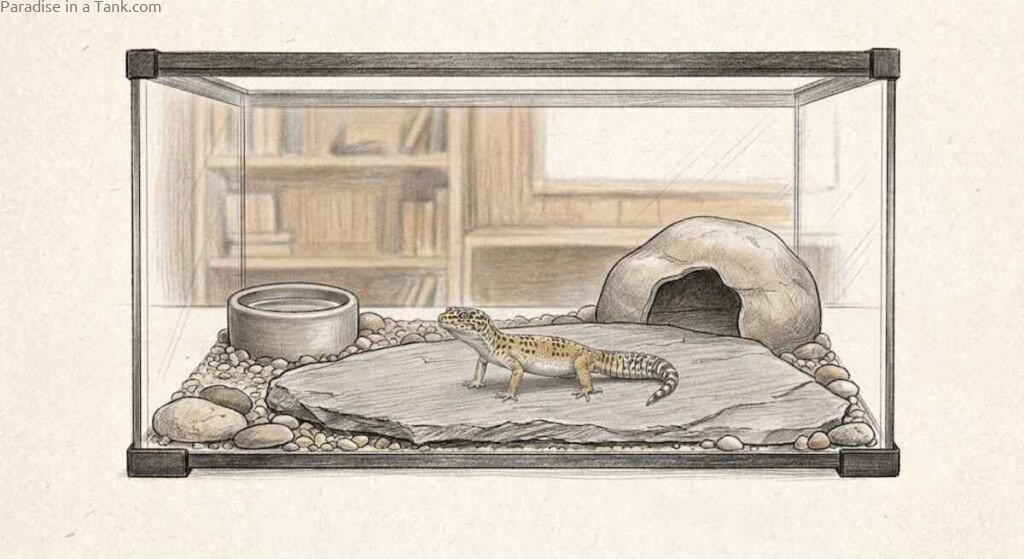
Because leopard geckos are strictly terrestrial, floor space is vastly more important than tank height. A standard 20-gallon long glass enclosure measuring 30 inches by 12 inches by 12 inches represents the absolute minimum floor dimensions for a single adult. They require a distinct thermal gradient to thermoregulate their bodies effectively, featuring a warm basking side maintained at 88–92°F using an under-tank heating pad paired with a reliable thermostat, alongside a cooler side sitting between 75–80°F. Keeping relative humidity low at 30–40% is non-negotiable. Constant high humidity traps ambient moisture inside their respiratory tracts, triggering lethal bacterial infections and painful skin sheds.
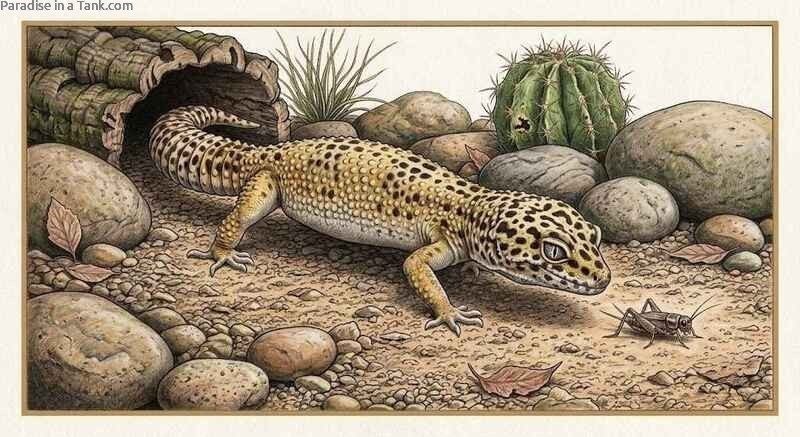
Leopard geckos are famously calm, slow-moving, and docile creatures when handled with gentle respect. They rarely bite unless severely threatened, cornered, or mistaking a human finger for a gut-loaded cricket during feeding time. Because they are crepuscular—meaning they are most active during dawn and dusk—they will spend the bright daylight hours resting inside dark micro-burrows. You must provide at least three distinct hiding caves: one on the warm side, one on the cool side, and a dedicated moist hide stuffed with damp paper towels or sphagnum moss to aid in peeling off old skin during shedding cycles.
Crested Geckos (Correlophus ciliatus)
Hailing from the lush, humid rain forests of New Caledonia, crested geckos are native to a small group of subtropical islands in the South Pacific. Once thought to be completely extinct until their dramatic rediscovery in 1994, these remarkable lizards are master tree dwellers that spend their lives high off the damp forest floor. Their most striking physical features are the prominent hair-like scale fringes running from above their large lidless eyes down along their spine, giving them a perpetually crested, prehistoric appearance.
What truly separates crested geckos from their desert cousins is their astounding ability to scale vertical surfaces with ease. Their toe pads are lined with millions of microscopic hair-like structures called setae that cling to glass, smooth wood, and wet leaves on a molecular level. To fully appreciate this incredible adaptation, you can read our deep dive on how and why do geckos stick to walls to see how microscopic forces keep these lizards airborne. They also possess a semi-prehensile tail that acts like a fifth limb to anchor themselves while jumping between dense branches.
Because crested geckos are arboreal jumpers, you must prioritize vertical tank height over horizontal floor space. An adult crested gecko requires an enclosure measuring at least 18 inches by 18 inches by 36 inches tall. Fill this space with climbing vines, cork bark tubes, broad-leaf plants, and elevated feeding ledges. High humidity is a fundamental requirement for survival; you must mist the terrarium thoroughly with clean water daily to maintain humidity spikes between 70–80%, allowing the tank to drop to 50–60% between mistings to prevent mold growth. Keeping temperature thresholds cool is equally critical, as ambient temperatures above 82°F will rapidly cause severe heat distress, heatstroke, and death.
| Key Care Parameter | Leopard Gecko (Eublepharis macularius) | Crested Gecko (Correlophus ciliatus) |
|---|---|---|
| Primary Habitat Orientation | Horizontal terrestrial space (20-gallon long minimum) | Vertical arboreal space (18x18x36 inches minimum) |
| Target Temperature Range | Warm side 88–92°F, Cool side 75–80°F | Ambient room temp 72–78°F (Avoid temperatures above 82°F) |
| Target Humidity Threshold | Low humidity 30–40% ambient dryness | High humidity 60–80% daily misting cycles |
| Climbing Ability | Claws only; cannot climb glass or smooth walls | Microscopic setae toe pads; scales vertical glass with ease |
| Dietary Base | Strictly insectivorous (live gut-loaded bugs) | Frugivorous/Omnivorous (powdered meal replacement + insects) |
| Shedding Assistance Needs | Enclosed humid hide packed with damp moss | High ambient tank misting and leaf condensation |
Selecting the proper glass enclosure is the single most important foundation for long-term health. Glass acts as a stable barrier that maintains environmental gradients while allowing easy cleaning and clear viewing. For a step-by-step breakdown on choosing lids, substrates, and ventilation screen tops, consult our comprehensive glass terrarium setup guide for geckos to build a safe, secure habitat from day one.
Diet, Nutrition & Feeding Protocols
Feeding your gecko correctly requires respecting its evolutionary biology rather than relying on lazy commercial convenience. Leopard geckos are obligate insectivores. Their digestive tracts are hardwired to process moving, chitin-rich prey items like gut-loaded crickets, dubia roaches, black soldier fly larvae, and occasional mealworms. They will completely ignore dead insects, dry pellets, or freeze-dried treats because their predatory instincts are triggered exclusively by movement. Crested geckos, on the other hand, are natural frugivores and opportunistic omnivores. In the wild, they feast on rotting fallen fruits, flower nectar, sap, and small insects moving through the forest canopy.
Modern reptile husbandry has made feeding crested geckos exceptionally reliable thanks to commercially formulated Crested Gecko Diets (CGD). These powdered meal replacement powders are whisked with clean water into a thick, smoothie-like paste and offered in elevated feeding dishes two to three times per week. While CGD provides complete baseline nutrition, offering live gut-loaded insects like crickets or small dubia roaches once a week satisfies their natural hunting drive and helps build healthy muscular tone. Never offer wild-caught bugs to any gecko, as wild insects harbor deadly parasites, pesticide residues, and toxic chemical contamination.
Calcium & Vitamin D3 Supplementation
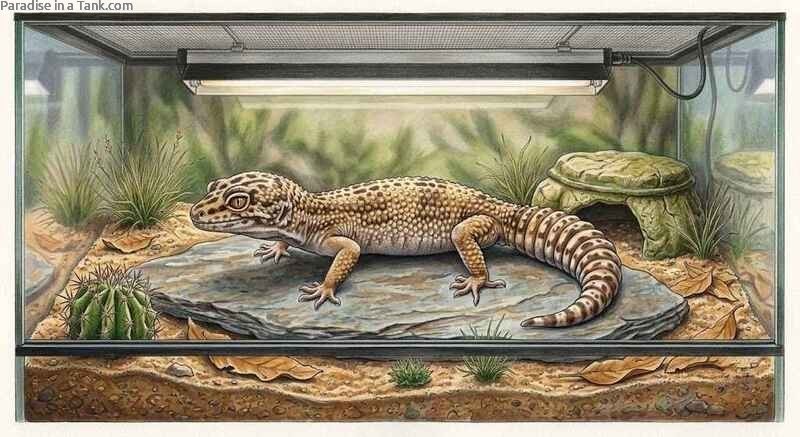
Proper supplementation is the line between a healthy, thriving pet and a devastating physical breakdown. Geckos kept in glass tanks without specialized UVB lighting cannot synthesize adequate amounts of Vitamin D3 on their own. Without Vitamin D3, a gecko’s body cannot absorb calcium from food, forcing the bloodstream to leach calcium directly out of the lizard’s own skeletal bones. This catastrophic process leads directly to Metabolic Bone Disease (MBD), a brutal, irreversible condition that causes rubbery jawbones, twisted spines, fractured limbs, severe tremors, and painful death.
To prevent Metabolic Bone Disease, all feeder insects must be dusted with a high-grade calcium powder containing D3 before being offered to your pet. For leopard geckos, keep a small, clean dish of pure calcium powder (without D3) inside the tank at all times so the animal can lick up extra minerals as its body dictates. For crested geckos eating commercial powdered diets, the formula already includes baseline calcium and D3, but any live insects offered as enrichment must still be lightly dusted. Additionally, a full multivitamin powder containing preformed Vitamin A or beta-carotene should be applied to feeder insects twice a month to protect eye tissue, skin elasticity, and organ function.
- Feeder Bug Starvation Risks: Feeding empty, pet-store crickets devoid of nutrients starves your gecko of essential minerals and causes rapid weight loss.
- Intestinal Impaction Hazards: Feeding live insects on loose sand or coarse bark chips causes geckos to swallow substrate, causing fatal gut blockages.
- Metabolic Bone Disease (MBD): Failing to dust feeder insects with calcium and Vitamin D3 causes soft, bent bones, muscular tremors, and spinal collapse.
- Severe Dehydration Signals: Offering stagnant water or neglecting daily misting leads to sunken eyes, wrinkled skin, and dangerous kidney strain.
- Toxic Wild Pest Contamination: Offering wild-caught spiders, ants, or lightning bugs introduces lethal toxins and internal parasitic worms into your tank.
Handling, Temperament & Lifespan
Understanding gecko temperament requires recognizing that small reptiles view large humans as giant apex predators. Patience is essential when building trust with a newly acquired pet. When you first bring your gecko home, leave it completely alone for at least 7–14 days—aside from replacing food and water—so it can acclimate to the ambient sounds, smells, and light schedules of your room. Pestering a stressed, newly arrived gecko triggers defensive posture, food refusal, and thrashing.
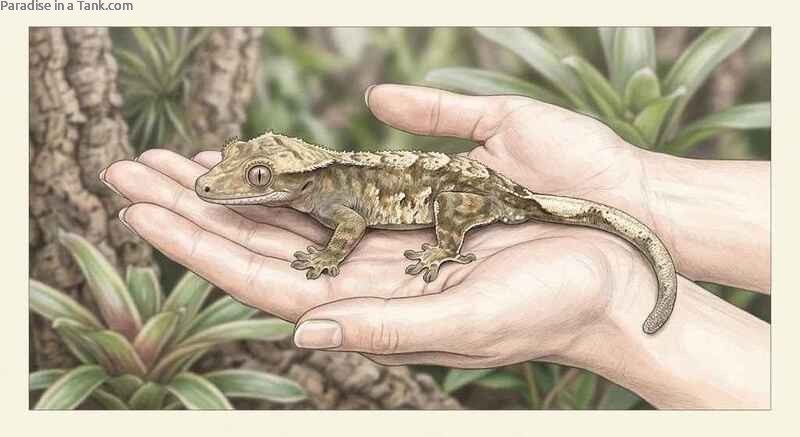
Leopard geckos are typically very forgiving, slow-moving, and easy to handle once they realize your hands mean no harm. Always scoop them gently from beneath their belly using a flat palm rather than reaching down from directly overhead like a swooping predatory hawk. Crested geckos are noticeably more flighty and energetic, earned through their natural instinct to leap through forest canopies. Use the “hand-over-hand” walking technique when holding a crested gecko, letting the lizard leap safely from one open palm to the other a few inches above a soft bed or couch surface.
Both species possess the defense mechanism known as caudal autotomy—the ability to drop their tail when grabbed, pinched, or severely frightened. If a leopard gecko drops its tail, the organ will slowly regenerate over several months, resulting in a smoother, bulbous, bulb-shaped replacement tail. However, if a crested gecko drops its tail, it will never grow back. Crested geckos live out their adult lives as tailless “frog-butts” without any loss of quality of life or mobility, but preventing unnecessary fright keeps their original physical beauty intact.
| Behavior / Trait | Leopard Gecko Expectations | Crested Gecko Expectations |
|---|---|---|
| Baseline Temperament | Docile, calm ground walker; low jump risk | Active, springy jumper; eager canopy explorer |
| Handling Tolerance | High once acclimated; enjoys slow crawling | Moderate; requires active hand-over-hand supervision |
| Tail Autotomy Capability | Drops tail under stress; tail regenerates fully | Drops tail easily under stress; tail NEVER regenerates |
| Average Domestic Lifespan | 15–20+ years with disciplined husbandry | 12–18+ years with proper environmental care |
| Primary Stress Indicators | Tail wagging, loud barking/squeaking, defensive arching | Tail twitching, sudden frantic jumping, gaping mouth |
Committing to a pet gecko is a long-term journey that spans decades rather than a few brief years. With disciplined environmental controls, gut-loaded nutrition, regular calcium dusting, and gentle handling habits, your leopard gecko or crested gecko will remain a healthy, fascinating, and serene companion for up to 20 years. Take the time to dial in your temperatures, perfect your humidity levels, and observe your pet’s subtle body language every day, and you will master the art of reptile custodianship with total confidence.