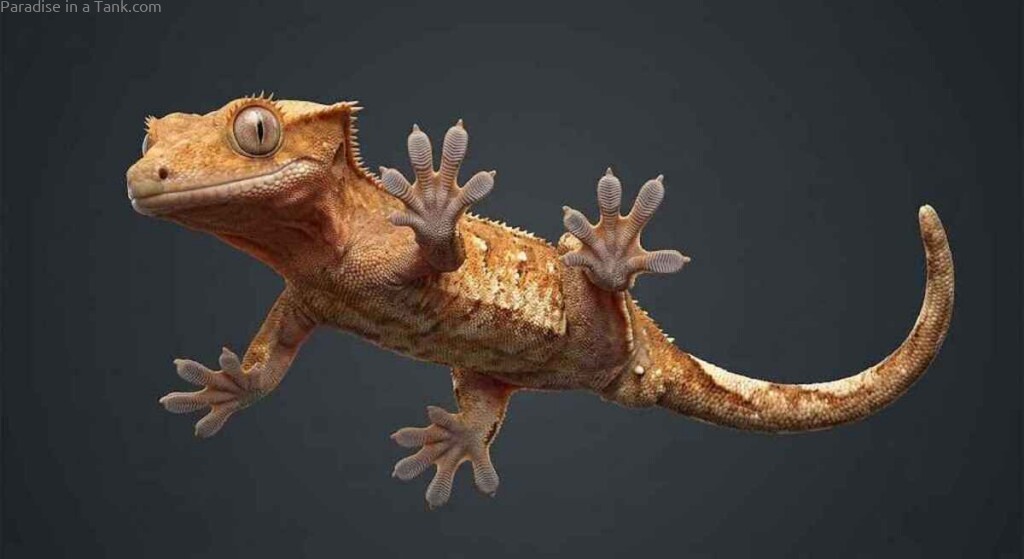
The Science Behind Gecko Adhesion: Microscopic Setae
Geckos stick to vertical glass and walls through dry mechanical adhesion powered by sub-microscopic spatulae on millions of tiny toe setae. These structures create weak intermolecular attraction known as Van der Waals forces. Combined with physical claws, these specialized toe pads allow arboreal species to cling effortlessly without liquid adhesives or sticky mucus.
Watching a gecko scurry across a sheet of polished glass without slipping feels like watching a defiance of gravity. You might wonder if they secrete some hidden glue or rely on tiny suction cups hidden beneath their toes. The reality is far more astounding and rooted in quantum physics and evolutionary biology. Geckos do not use liquid, stickiness, or suction to hold their weight. Instead, their footpads are masterworks of bioengineering that exploit subatomic forces to turn solid surfaces into personal pathways.
When you look closely at the underside of a climbing gecko’s foot, you see broad, overlapping ridges called lamellae. Under an electron microscope, these lamellae break down into millions of hair-like structures made of beta-keratin called setae. Each individual seta is microscopic, roughly 1/10th the diameter of a human hair. But evolution did not stop there. The tip of every single seta branches out into hundreds of microscopic, spade-shaped ends known as spatulae.
- Van der Waals Forces: Every physical object is made of molecules surrounded by shifting clouds of electrons. When a gecko presses its toe pads against a wall, the spatulae get so close to the surface—within 1–2 nanometers—that the electron clouds of the gecko’s skin and the surface interact. This microscopic proximity triggers Van der Waals forces, which are electrostatic attractions between neighboring molecules. Individually, a single Van der Waals bond is incredibly weak. However, when multiplied by millions of spatulae making simultaneous contact, the cumulative holding force becomes enormous. A single adult gecko generating full contact with all four feet could theoretically support over 200 lbs of weight.
- Dry Adhesion: Unlike tree frogs or snails that rely on wet mucus secretions to create surface tension, geckos utilize completely dry adhesion. They leave zero sticky residue, moisture trails, or chemical marks on your enclosure walls. This dry mechanism allows them to engage and disengage their grip in milliseconds. To release their grip, geckos simply peel their toes upward at a specific angle—roughly 30 degrees—which instantly breaks the molecular attraction. This rapid angle modification lets them sprint up vertical walls at breathtaking speeds without getting stuck to the glass.
Understanding these mechanical adaptations is essential when evaluating a beginner pet gecko care guide because climbing ability directly influences how you must structure their enclosure.
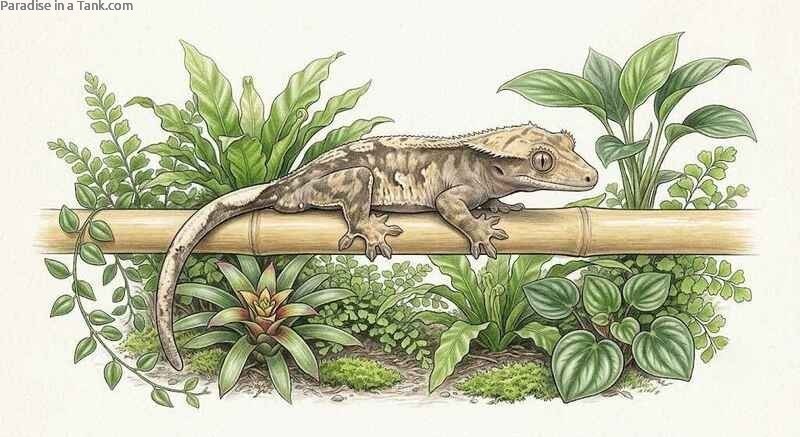
You can observe a crested gecko perched on a smooth bamboo branch, where its entire head, tail, and digits are framed within a dense tropical foliage canopy.
Which Gecko Species Can Climb Glass Walls?
Not all geckos are created equal when it comes to vertical acrobatics. Millions of years of evolutionary divergence have split the gecko world into distinct morphological categories based on their natural habitats. Species that evolved in dense rain forest canopies or rocky cliffs developed broad toe pads engineered for smooth surfaces. Conversely, species that adapted to arid deserts and rocky ground preserved specialized claws designed for traction on loose sand and rough gravel.
If you place a ground-dwelling lizard on smooth glass, it will slide around frantically like a dog on polished hardwood. Meanwhile, an arboreal species will glide up the same glass panel effortlessly. Before buying an enclosure, you must understand which physical mechanics your pet relies on so you do not accidentally subject a terrestrial animal to stress or leave an arboreal escape artist with an unsealed enclosure.
- Arboreal Climbers (Crested & Day Geckos): Crested geckos, day geckos, and tokay geckos possess specialized adhesive toe pads lined with dense clusters of setae. These tree-dwelling species use vertical glass terrarium walls as natural highways. Crested geckos even feature a secondary adhesive pad at the tip of their prehensile tail, giving them a fifth point of contact when leaping between branches.
- Terrestrial Walkers (Leopard Geckos): Leopard geckos and African fat-tailed geckos lack expanded toe pads and setae entirely. Instead, they feature thin, flexible digits equipped with sharp, tiny claws. These claws are designed to grip rough terrain, dry soil, slate, and desert rocks. Placing a leopard gecko in a slick glass enclosure without rough climbing branches or textured rock walls means they will remain strictly on the floor substrate, unable to climb the smooth glass walls.
| Gecko Species Category | Primary Toe Structures | Target Surface Type | Glass Climbing Ability |
|---|---|---|---|
| Arboreal Climbers | Expanded toe pads with microscopic setae spatulae | Smooth leaves, bark, polished rock, glass | Highly capable of scaling smooth vertical glass |
| Terrestrial Walkers | Slender digits with sharp terminal claws | Rough soil, gravel, slate, packed sand | Uncapable of scaling smooth vertical glass |
To ensure your climbing species thrives, you need a proper setup tailored to their vertical demands. Consult our detailed glass terrarium setup guide to design a habitat that supports vertical movement and optimal humidity.
A vibrant day gecko rests vertically against a smooth glass wall, showcasing its full body length, fully expanded green skin, and vibrant red markings against background live plants.
Terrarium Glass & Maintenance
Because gecko adhesion relies on direct, microscopic contact between setae spatulae and a solid surface, any physical barrier between the toe pad and the glass ruins their ability to grip. In captivity, dirty glass is the single most common cause of sudden slipping, fall injuries, and stress in arboreal geckos. If your pet suddenly starts slipping down the glass or refuses to rest on vertical walls, the problem is rarely their foot biology—it is almost always environmental contamination on the glass itself.
When high ambient humidity levels mix with mineralized water misting, shed skin fragments, and airborne dirt, a microscopic film builds up over the enclosure walls. This film prevents the setae from getting within that crucial 1–2 nanometer distance required to establish Van der Waals bonds. Instead of bonding with the solid glass, the spatulae slide over loose mineral crystals and slick oils, causing the gecko to slide down the pane.
- How Water Spots & Dust Affect Grip: Hard water spots contain heavy calcium and magnesium deposits that cure onto glass like sandpaper. Dust, shed skin particles, and dried feces leave powdery residues that fill the micro-grooves of the glass surface. When a gecko steps on hard water crust or dust, the setae grab onto the loose particles rather than the glass. The loose dust peels right off the wall, taking the gecko’s grip down with it. Regular cleaning with distilled water or diluted white vinegar breaks down mineral crusts and restores smooth glass contact.
- Preventing Escapes: Because arboreal geckos can sprint up glass effortlessly, they can reach the very top of their enclosure within seconds. Mesh terrarium lids must be tightly latched, as geckos can squeeze through surprisingly tight gaps near light fixtures or cable ports. Furthermore, their claws can hook into screen mesh, allowing them to hang upside down from the ceiling before finding an unlatched corner to slide through. Always inspect top screen latches daily to ensure your climbing escape artist stays safely inside.
Keeping your glass clean and secure guarantees that your arboreal pet can climb safely without risking dangerous falls onto hard terrarium decor below. By respecting their specialized biology and maintaining their physical environment, you turn a simple glass tank into a thriving, natural ecosystem where your gecko can leap, climb, and display their ancestral behaviors every single night.