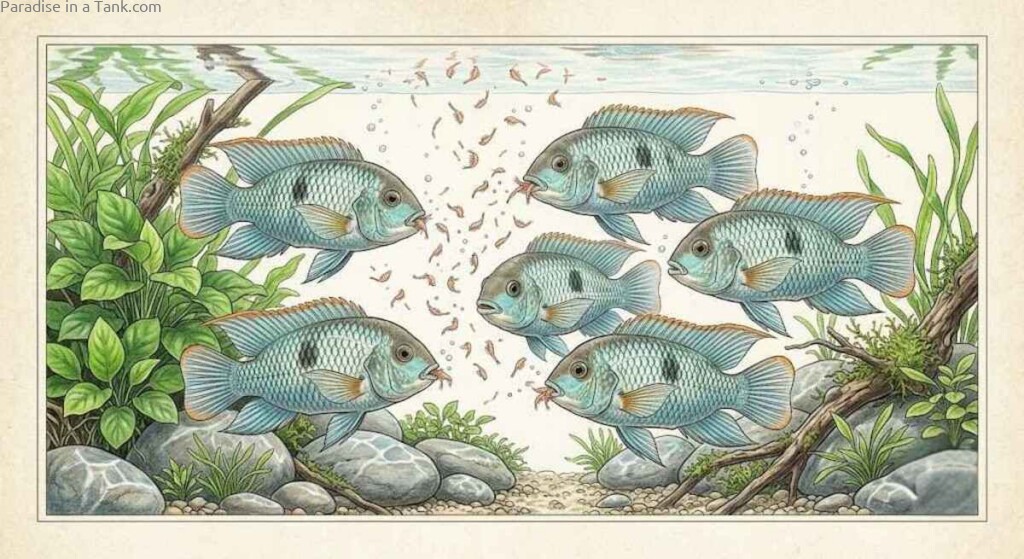
The Micro-Predatory Digestion Framework
Optimal Blue Acara feeding requires a protein-rich micro-predatory diet of 40–45% high-grade aquatic protein paired with frozen invertebrates, fed in small quantities 1–2 times daily. Ideal tank mates include deep-bodied tetras, peaceful dwarf cichlids, and armored catfish maintained at pH 6.5–7.5, keeping nitrate levels strictly below 20 PPM to prevent intestinal distress.
Wild South American river systems do not dish out neat, dry meal pellets at scheduled clockwork intervals. Deep within the murky floodplains and slow-moving tributaries of Trinidad and Venezuela, the native Andinoacara pulcher hunts constantly through tangled leaf litter and river gravel. They are specialized micro-predators, anatomically engineered to vacuum up living aquatic organisms from the muddy bed.
Understanding this biological design is the bedrock of keeping your fish thriving for years rather than surviving for months. When you drop high-carb land-animal fats or filler-laden commercial grain flakes into your aquarium, you disrupt millions of years of anatomical evolution. A proper diet preserves their vibrant blue scales, keeps their guts healthy, and prevents water quality from crashing. If you want to master every aspect of housing this species, start by reviewing our comprehensive blue acara care guide to align your filtration and water chemistry before tweaking your feeding schedule.
Wild Foraging Routines: How Small Invertebrates Fuel Metabolic Needs
In their natural habitat, these fish spend their daylight hours cruising the substrate, tilting their heads downward at a 45-degree angle to spot subtle movements in the silt. They use their strong, extendable jaws to create a suction pulse, snapping up tiny crustaceans, aquatic insect larvae, bloodworms, and small snails. They swallow these tiny creatures whole, grinding tough chitinous shells down using specialized pharyngeal teeth located deep inside their throats.
This continuous foraging cycle means wild fish consume small, frequent, low-density protein meals throughout the day while burning massive amounts of calories swimming through river currents. In a home tank, however, a cichlid sits in still water with zero current to fight, waiting for a massive clump of dense processed food to drop from the sky. They will greedily gobble up every single morsel until their bellies swell like tight golf balls.
When you overfeed high-density food to an inactive fish, unused nutrients accumulate in the gut and quickly rot. Unprocessed proteins break down into excess waste, spiking harmful ammonia levels in the water column and causing severe intestinal blockages inside the fish’s digestive tract.
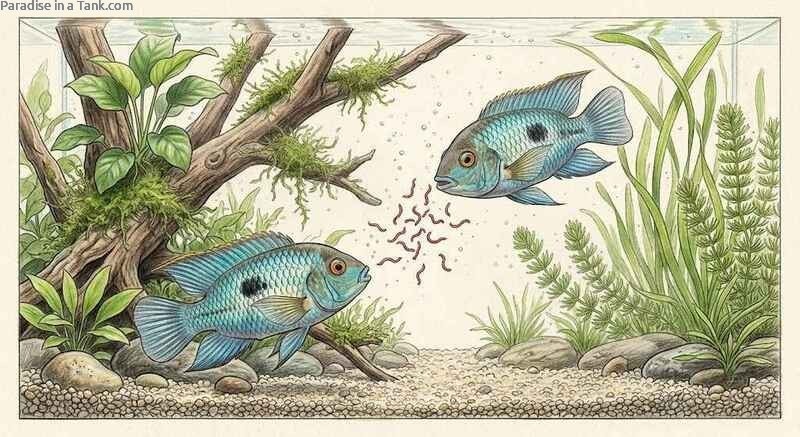
Nutritional Balancing: Driving Protein Inputs Without Triggering Intestinal Stress
To replicate their wild dietary demands without destroying your biological filter, you must offer a balanced ratio of aquatic protein and raw roughage. A baseline captive diet should consist of 40–45% crude protein derived strictly from marine animals like fish meal, squid, and krill. Avoid lower-tier commercial feeds that rely on soy meals, wheat gluten, or terrestrial animal fats, as cichlids lack the digestive enzymes necessary to process land-based lipids.
When high-fat terrestrial fillers sit in a cichlid’s warm intestinal tract, they ferment and promote explosive blooms of harmful gut bacteria like Hexamita. This leads straight to stringy white poop, severe abdominal bloat, loss of balance, and eventually systemic organ failure. You will literally watch your once-vibrant pet turn dark, stop eating, and float lifelessly in the corners of the tank.
Balance high-protein rations with indigestible chitinous fiber from frozen or live foods to keep their gut moving smoothly. Feed only what your fish can completely consume within 60–90 seconds. Any leftover food that sinks into the substrate will dissolve, fuelling sudden spikes of toxic nitrite and pushing nitrate levels past safe limits.
Formulating a High-Performance Captive Feeding Schedule
Creating a strict feeding schedule prevents the typical beginner mistake of tossing in handfuls of food whenever the fish swims to the front glass to beg. Blue Acaras are absolute masters at emotional blackmail, thrash-swimming against the front pane as if they are perpetually starving. Resist the urge to give in every time they throw a fit.
For juvenile specimens under 3 inches long, feed small portions 2 times daily to support rapid muscular and structural bone growth. You can track their standard physiological development and body milestones by reading our electric blue acara growth rate and size charts to ensure your feeding volume matches their growth curve. For fully mature adults, dial back your routine to 1 feeding per day, 6 days a week, keeping 1 day completely clear of food to let their digestive systems fully flush out accumulated waste.
| Food Category | Frequency | Primary Biological Benefit | Storage & Preparation Rule |
|---|---|---|---|
| High-Protein Cichlid Pellets | 4–5 Days / Week | Provides core daily amino acids and essential vitamins. | Pre-soak in tank water for 2 minutes to prevent gut swelling. |
| Frozen Artemia & Mysis Shrimp | 2 Days / Week | Delivers natural chitin fiber to prevent constipation and bloat. | Thaw completely in a glass of tank water; never drop frozen blocks directly. |
| Frozen Bloodworms & Krill | 1 Day / Week | Drives predatory instincts and supplies dense natural iron. | Feed sparingly as a high-calorie treat to avoid fatty liver disease. |
| Spirulina Flakes or Kelp Tabs | 1–2 Days / Week | Provides raw plant roughage to aid smooth digestion. | Pinch directly under the surface to prevent fish from swallowing air. |
Pigment Enhancement: Incorporating Carotenoid Rations Safely
The stunning electric blue iridescence and golden-orange dorsal trimmings on a healthy Acara depend heavily on natural compounds called carotenoids. Fish cannot synthesize these color-enhancing pigments internally; they must absorb them directly from the food they consume. In the wild, they get these pigments by vacuuming up micro-crustaceans that graze on algae.
Look for high-quality sinking pellets formulated with natural astaxanthin, spirulina algae, and beta-carotene rather than synthetic dye additives. Feeding foods rich in natural astaxanthin deepens the vivid orange borders along their dorsal and caudal fins within 2–3 weeks.
Be careful not to overdo color-enhancing formulations at the expense of variety. Feeding a single specialized color pellet every day causes nutritional gaps and can overload the liver with excess vitamin A. Rotate color-focused pellets with clean frozen rations to keep their immune system strong and their scales bright.
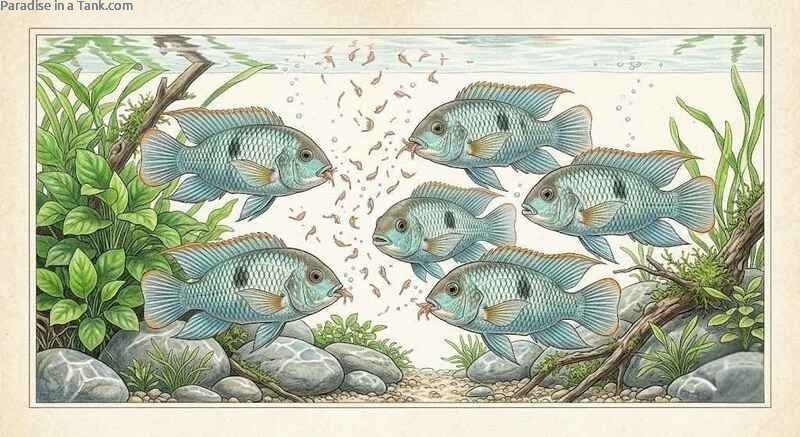
Supplemental Feeds: The Role of Frozen Artemia, Krill, and Flake Rations
Frozen feeds are the ultimate bridge between wild micro-predatory hunting and safe captive husbandry. Frozen Artemia (brine shrimp) and Mysis shrimp are loaded with intact exoskeletons that act as natural laxatives, scraping out lingering debris from the intestinal track.
Never drop a frozen cube of food directly into your aquarium. The frozen core will shock the thermal lining of a fish’s stomach if swallowed whole, and dropping concentrated frozen juices straight into the tank dumps raw liquid phosphate into your water, triggering massive outbreaks of hair algae. Always thaw frozen food blocks in a small cup of tank water, pour the mix through a fine net, and drop only the strained organisms into the flow of your filter outlet.
Flake foods have their place for young juveniles, but mature fish tend to swallow excess air at the surface when gulping down floating flakes. Swallowing surface air causes gas bubbles in the gastrointestinal tract, causing the fish to float tail-up uncontrollably. Switch to slow-sinking micro-pellets as soon as your fish are large enough to take them.
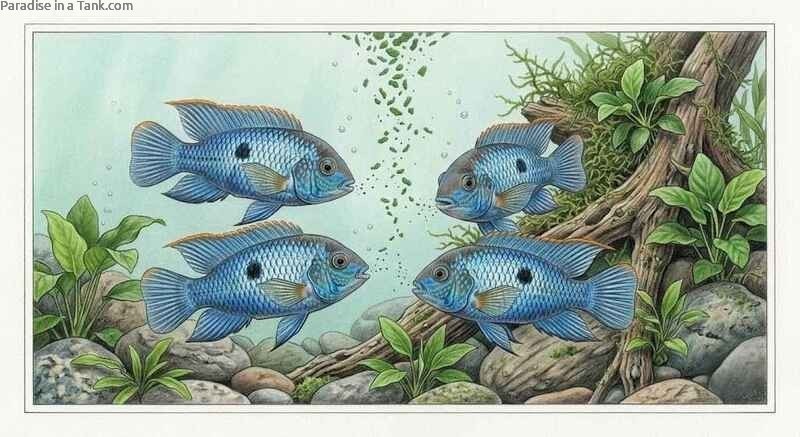
The Companion Compatibility Matrix for Mild-Mannered Cichlids
While many Central and South American cichlids are notorious glass-bashing bullies, the Blue Acara is celebrated for its remarkably level-headed demeanor. They possess a calm, curious personality, making them ideal anchor species for semi-aggressive community tanks. However, do not let their calm demeanor fool you—they are still opportunistic predators. Any tank mate small enough to fit inside their mouth will eventually become an expensive midnight snack.
Pairing them with the right tank mates comes down to spatial geometry and territory management. You need deep-bodied, fast-moving midwater swimmers that stay out of the lower water column, combined with durable, armored bottom-dwellers that will not be intimidated by an occasional nudge during mealtime.
If you plan to breed a paired set, be prepared for their peaceful nature to vanish overnight. To understand how territorial boundaries shift during egg-laying cycles, consult our detailed breakdown on blue acara sexing and breeding behaviors so you can safeguard surrounding tank mates before aggression spikes.
| Companion Species | Risk Level | Target Water Column | Ideal Tank Mate Characteristics & Housing Rules |
|---|---|---|---|
| Bleeding Heart / Lemon Tetras | Low Risk | Midwater Layer | Deep-bodied shape prevents them from fitting into an adult cichlid’s mouth. |
| Bristlenose Pleco (Ancistrus) | Low Risk | Bottom Substrate | Heavy skeletal armor plates protect them from territorial bottom nips. |
| Corydoras Catfish (Large Species) | Moderate Risk | Bottom Substrate | Keep in groups of 6+; avoid tiny dwarf species like Corydoras pygmaeus. |
| Angelfish (Pterophyllum scalare) | Moderate Risk | Mid to Upper Layer | Similar temperaments; ensure a 75-gallon tank minimum to split sightlines. |
| Convict Cichlids / Green Terrors | High Risk | Lower to Mid Layer | Avoid completely; hyper-aggressive cichlids will harass and stress your Acara. |
| Neon Tetras / Guppies | Lethal Risk | All Water Layers | Sleek, tiny bodies will be systematically hunted down and eaten overnight. |
When introducing new tank mates, always re-arrange the rockwork and driftwood layout just before feeding time. This disrupts established territorial boundaries and forces every fish to focus on hunting down pellets rather than defending a specific spot.
Provide plenty of visual barriers using dense plants like Java Fern, Large Amazon Swords, and smooth river cobbles. Giving every inhabitant its own distinct cave or structural retreat ensures long-term peace, low stress, and a vibrant, flourishing community aquarium you can enjoy for years to come.