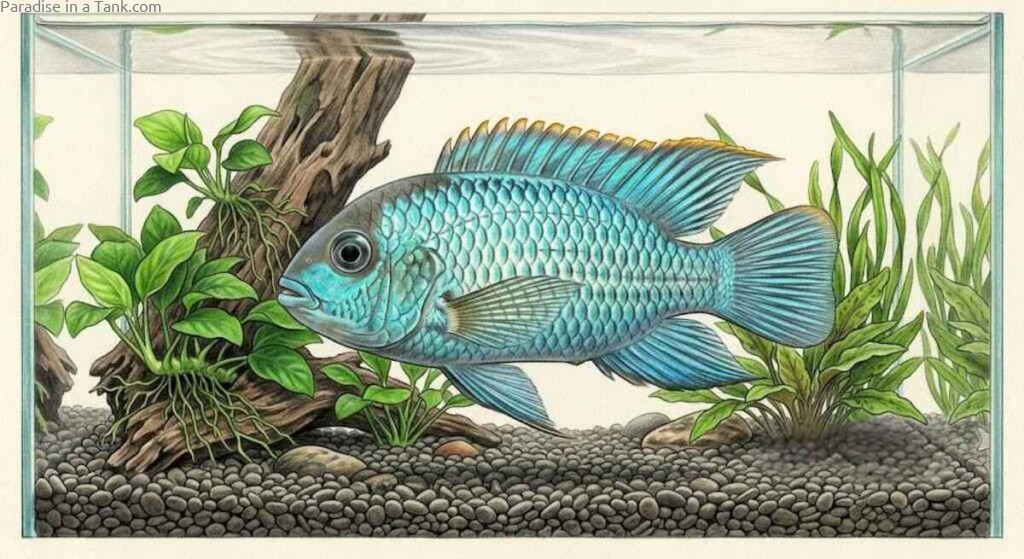
An Introduction to the Resilient Andinoacara Genus
The Blue Acara (Andinoacara pulcher) is a peaceful South American cichlid reaching 5–6 inches in length, thriving in water temperatures of 72–82°F, pH levels of 6.5–7.8, and water hardness of 3–12 dGH. Renowned for their brilliant metallic coloration and docile nature, these hardy bottom-to-midwater dwellers require a minimum 30-gallon tank with clean, low-nitrate water.
If you have spent any time in the freshwater aquarium community, you have likely heard keepers rave about the Blue Acara. They occupy a legendary sweet spot in the fishkeeping world. Most South American cichlids carry a well-earned reputation for being absolute wrecking balls in a glass box, tearing up live plants, bullying community tank mates, and redecorating substrate like aggressive bulldozers. The Blue Acara breaks that mold entirely. They give you all the intelligence, striking color, and interactive personality of a classic cichlid without the relentless territorial bloodshed.
To truly understand this species, you have to look past the cozy glass boundaries of your living room tank and appreciate where they come from. Native to the sluggish freshwater rivers, quiet backwaters, and muddy drainage basins of Trinidad and Venezuela, these fish are evolutionary survivors. They are engineered by nature to withstand seasonal shifts in water flow, fluctuating oxygen levels, and murky conditions. That natural hardiness makes them exceptionally forgiving for hobbyists who are still mastering the rhythm of routine water changes and bio-filtration maintenance.
However, “hardy” should never be confused with “indestructible.” A beginner can easily slip into lazy habits, assuming a fish that survives a minor spike in organic waste is thriving. Unchecked bacterial accumulation, decaying organic debris, and soaring nitrate levels will break down their immune defenses over time, opening the door to severe systemic issues like lateral line erosion, velvet, or systemic hexamita. Treating your aquarium as a living, breathing biological sanctuary rather than a static piece of home decor is the core mindset required to keep these magnificent animals thriving for their full 7–10 year lifespan.
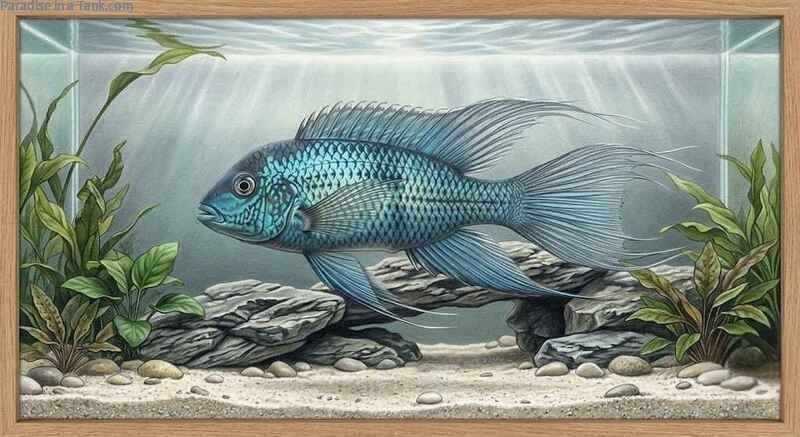
Taxonomic Framework: Defining the True Blue Acara Profile
For decades, aquarists knew the Blue Acara under the scientific name Aequidens pulcher. If you dig through vintage fishkeeping literature from the 1980s or 1990s, you will find them classified alongside dozens of other medium-sized South American cichlids under that massive taxonomic umbrella. However, modern ichthyology relies heavily on fine anatomical mapping, osteological structures, and DNA sequencing. In the late 2000s, taxonomists systematically overhauled the genus Aequidens, splitting off several species into newly established genera, including Andinoacara.
The genus name Andinoacara explicitly reflects their geographic distribution, referring to the Acara species inhabiting the rivers surrounding the Andean mountain range. The specific epithet pulcher is a Latin word that translates directly to “beautiful”—a fitting title for a creature whose body is naturally adorned with iridescent turquoise spots and glowing facial scales. Understanding this scientific evolution helps clarify why older aquarium handbooks might confuse beginners with outdated nomenclature.
In their natural wild habitats, Andinoacara pulcher inhabit slow-moving streams, clear rivers, and swampy lowland margins. These environments are rich in soft, sandy substrates, decaying leaf litter, submerged driftwood branches, and overhanging jungle foliage. The water in these ecosystems is frequently stained with natural plant tannins, creating a slightly acidic to neutral chemical balance rich in organic humic acids. While generations of tank breeding have rendered modern aquarium-raised stock adaptable to a broad range of municipal water parameters, their fundamental biological machinery remains hardwired for pristine, low-stress environments with plenty of structural cover.
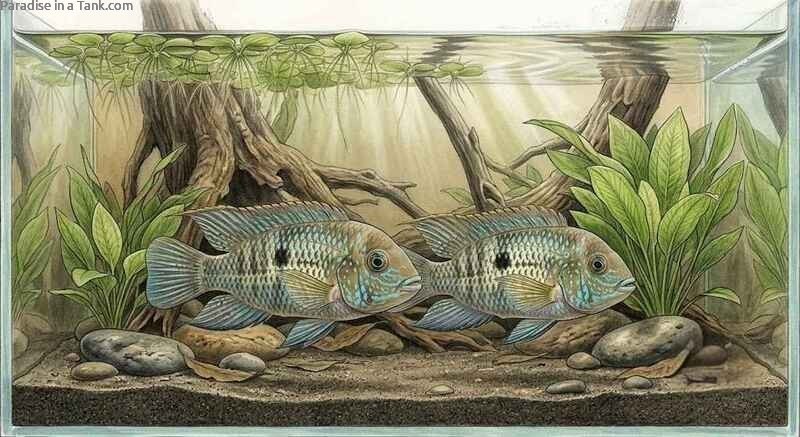
Silhouette Geometry: Analyzing the Robust, Oval South American Shape
When you observe a mature Blue Acara swimming through open water, its physical geometry immediately stands out. Unlike the long, streamlined bodies of river-dwelling hunting fish like pike cichlids, the Blue Acara displays a deep, laterally compressed oval silhouette. This stocky, muscular build is designed for maneuvering through dense tangles of submerged roots, fallen tree limbs, and aquatic vegetation rather than high-speed open-water sprints.
Their broad forehead slopes upward from a wide, expressive mouth to a sturdy dorsal ridge. The dorsal fin spans almost the entire length of the back, featuring sharp, rigid anterior spines that flare outward when the fish feels threatened or wants to display dominance to a rival. Towards the rear, the dorsal and anal fins taper into delicate, elongated rays that frame a powerful, paddle-shaped caudal peduncle. This wide tail section allows the fish to execute sudden, explosive bursts of speed to pounce on unsuspecting aquatic invertebrates or dart into a protective rock crevice when a predator looms above.
Understanding their physical development and ultimate proportions is critical when mapping out tank space, structural hiding spots, and long-term cohabitation plans. You can track their complete structural trajectory by reviewing our detailed breakdown of Electric Blue Acara size and growth potential.
Their facial structure is uniquely tailored for bottom-sifting foraging behavior. Their thick, fleshy lips house small, sharp conical teeth designed to crush chitinous insect larvae, small crustaceans, and detritus-dwelling worms. If you watch them closely during feeding sessions, you will see them plunge their snouts directly into fine sand, scoop up mouthfalls of substrate, filter out edible organic morsels using their gill rakers, and blast clean sand grains out through their gill slits. This deep-seated foraging instinct highlights why coarse, sharp gravel should never be used in an Acara setup, as jagged stones can slice their delicate oral tissues and invite severe fungal or bacterial mouth infections.
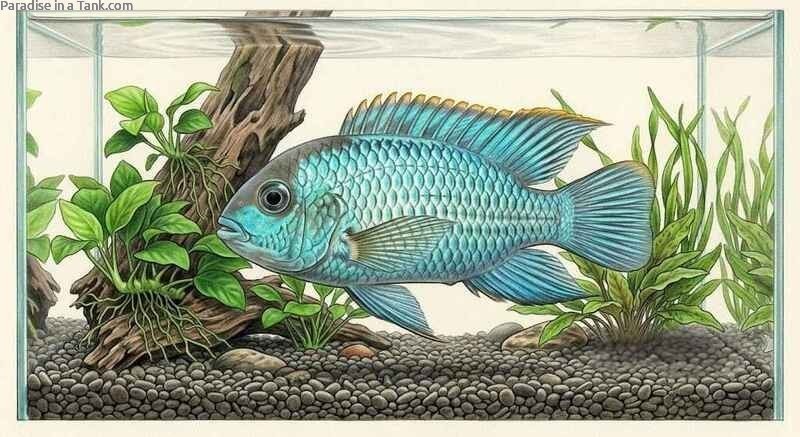
Navigating the Acara Variety and Color Strains
Selective breeding and genetic mutations have completely transformed the modern Acara market over the past decade. While early fishkeepers were content with the subtle, wild beauty of naturally collected specimens, modern aquarium trade innovations have introduced intense color morphs that rival exotic saltwater reef fish. Understanding the physical differences between these strains prevents confusion when sourcing fish from local stores or online breeders.
- The Wild Standard: Spotting the natural olive base and turquoise facial lines.
The wild-type Andinoacara pulcher possesses a subtle, ancient elegance that pure line-breeders still cherish. The base body coloration ranges from an earthy olive-grey to a warm, golden-tan background. Spanning across this neutral backdrop are 5 to 8 faint, vertical dark bars that darken or fade depending on the animal’s stress levels, reproductive mood, or social hierarchy status. What truly elevates the wild standard is the intense metallic iridophores scattered across the flanks. Shimmering, neon-turquoise flecks light up every individual scale, while brilliant liquid-blue lines trace intricate, worm-like patterns across the cheeks and gill covers. The edge of the dorsal fin is crowned with a crisp, fiery orange-red border that creates a striking visual contrast against the cool metallic blues of the head. - The Electric Blue Modification: Analyzing the vibrant neon aquarium color developments.
The Electric Blue Acara (often abbreviated as EBA) represents one of the most explosive genetic hits in modern freshwater fishkeeping. This variety is the result of line-breeding a natural leucistic/hypomelanistic color mutation—or, according to some geneticists, an intentional hybridization with the Electric Blue Ram line—that strips away the dark, muddy melanin pigments from the skin. In their place, an uninterrupted blanket of blinding, metallic cyan-blue covers the entire torso from the nose to the base of the tail. The scales reflect light like liquid chrome under proper LED fixtures. Despite this massive color overhaul, the Electric Blue variant retains the species’ characteristic orange dorsal seam and warm golden-red eyes. Distinguishing mature specimens during courtship displays becomes particularly exciting as their colors intensify; you can learn more about identifying sexes and managing breeding pairs in our guide to sexing and breeding Blue Acaras. - The Rare Lineages: Identification markers for the Royal Acara and Neon variations.
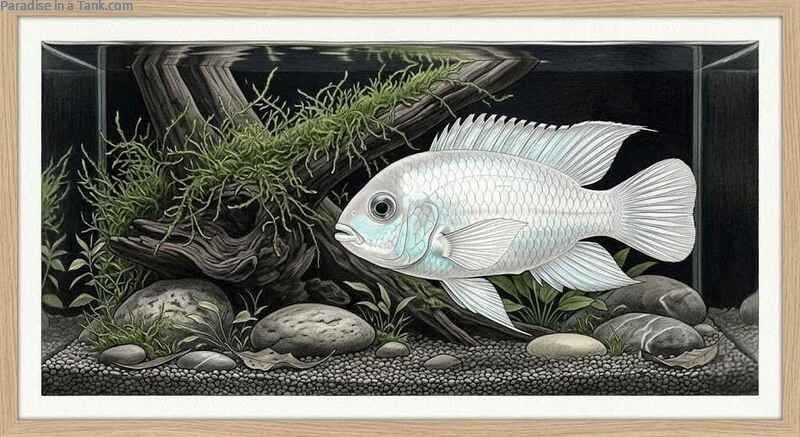
Beyond the standard and Electric Blue strains lie a few specialized, highly sought-after genetic lines. The “Royal Acara” line features exaggerated, long-fin genetics where the dorsal, anal, and caudal fin filaments extend into sweeping, gossamer streamers that billow behind the fish as it swims. Another rare strain is the Platinum or Albino variation, where melanin is entirely suppressed, resulting in a stark, pearl-white body highlighted by faint iridescent sky-blue highlights and striking pink or red pupils. Occasionally, breeders produce short-body or balloon variants due to spinal mutations; however, disciplined keepers generally avoid these compressed shapes because their compressed internal cavities frequently lead to chronic swim bladder issues, severe constipation, and premature organ failure.
| Acara Strain Variant | Primary Body Coloration | Facial Pattern Characteristics | Fin Edging & Trim |
|---|---|---|---|
| Wild Standard A. pulcher | Earthy olive-grey to golden-tan base | Iridescent turquoise lines and worm-like markings | Bright fiery-orange seam on dorsal fin |
| Electric Blue (EBA) | Full-body solid metallic cyan-blue | Solid electric blue with high scale reflectivity | Deep orange-gold border along dorsal tip |
| Royal Long-Fin Strain | Metallic blue or olive with broad scale coverage | High-density blue cheek flecks and bright scales | Extended, flowing rays on caudal and dorsal fins |
| Platinum / Leucistic | Translucent pearl-white to soft cream | Faint ice-blue metallic iridophores under light | Clear to pale yellow translucent fin rays |
General Tank Infrastructure and Water Quality Foundations
Creating a sustainable long-term habitat for your Blue Acara means engineering an environment that respects both their biological mechanics and their behavioral instincts. Housing an adult Acara in a small, cramped environment is a recipe for chronic stress, stunted growth, and sudden disease outbreaks. A single adult specimen requires a minimum tank size of 30 gallons, but if you intend to keep a bonded pair or host a peaceful South American community setup, you should start with a 55-gallon or 75-gallon aquarium. A larger water volume provides a critical thermal and chemical buffer, preventing sudden water quality crashes when fish produce heavy metabolic waste.
Filtration must be robust and thoroughly cycled before introducing any fish. Blue Acaras are carnivorous, enthusiastic eaters that generate a significant biological load through feces and nitrogenous waste output. Your filtration system must rely on a well-established colony of beneficial nitrifying bacteria—specifically species like Nitrosomonas, which convert toxic ammonia into nitrite, and Nitrobacter, which oxidize harmful nitrite into less dangerous nitrate.
To keep these microscopic balance keepers thriving, run heavy-duty canister filters or high-capacity hang-on-back units capable of turning over the entire tank volume at least 5 to 6 times per hour. Keep your water parameters locked into these strict, healthy ranges:
- Water Temperature: Maintain a steady range between 72–82°F using a reliable submersible heater.
- pH Range: Aim for neutral to slightly soft conditions between 6.5–7.8.
- Water Hardness: Keep general hardness within 3–12 dGH.
- Ammonia & Nitrite Levels: Absolute zero at 0 PPM at all times.
- Nitrate Threshold: Keep strict control below 20 PPM via weekly 25–30% water changes.
The internal aquascape of the aquarium should balance open swimming space with physical, sight-blocking territory markers. Use smooth river rocks, flat slate slabs, and natural Malaysian or Pacific driftwood branches to break up sightlines across the tank floor. Flat rocks serve a dual purpose: they give your fish reassuring territorial home bases and provide pristine spawning surfaces if a pair decides to breed.
When choosing substrate, always opt for smooth, fine-grained aquarium sand rather than coarse gravel. As mentioned earlier, Acaras love to sift through the top layer of dirt in search of food morsels. Fine sand passes safely through their mouth and gills without causing physical trauma.
If you want to include live aquatic plants, select tough, heavy-rooting, or water-column-feeding species like Anubias, Java Fern, Amazon Swords, and Cryptocoryne. Secure epiphytes like Anubias and Java Fern directly to driftwood or rock structures using fishing line or cyanoacrylate gel, keeping their vulnerable roots safe from energetic diggers.
Formulating proper daily nutrition and selecting peaceful, non-aggressive tank mates will keep your Acara healthy, confident, and stunningly vibrant for years to come; delve deep into dietary balance and peaceful cohabitation options by reading our comprehensive guide to Blue Acara feeding and tank mates.
Building a thriving, long-term aquarium is not about relying on expensive chemical quick-fixes or fancy automated gadgets. It comes down to respecting the ancient evolutionary needs of your fish, staying consistent with basic maintenance, and observing your animals every single day with a trained, compassionate eye. When you give a Blue Acara clean water, soft sand, and quality food, they will reward you with unparalleled color, captivating intelligence, and a front-row seat to one of nature’s finest underwater creations. Get those fundamentals right, sit back, and enjoy the journey!