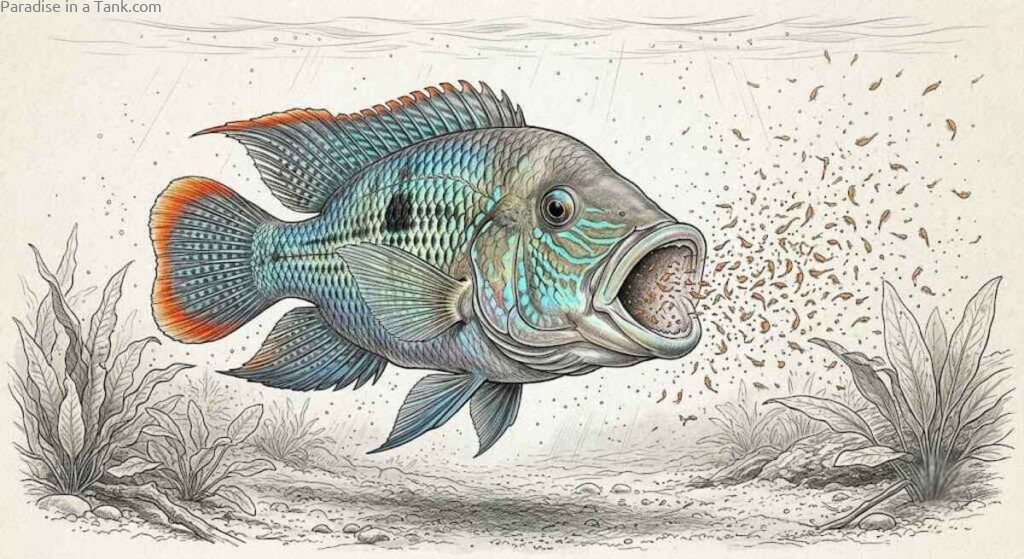
The Carnivorous Digestion Framework of an Apex Predator
Feeding a Green Terror requires a high-protein diet of 40–45% crude protein from high-grade cichlid pellets, krill, and earthworms, paired with clean water kept at pH 6.8–7.8 and ammonia at 0 PPM. Pair them only with robust tank mates in tanks of 75+ gallons to manage territorial aggression and prevent fatal bloat.
Understanding how Andinoacara rivulatus processes nutrients starts with looking straight at its anatomy. These fish are built with short, highly acidic digestive tracts designed to rapidly break down dense animal tissues. In the wild, they do not graze endlessly on aquatic plants or algae fields. Instead, they hit hard, swallow fast, and digest fast.
When you feed cheap fillers like soy or corn, their gut mechanics stall out. Undigested carbohydrates ferment inside the intestine, creating a prime breeding ground for opportunistic flagellates like Hexamita. That leads straight to belly swelling, white stringy poop, and a stressed fish. Keep their intestinal tract moving cleanly with dense, meat-based biological matter.
Natural Feeding Mechanics: Benthic Foraging for Invertebrates and Small Prey
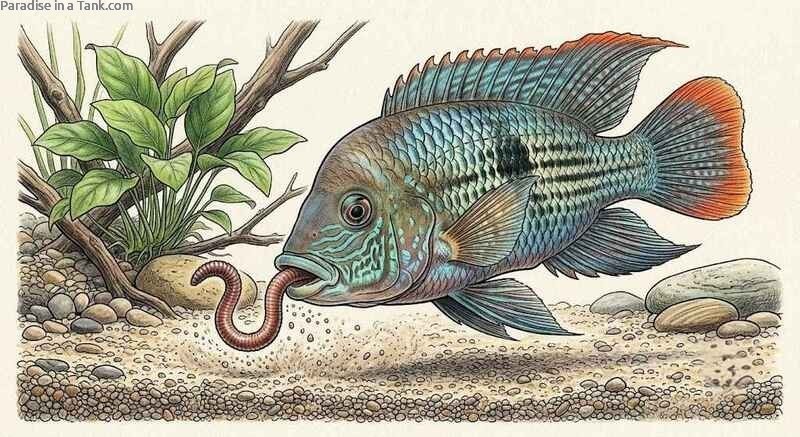
In the slow-moving rivers and river basins of South America, these cichlids operate as opportunistic benthic hunters. They hover just above the substrate, eyeing the riverbed for movement. Once a target is spotted, they plunge their snout directly into the gravel and detritus to suck up aquatic insects, crustaceans, worms, and small feeder fish.
They use heavy pharyngeal teeth located down in their throat to crush hard chitinous shells before swallowing. This natural crunching motion keeps their jaw muscles toned and stimulates digestive enzyme secretion. If you feed only soft, dissolving flakes, you strip them of this fundamental biological behavior.
When setting up your aquarium layout, choose smooth river substrate rather than jagged quartz sand. A foraging cichlid will relentlessly scoop and spit substrate while hunting for sunken food particles. Coarse or sharp gravel will scrape their delicate mouth tissue, creating open wounds where bacteria quickly take root. To understand the foundational tank setup and water parameters required for this species, review our comprehensive green terror care guide.
Nutritional Balancing: Driving Protein Inputs Without Triggering Intestinal Stress
Powering the explosive growth rate of an apex predator requires heavy protein, but overdoing rich foods creates severe biological consequences. Young specimens need around 45% crude protein to fuel rapid bone and muscle development. Adults transition comfortably to 40% protein as their baseline metabolic demands settle down.
Excessive protein loading combined with low water circulation creates a massive nitrogen overload in your system. Unconsumed food decays rapidly into dangerous ammonia spikes, which immediately burn delicate gill filaments. Always balance heavy protein meals with rigid water turnover to ensure nitrates remain strictly below 20 PPM.
To prevent gut compaction, incorporate fiber-rich invertebrates like live or frozen earthworms and brine shrimp. The tough outer exoskeleton of chitin acts as roughage, scouring the intestinal walls as it passes through. Think of it as a natural scrub brush for your fish’s digestive system.
Formulating a High-Efficiency Captive Feeding Routine
Color Optimization: Utilizing Carotenoid Feeds to Intensify Tail Fin Trims
The breathtaking iridescence of a healthy specimen—from its electric blue-green scales to the blazing orange trim on its caudal fin—is entirely dependent on natural pigment compounds called carotenoids. Fish cannot synthesize these vivid pigments internally. They must consume them directly through their daily rations.
Incorporate high-grade feeds enriched with Haematococcus pluvialis microalgae, astaxanthin, and freeze-dried krill. Krill contains massive reserves of natural astaxanthin, which binds directly to skin cells and intensifies the fiery reddish-orange border along the tail and dorsal fins.
Feed pigment-rich foods two to three times a week rather than every day. Excessive pigment dosing yields diminishing returns and can muddy the brilliant blue metallic sheen across the operculum. A balanced mix keeps the colors crisp, sharp, and naturally vibrant. Proper diet plays a direct role in how rapidly these fish achieve their full structural proportions, which you can track using our green terror size and growth framework.
Metabolic Management: Adjusting Rations to Support Massive Muscular Development
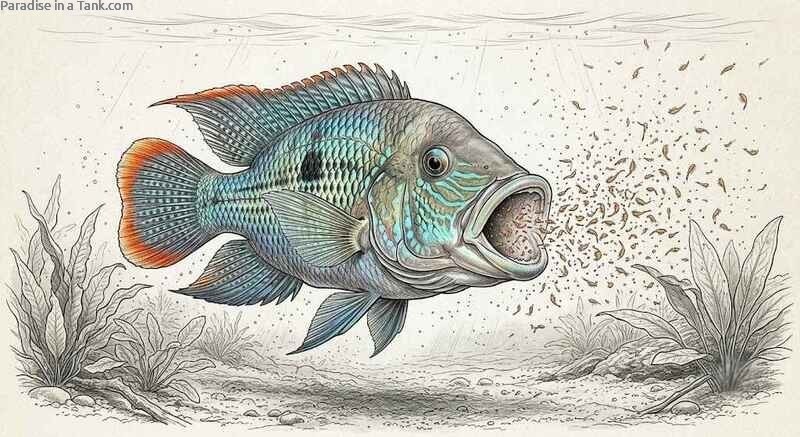
Juvenile fish under four inches need small, high-frequency meals to support their rapid metabolic burn rate. Feed them small portions two to three times daily, giving them only what they can completely gobble up within 90 seconds. Leaving uneaten food floating around is an open invitation for water quality breakdown.
As your cichlid matures past the six-inch mark, dial back the feeding frequency to once per day, or six days a week with one fast day. Adult cichlids in captivity burn far fewer calories than their wild river-dwelling ancestors. Overfeeding an adult leads straight to fatty liver disease and unsightly visceral fat deposits inside the belly cavity.
| Life Stage | Daily Feeding Frequency | Recommended Protein % | Key Food Sources |
|---|---|---|---|
| Juvenile (1–3 Inches) | 2 to 3 times per day | 45% Crude Protein | Baby brine shrimp, crushed cichlid pellets, chopped bloodworms |
| Sub-Adult (4–6 Inches) | 1 to 2 times per day | 42% Crude Protein | Medium floating pellets, frozen mysis shrimp, live earthworms |
| Mature Adult (6+ Inches) | 1 time per day (6 days/week) | 38–40% Crude Protein | Large cichlid pellets, whole krill, gut-loaded earthworms |
Fast your adult cichlid one day each week to clear out the digestive tract completely. This single rest day resets their gut motility, dramatically reduces the risk of intestinal blockages, and keeps their predatory appetite sharp.
The Companion Matrix: Selecting Tank Mates That Can Stand Up to Aggression
Choosing companions for this species is an exercise in structural territory management. You cannot drop passive community fish into this environment and expect peace. Soft-bodied, slow-moving, or overly docile species will be relentlessly pestered, nipped, and eventually killed.
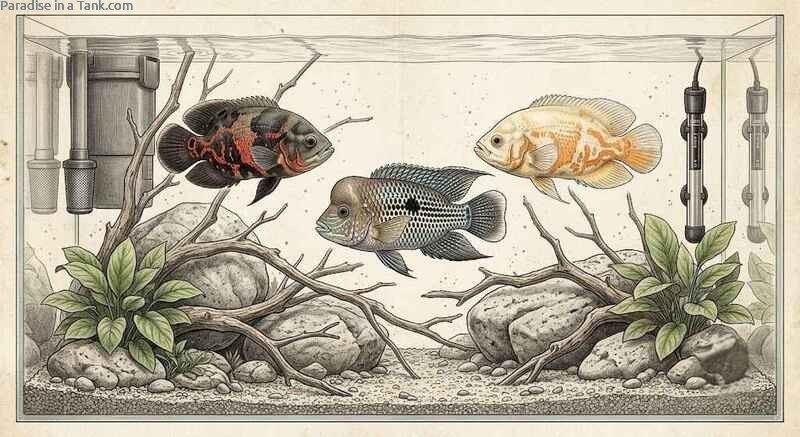
Target robust, deep-bodied species that occupy different water layers or possess enough size to command respect. Excellent candidates include large Silver Dollars, Oscar Cichlids, Severums, Convict Cichlids, and armored catfish like Plecostomus or Synodontis species. Fast-moving dither fish confuse predatory focus and break up line-of-sight aggression.
Ensure the aquarium layout provides clear visual barriers using large driftwood logs, slate caves, and tall rocks. Establishing distinct territorial boundaries allows subdominant fish to break line of sight immediately when a territory dispute flares up.
It is also vital to verify the exact species variant you are housing before finalizing tank mates. True species lines display distinct temperaments and territorial thresholds compared to popular commercial variants. Take time to study our detailed true green terror versus gold saum comparison guide to ensure your stocking density and mate choices fit the exact behavioral profile of your fish.
Building a thriving cichlid community requires keen observation, generous physical space, and an uncompromising commitment to clean water and proper nutrition. When you respect their ancient evolutionary drives and provide a disciplined care structure, you turn a potentially chaotic aquarium into a stunning display of natural aquatic power.