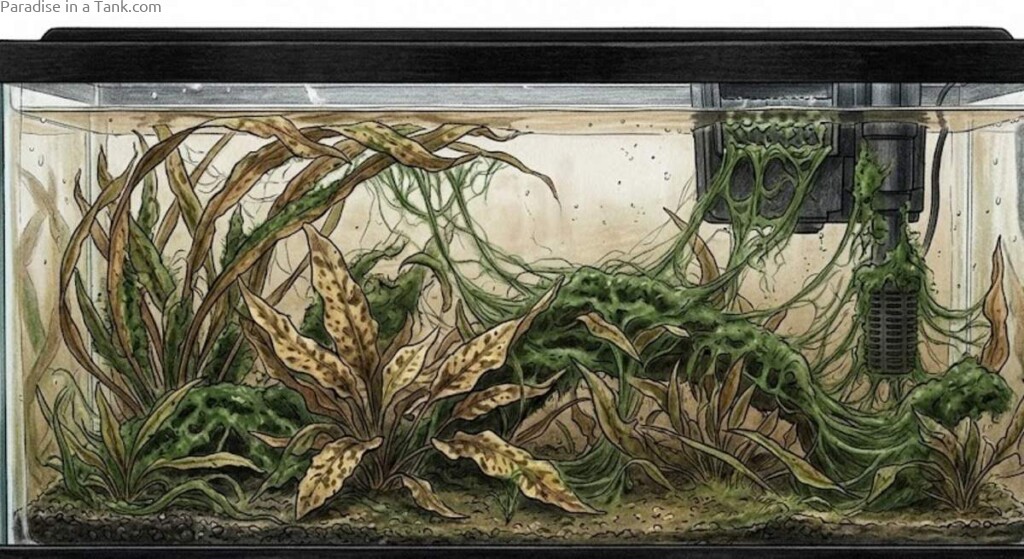
Every time you drop a pinch of flakes into your aquarium, you are signing a silent contract with the invisible ecosystem inside the glass. Your fish gobble up that food with primitive desperation, but what goes in must come out. In the closed environment of an aquarium, the cumulative total of all living waste, decaying matter, and organic debris is known as bioload. If you do not understand how to balance this biological weight, your tank will rapidly transform from an underwater paradise into a suffocating, toxic trap for its inhabitants.
What is Bioload and Why Does It Matter?
Aquarium bioload is the total volume of organic waste produced by all living inhabitants, uneaten food, and decaying material within your tank that must be processed by your biological filtration. When this waste output exceeds the processing capacity of beneficial bacteria, highly toxic compounds spike, stripping the water of oxygen and causing catastrophic livestock failure.
Think of your aquarium as a tiny, self-contained city where your fish are the citizens and the beneficial bacteria living in your filter are the waste management department. In a healthy tank, the bacteria process the waste as quickly as it is produced, keeping the invisible nasties in check. But if your citizens produce more garbage than the sanitation crew can handle, the entire system collapses under its own weight.
Understanding this balance requires you to look past the clear water and peer into the microscopic world of the biological breakdown. When waste enters the water, it initiates a relentless chemical chain reaction. If your biological filter isn’t robust enough to meet the demand, the environment turns lethal before you even notice a change in water clarity.
The Hidden Drivers: Factors That Explode Biological Load
You cannot manage what you cannot see, and bioload is driven by several variables that go far beyond the sheer number of fish swimming in the water column. Every scrap of organic material left lying around is an all-you-can-eat buffet for micro-organisms, which frantically multiply and break that debris down into lethal compounds.
The primary contributors to a tank’s biological burden include:
- Inhabitant Mass and Numbers: A school of tiny tetras produces a fraction of the waste generated by a single, thick-bodied goldfish or cichlid.
- Uneaten Fish Food: Flakes and pellets that sink to the bottom unconsumed do not just vanish; they rot, triggering immediate bacterial explosions.
- Decaying Plant Matter: Yellowing leaves, melting stems, and dead moss act exactly like rotting food, constantly leaching waste into the water column.
- Dead Livestock: A single dead snail or small fish hidden behind a rock will decompose rapidly, acting like a chemical bomb within hours.
- Dietary Profiles: Carnivorous and predatory species produce far more highly concentrated, protein-rich waste than smaller herbivores.
To truly master this ecosystem, you need to understand how these waste inputs are processed naturally. Reading a comprehensive breakdown of the aquarium nitrogen cycle will reveal exactly how beneficial bacteria convert these dangerous accumulations into safer elements.
How an Overloaded System Suffocates and Poisons Livestock
When your bioload crosses the invisible safety line, a devastating chain reaction occurs. The sudden abundance of organic food causes a massive growth spurt in the heterotrophic bacteria population. As these microscopic cleaners rush to break down the debris, they flood the water with raw ammonia, toxic nitrite, and nitrate buildup.
This chemical surge triggers a double-edged sword of oxygen deprivation. First, the exploding bacteria populations consume massive amounts of dissolved oxygen for themselves as they work. Second, because the water column is packed to the brim with dissolved waste solids, there is physically less room for precious oxygen to dissolve into the water. Your fish are left trapped in a toxic soup, literally suffocating from the inside out.
Furthermore, excess raw ammonia and nitrate buildup act as a massive injection of free fertilizer. If left unchecked, this nutrient surplus will trigger a suffocating algae infestation that coats your glass, smothers your decorations, and chokes out your live plants.
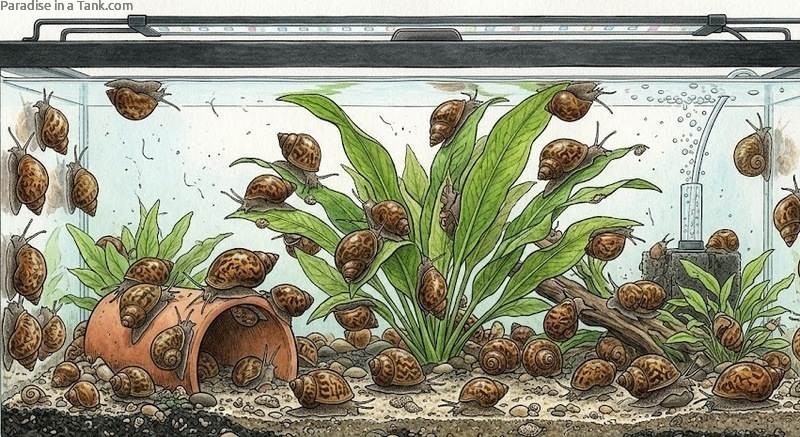
Worse yet, a constant surplus of decaying food will invite a sudden pest explosion. Ramshorn, bladder, and trumpet snails breed with frightening speed when an unchecked food supply is present. If you notice your glass covered in hundreds of tiny shells, you can deploy targeted strategies for removing aquarium snails to regain control of your substrate.
Red Alerts: Signs Your Tank’s Biological Load is Too High
While you cannot pull out a scale and weigh your bioload directly, your aquarium will scream for help through clear physical and chemical indicators. You must learn to read these signs before the damage becomes irreversible.
| High Bioload Indicator | Biological Root Cause | Required Action |
|---|---|---|
| Surface Gasping | Severe lack of dissolved oxygen caused by heavy bacterial respiration. | Increase surface agitation and execute an emergency water change. |
| Ammonia/Nitrite Above 0 ppm | The beneficial bacteria colony is outnumbered by the sheer volume of waste. | Cease feeding immediately and perform daily conditioned water changes. |
| Explosive Algae Growth | Unchecked nitrate buildup acting as an unrestricted fertilizer source. | Manually scrape algae, reduce photoperiod, and vacuum the substrate. |
| Snail Population Boom | Massive accumulation of uneaten fish food and decaying organic plant debris. | Thoroughly gravel-vac the substrate and drastically cut back feeding portions. |
The absolute most reliable, proactive defense is utilizing liquid testing kits to check your water parameters every single week. In a stable, cycled aquarium, your raw ammonia and toxic nitrite must read a flat, absolute zero parts per million. Levels as low as 0.2 parts per million will cause severe physiological stress, and anything higher can kill your fish within a matter of hours.
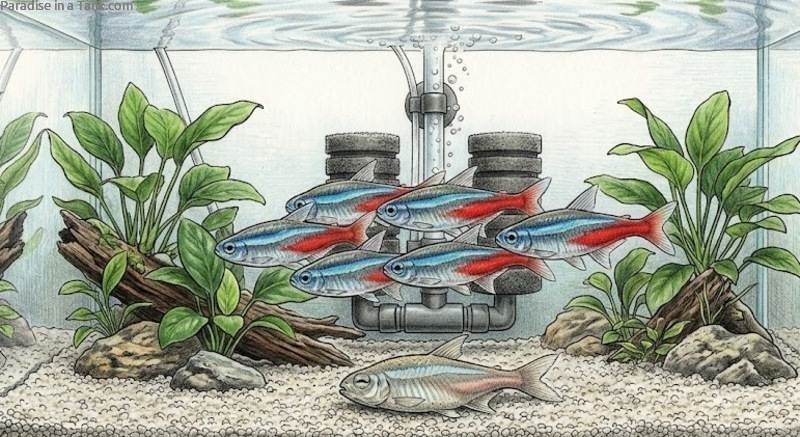
The Emergency Blueprint: Restoring Balance to a Crashing Tank
If your test kits are throwing red flags or your fish are thrashing at the surface for air, you must act systematically. Follow this strict, step-by-step restoration protocol in the exact order listed to stabilize the environment without shocking your livestock.
1. Test and Document Your Parameters
Before touching the water, run your liquid tests to establish a baseline for raw ammonia, toxic nitrite, and nitrate buildup. This ensures you know exactly how severe the spike is and gives you a target metric to hit.
2. Perform a Conditioned Water Change
Manually remove a significant portion of the polluted water and replace it with fresh, clean water. You must thoroughly dechlorinate the new water before it enters the tank. Match the temperature precisely using your aquarium heater, and ensure the water acidity and hardness match your tank’s baseline. Pouring in unconditioned or temperature-mismatched water will instantly shock your already stressed fish, pushing them over the edge into systemic shock.
3. Maximize Dissolved Oxygenation
Force oxygen into the water column by cranking up your aquarium air pump or adjusting your power filter to maximize surface agitation. If you encounter a power outage or cannot increase mechanical air flow, execute smaller, frequent water changes every hour to manually introduce fresh, oxygenated water into the system.
4. Purge Decaying Organic Matter
Grab your siphon and fish net to manually extract the physical root of the problem. Siphon out visible poop floating along the substrate, pluck out uneaten food, and immediately remove any dead fish or snails. Take a pair of aquascaping shears and trim away melting, rotting leaves or dead plants to halt ongoing decomposition.
Defensive Husbandry: How to Prevent Future Bioload Spikes
Once your water parameters sit safely back at zero parts per million, you must change your daily habits to prevent the next catastrophic spike. Maintaining long-term stability requires a shift from reactive panic to defensive husbandry.
Slash Feeding Portions
The number one cause of a collapsed biological system is overfeeding out of misplaced affection. For standard species that consume flakes or pellets, only feed what they can completely finish in under five minutes. Slow-eating or specialized bottom-feeders need targeted, controlled portions that do not dissolve into the gravel and rot out of sight.
Reduce the Stocking Density
The math of the ancestral evolutionary contract is brutally simple: fewer inhabitants mean less total food consumption and less poop. If your tank is constantly teetering on the edge of an ammonia spike, you must reduce the number of animals in the system.
Avoid Notoriously Messy Species
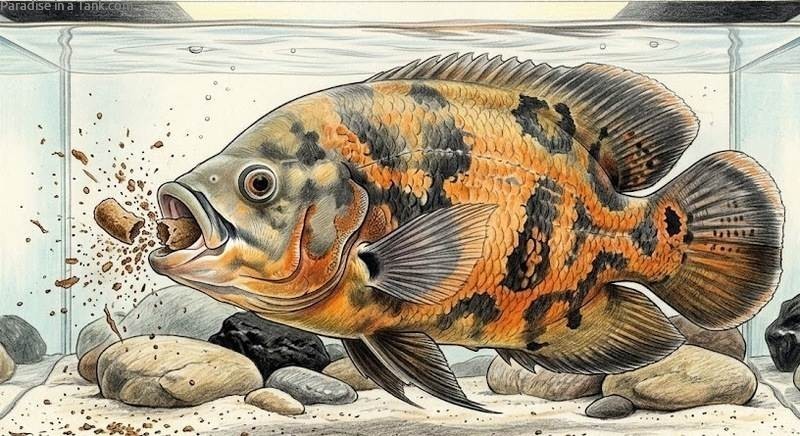
Certain fish are biological wrecking balls. Large predators bite off massive chunks of food, scattering tiny, shredded pieces into the water column to rot unnoticed. Heavy bottom-feeders take hours to rasp at food, while fresh vegetables with high water content can foul a small tank surprisingly fast. Avoid these species unless you are prepared for relentless maintenance.
Drastically Upgrade Your Filtration Capacity
If you refuse to part with your favorite fish or insist on keeping a crowded tank, you must scale up your mechanical and biological filtration to compensate. Your mechanical filters should easily process at least three to four times the entire volume of your aquarium every single hour.
To expand your biological boundary, add high-surface-area media like ceramic rings, bio balls, or a dedicated, porous dishwashing sponge directly into the high-flow areas of your filter housing or sump. This provides millions of microscopic anchoring sites for Nitrosomonas and Nitrobacter bacteria to colonize and tear through toxic waste.
Harness the Power of Live Plants
Live aquatic plants are nature’s ultimate safety valve. They view raw ammonia and nitrates not as deadly poisons, but as highly craveable, free fertilizer. By heavily planting your aquascape, you introduce a living, growing filtration network that silently gobbles up waste products on a daily basis, heavily reducing the manual burden on your shoulders.
Taking ownership of an aquarium means accepting your role as a disciplined custodian of nature. Keep your feeding tight, maintain your mechanical equipment with unyielding consistency, and respect the biological limits of the glass world you control. Your fish will reward you with vibrant health, clear eyes, and active behaviors for years to come.