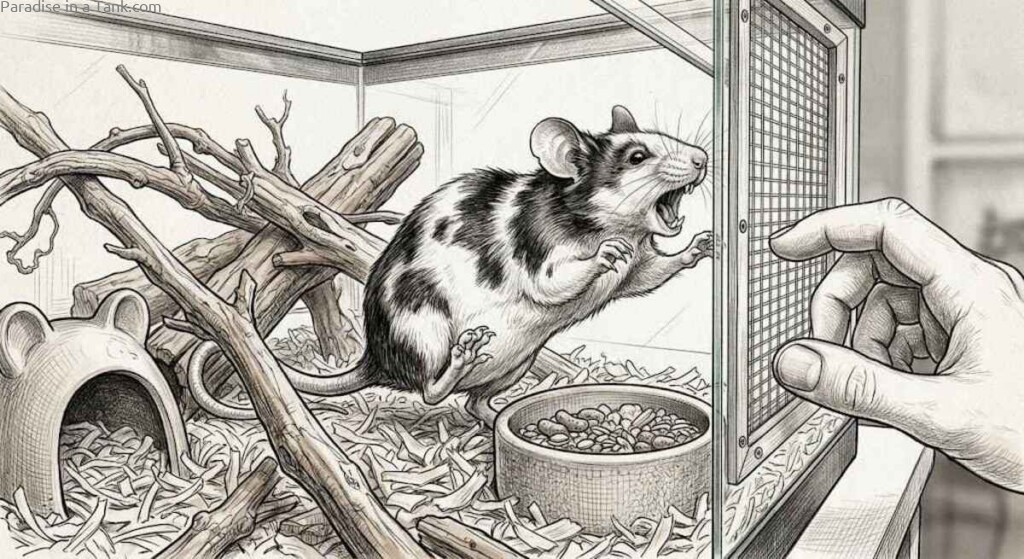
Pet mice bite primarily due to prey-driven fear, territorial defensiveness, or scent confusion caused by lingering food odors on your hands. Mice rarely bite out of malice; their sharp incisors are survival tools used when they feel cornered, startled, or startled by sudden hand movements inside their enclosure.
Understanding why a pet mouse nips or delivers a deep, painful bite requires looking through the lens of a tiny prey animal living in a massive, noisy world. In nature, a shadow passing over a mouse or a sudden hand invading its nest usually means a predator is about to end its life. When your pet mouse sinks its teeth into your finger, it is acting on millions of years of evolutionary programming designed to keep it alive.
By taking the time to decode their body language, clean your hands before handling, and build trust at their pace, you can completely eliminate biting behavior and build a confident, docile bond with your pet.
The Top Reasons Pet Mice Bite
To curb biting, you must first identify the exact trigger driving the behavior. A mouse’s incisors grow continuously and can easily break human skin, but they only use them as a last line of defense.
- Fear & Defense: Why a nervous or cornered mouse uses its teeth. A newly brought home mouse views your giant hand as a massive predator. If you reach in and corner them against the wall, their instinct shifts from flight to fight, leaving them no choice but to bite.
- Scent Confusion: Why handling food before touching your mouse leads to accidental bites. Mice have terrible eyesight and rely overwhelmingly on their acute sense of smell. If you handle peanut butter, cheese, or fruit treats and then reach into the enclosure, your finger smells like dinner. The mouse isn’t trying to hurt you; it simply thinks it is taking a bite of food.
- Cage Territoriality: Defensive behavior when hands enter their glass tank or enclosure unexpectedly. The enclosure is the only safe space a mouse has. Swooping your hand down from above mimics an overhead avian predator invading their sanctuary. To make their habitat feel safe while reducing stress, check out our guide on keeping pet mice in glass tanks & aquariums for ideal setup strategies.
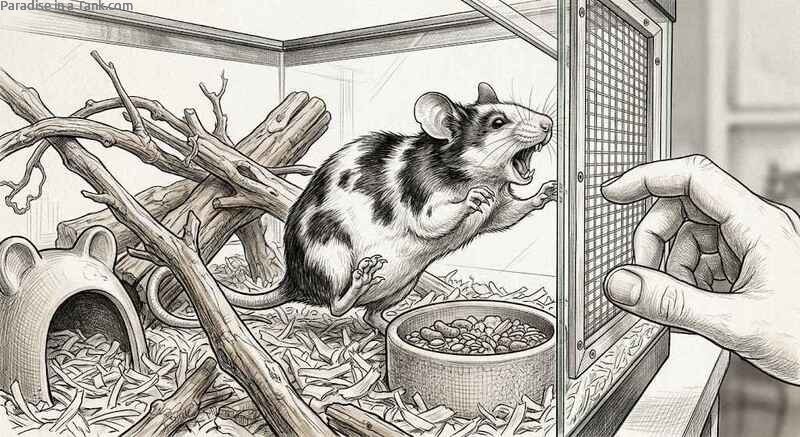
Reading Mouse Body Language Before a Bite
Mice almost always give clear warning signals before resorting to a bite. Recognizing these subtle physical cues allows you to back off before a nip occurs.
- Warning Signs: Tail wagging/thumping, squeaking, tense posture, or freezing. A happy mouse is curious, moving smoothly, and sniffing the air. A stressed or defensive mouse will freeze in place, arch its back, elevate its tail, or lash its tail quickly against the substrate (creating a distinct thumping noise). High-pitched squeaking while backing into a corner is an explicit request to leave them alone immediately.
Step-by-Step Guide: How to Train & Tame a Biting Mouse
Taming a skittish or nipping mouse requires consistency, patience, and zero physical force. Never scold, tap, or punish a mouse for biting, as this only reinforces their belief that you are a dangerous threat.
The Hand-in-Tank Scent Desensitization Protocol
- Wash Your Hands: Thoroughly clean your hands with unscented soap to eliminate all traces of food items, domestic pets (like cats or dogs), or outside scents.
- Rest Your Hand Resting Low: Slowly place your flat, open hand on the bedding near the edge of the enclosure. Keep your fingers completely still.
- Let Them Initiate Contact: Allow the mouse to come over, sniff your knuckles, and inspect you on their own terms. If they show signs of tension, freeze, or approach aggressively, slowly withdraw your hand. Repeat this process for 10–15 minutes daily until the mouse comfortably climbs onto your palm. As your mouse settles in, you may notice high digestion rates; read our breakdown on why do pet mice poop so much to better understand their rapid metabolic needs.
Using Treats & Positive Reinforcement (No Punishment)
- Lure, Don’t Force: Offer high-value treats (such as a tiny smear of plain unsweetened yogurt on a spoon, or a single pumpkin seed held between your fingertips) to teach the mouse that your presence brings positive rewards.
- Short, Frequent Sessions: Keep taming sessions under 10 minutes to avoid overwhelming the animal’s nervous system. End every session on a positive note with a reward.
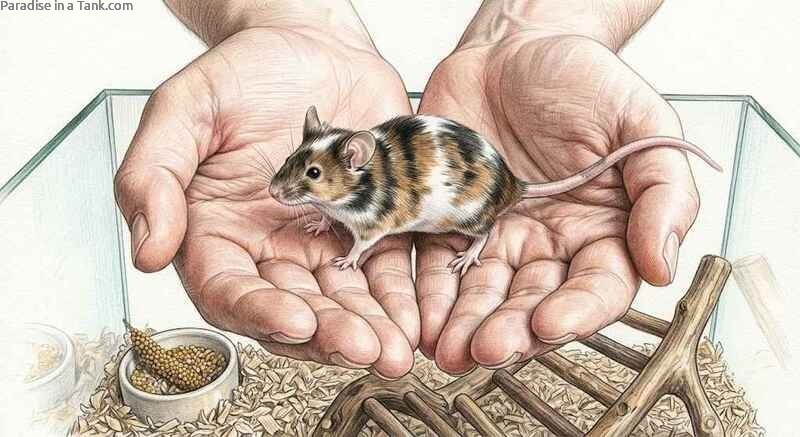
Safe Handling Techniques: Scoop Method vs. Tail Lifting (What NOT to do)
- The Scoop Method: Never reach down grabbing from above like a claw machine. Instead, slip both hands under the mouse’s belly and scoop them up gently from below, bringing them close to your chest where they feel secure. You can also coax them into a plastic cup or paper towel tube to move them safely without risking a nip.
- Why You Must NEVER Lift by the Tail: Lifting a mouse by its tail causes extreme pain, severe psychological distress, and can strip the delicate skin right off the tail bone (a horrific injury known as degloving). Tail lifting guarantees an aggressive bite out of sheer agony and self-defense.
To ensure your pet’s environment supports proper socialization, diet, and long-term wellbeing, explore the complete pet mouse care guide. With a calm approach, consistent scent desensitization, and respect for their body language, your mouse will quickly learn that your hands bring comfort, safety, and treats rather than harm.