The Micro-Predatory Digestion Framework
To optimize your ram cichlid feeding regimen, provide high-protein, carotenoid-rich foods 2–3 times daily within a temperature range of 26–30°C and a pH of 5.5–6.5. Pair these micro-predators with peaceful tank mates like neon tetras or corydoras, maintaining low nitrate levels below 10 PPM to ensure complete safety and vibrant scale coloration.
Understanding the internal anatomy of Mikrogeophagus ramirezi is the first step toward keeping them thriving rather than merely surviving. These miniature cichlids are specialized carnivores designed by evolution to sift through sub-surface substrate rather than consuming floating organic matter. Their digestive tracts are surprisingly short and highly sensitive, meaning low-quality fillers will rot in their guts, triggering systemic bacterial infections and sudden fatalities.
When you bring these fish home, you are entering an ancient evolutionary contract that requires strict compliance. Their high metabolic rate requires a steady intake of nutrient-dense food, yet their small stomachs cannot handle massive, infrequent meals. If you overfeed them in a single sitting, the uneaten debris decomposes into high levels of ammonia and nitrite, stressing their delicate gills.
Wild Feeding Habits: How Benthic Organisms Fuel Metabolic Needs
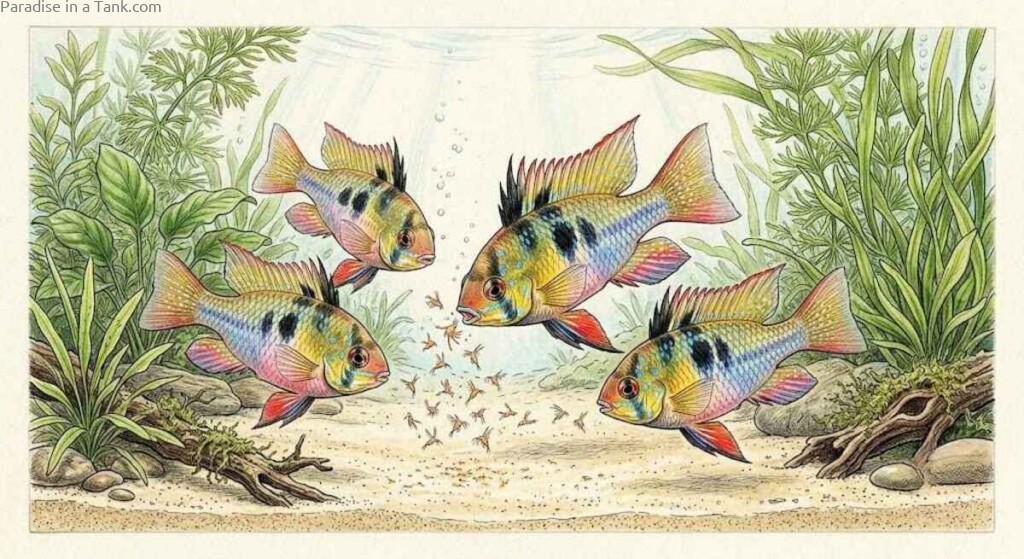
In the slow-moving, warm waters of the Orinoco River basin, ram cichlids spend their entire day hovering over sandy shallows, performing a continuous hunting dance. They plunge their mouths deep into the soft sand, scooping up mouthfuls of sediment to filter out tiny insect larvae, small crustaceans, and benthic worms. This constant sifting behavior means they are genetically hardwired to graze continuously throughout the day.
Attempting to force them into a feeding schedule built around dry, buoyancy-treated flakes that sit at the surface contradicts millions of years of anatomical programming. They will pace around the bottom of the glass, starving while food floats just a few inches above their heads. If you want to witness their natural behaviors, you must provide sinking foods that challenge their predatory tracking instincts.
The environment they inhabit must support this lifestyle, which is why a soft sand substrate is absolutely non-negotiable for their long-term health. If kept on sharp gravel, their delicate mouthparts will get scratched and infected by opportunistic aquatic bacteria, leading to horrific mouth rot that prevents them from eating entirely. You can explore our comprehensive ultimate ram cichlid guide to fully grasp their environmental nuances and baseline requirements.
Nutrient Ratios: Driving Protein Intakes for Long-Term Intestinal Safety
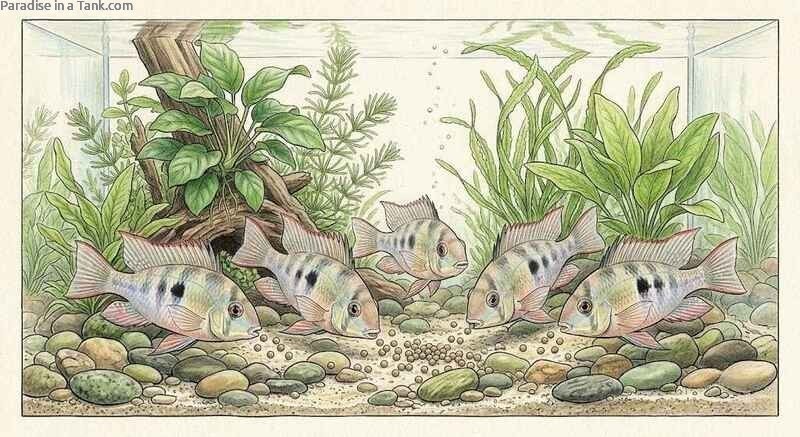
To preserve the sensitive intestinal lining of these dwarf cichlids, their daily intake must consist of at least 45–50% crude protein and high fat ratios derived from genuine marine sources. Cheap commercial pellets packed with terrestrial starches, soy, and wheat gluten act as a slow poison in their short digestive tracts. These complex plant sugars cause severe intestinal bloating, structural collapses of the gut wall, and eventual death.
When checking the ingredient label on your fish food, look for whole salmon, whole herring, or krill listed as the primary ingredients. Avoid products that rely heavily on grain byproducts as cheap texturizers to bulk up the product. If your fish gobble up low-quality fillers, their bodies cannot process the dense carbohydrates, leading to foul odors in the tank and rapid nitrate buildup.
Maintaining strict water parameter discipline goes hand-in-hand with their metabolic health, as poor water quality completely halts their digestive enzymes. A sudden spike in organic waste slows down their gastrointestinal motility, causing food to literally ferment inside their bellies. Keep your dissolved organic solids low and your feeding portions small enough to be completely consumed within 60–90 seconds.
Formulating a High-Efficiency Captive Diet
A high-efficiency captive diet relies on a diverse, rotating menu that mirrors the nutritional complexity of the wild Orinoco floodplains. Relying on a single type of dry food week after week leads to severe vitamin deficiencies and a completely suppressed immune system. We must mix high-grade sinking micropellets, freeze-dried organisms, and clean frozen foods to cover every single nutritional base.
Establishing a solid routine means feeding your fish 2 or 3 times per day in tiny, controlled increments rather than dumping a massive portion in the morning. This frequent, low-volume approach keeps their active metabolisms fueled without overwhelming the biofiltration capacity of your aquarium. Any food that touches the substrate and remains unconsumed after 2 minutes must be manually siphoned out immediately.
Watching their growth milestones closely will give you direct insight into whether your nutritional strategies are working as intended. A healthy adult will rapidly reach its full genetic potential when backed by pristine water and a premium carnivore diet. You can check the expected standard metrics for these fish in our detailed look at german blue and bolivian ram size milestones to ensure your specimens are growing at a normal pace.
Color Optimization: Incorporating High-Carotenoid Rations to Boost Scale Vibrancy
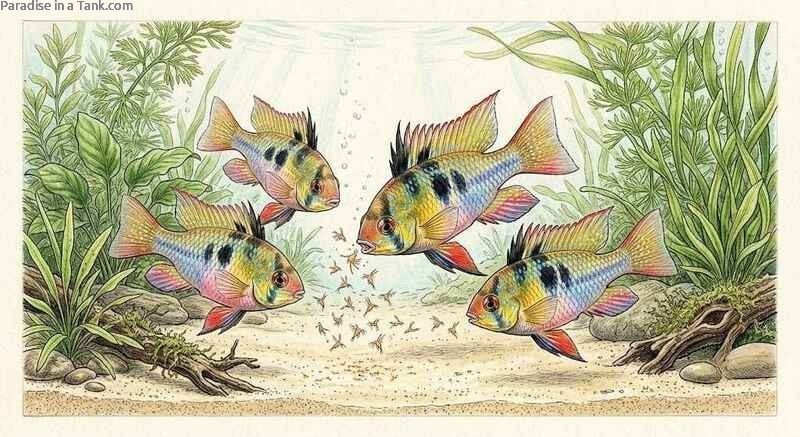
The brilliant neon blues, striking sunburst yellows, and deep ruby reds displayed by healthy rams are not produced automatically; they must be unlocked through specific dietary compounds called carotenoids. In the wild, these fish acquire pigments by consuming vast quantities of micro-crustaceans that graze on specialized algae. Without these natural pigments in their captive diet, their scales will turn a dull, washed-out gray color within weeks.
To combat this aesthetic decline, integrate high-carotenoid inputs like astaxanthin, spirulina algae, and premium krill meal into their primary feeding routine. These compounds act as powerful internal antioxidants that protect cellular structures while enhancing the iridescent iridophores embedded in their skin. You will know your diet is working when their lateral mackerel striping darkens and their dorsal fins develop an intense crimson edge.
Be cautious of artificial chemical color enhancers that promise immediate results but put unnecessary strain on the fish’s liver and kidneys. Stick to natural, biological sources of pigmentation that build true, radiant health from the inside out. When you couple these nutrient-rich pigments with optimal water chemistry, your tank will transform into a stunning display of natural brilliance.
Supplemental Inputs: The Role of Live Artemia and Vitamin-Enriched Flakes
Nothing sparks the predatory fire of a dwarf cichlid quite like the frantic, jerky movements of freshly hatched live Artemia nauplii. Feeding live brine shrimp or gut-loaded daphnia once or twice a week provides excellent physical exercise and highly bioavailable lipids. The hunting stimulus encourages sedentary fish to thrash through the water column, preventing fatty liver degeneration and boosting overall vitality.
In addition to live foods, high-quality vitamin-enriched flakes that are broken down into bite-sized pieces can serve as an excellent vehicle for essential micronutrients. Look for formulations enriched with stabilized Vitamin C and marine lipids to support their delicate slime coats and skeletal integrity. These supplemental items fill any minor nutritional gaps that might occur from a pure pellet routine.
Providing top-tier nutrition becomes even more crucial when you are trying to induce spawning behaviors in mature pairs. Proper conditioning with rich, live proteins triggers the female’s hormonal pathways, causing her abdomen to swell with healthy eggs. If you are eager to learn how to distinguish genders and trigger successful reproduction, take a look at our definitive guide on female vs. male german blue ram identification and spawning tactics.
The Companion Compatibility Matrix for Peaceful Communities
Selecting the right tank mates for your ram cichlids is a high-stakes balancing act where a single bad choice can lead to torn fins, cage escapes, or severe territorial violence. Rams are naturally timid, territorial substrate dwellers that easily become stressed by hyperactive or aggressive tank inhabitants. If you pair them with boisterous fish that gobble up all the food before it hits the bottom, your rams will slowly starve to death.
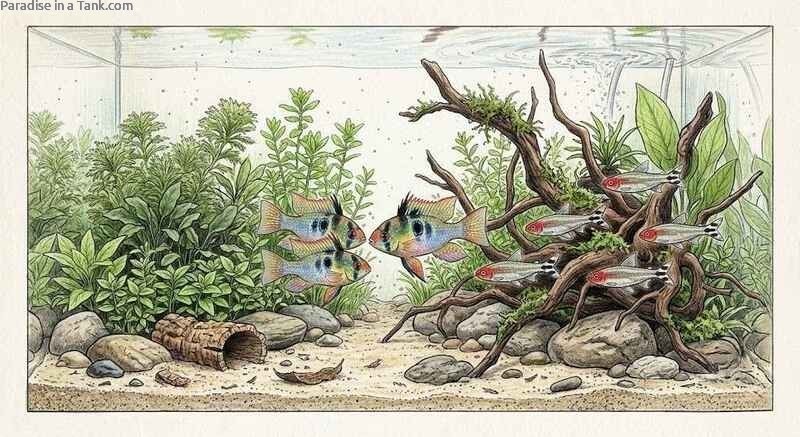
To maintain absolute peace, select small, peaceful schooling species that occupy the upper and middle layers of the water column. These dither fish act as natural reassuring signals, telling the rams that no predators are hovering nearby. Avoid large, aggressive cichlids or hyper-competitive bottom feeders that will constantly pester your rams for territory.
| Potential Tank Mate | Community Compatibility Status | Primary Risk or Benefit Factor |
|---|---|---|
| Cardinal Tetras | Highly Recommended | Act as peaceful dither fish while occupying the upper water column safely. |
| Rummy Nose Tetras | Highly Recommended | Excellent schoolers that indicate water quality drops by losing nose coloration. |
| Corydoras Catfish | Moderately Compatible | Peaceful bottom dwellers that may occasionally infringe on ram nesting territories. |
| Angelfish | Caution Required | May outcompete smaller rams for food and become highly aggressive during spawning. |
| Male Betta Fish | Not Recommended | High risk of territorial battles due to overlapping environmental preferences and bright fins. |
When you construct your community around these strict biological boundaries, your aquarium will thrive in complete harmony. Keep your water chemistry locked in, feed a rich variety of high-protein foods, and watch your dwarf cichlids rule the bottom layers of your aquatic display with absolute confidence.