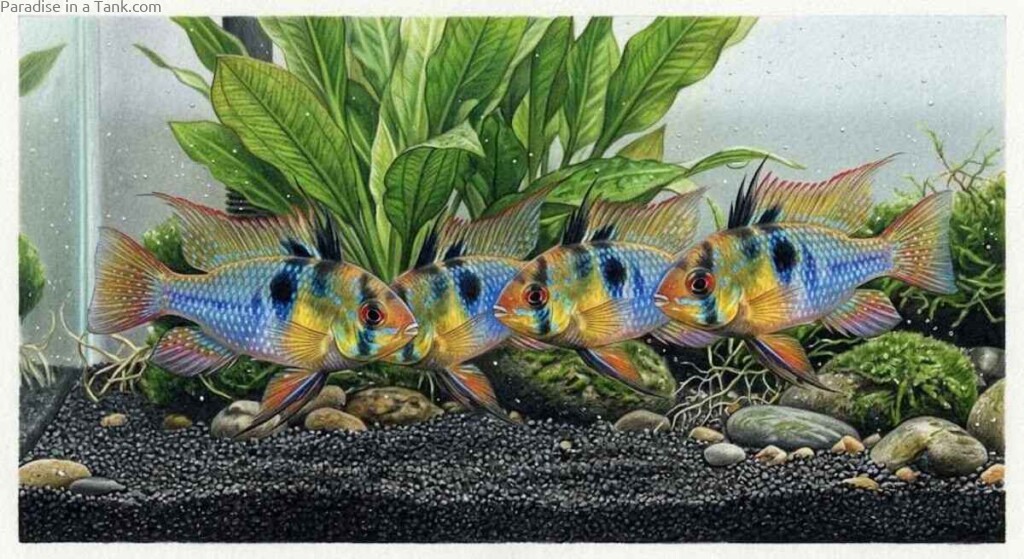
An Introduction to the Mikrogeophagus Genus Profile
Ram cichlids are stunning dwarf cichlids requiring meticulous husbandry to thrive. They demand soft, acidic water with a pH of 5.0–6.5, a temperature range of 78–85°F, and immaculate water quality with ammonia and nitrite at 0 PPM and nitrate below 10 PPM. Proper care requires deep understanding of their unique varieties, morphology, and habitats.
The world of dwarf cichlids contains many fascinating species, but few command the gaze of aquarists quite like the genus Mikrogeophagus. These tiny titans pack all the complex behavioral architecture, territorial disputes, and fierce parental instincts of massive cichlids into a body that rarely exceeds a few inches. For too long, casual keepers have treated these delicate creatures like disposable, brightly colored ornaments, only to watch them drop like flies within weeks of purchase. If you treat them like generic community fish, you will fail. They are specialized, evolutionary marvels that demand disciplined custodianship.
To succeed with these magnificent fish, you must completely abandon the lazy habit of throwing them into an unmonitored, unstable aquatic system. You are dealing with an animal whose biological tolerance windows are incredibly narrow. When you bring a Ram cichlid into your home, you are signing an ancestral evolutionary contract. You are committing to replicating ancient, pristine water chemistry parameters right in your living room, shielding their fragile immune systems from the chemical burns of accumulated waste and municipal water impurities.
Understanding the genus profile means appreciating the sheer complexity behind their everyday behaviors. They are not mindless, slow-moving decor; they pace around their territory, flash their fins at rivals, and meticulously pick clean potential spawning sites. Every flick of their pelvic fins and every sudden darkening of their lateral bars is an explicit broadcast of their physiological and psychological state. If you know how to read these signs, you can step in long before a minor husbandry mistake spirals into a lethal, system-wide collapse.
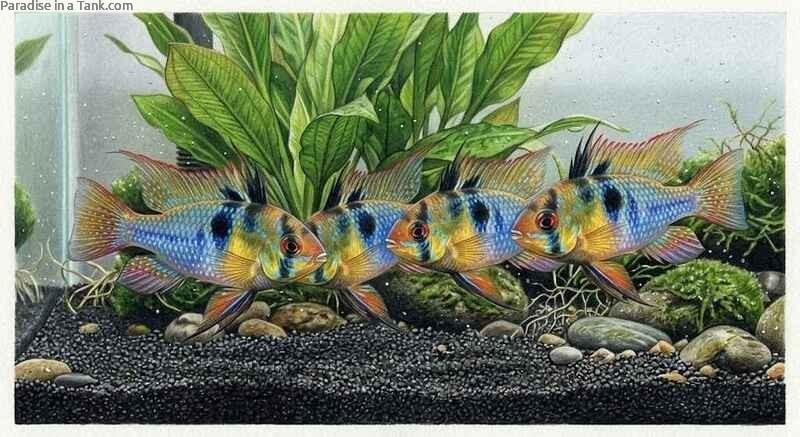
Evolutionary Origins: The Orinoco River Basin Drainage Networks
To truly understand why your Ram cichlid acts the way it does, we have to look thousands of miles away to the sprawling Orinoco River basin drainage networks of Venezuela and Colombia. These vast, sun-baked plains, known as the Llanos, feature shallow morichals, slow-moving streams, and seasonal floodplains. Here, the water is exposed to intense, unrelenting tropical sunlight, driving temperatures up to levels that would leave most tropical fish gasping for oxygen. The water is virtually devoid of mineral content, characterized by a crushing lack of calcium and magnesium carbonate.
Evolution did not design these fish to handle the heavy mineral loads, hard tap water, or shifting chemistry parameters common in modern urban households. In their native habitats, massive layers of terrestrial leaf litter fall into the water and slowly rot, leaching vast quantities of organic humic acids and tannins into the system. This natural process drops the pH down to astonishingly low levels, sometimes hitting 4.5–5.5. This ultra-acidic, warm environment acts as a natural sterile shield, severely restricting the growth of harmful environmental bacteria and parasites.
When you force a fish evolved for these pristine, biologically sparse conditions into a generic, high-pH aquarium filled with tap water, you shatter their primary line of defense. Their slime coats break down, their kidneys are forced to overwork to maintain osmotic balance, and environmental pathogens immediately take hold. They become vulnerable to horrific internal systemic infections, gill damage, and sudden death. You cannot expect a creature shaped by millions of years of soft, acidic, crystalline river flows to suddenly adapt to your hard, chlorinated local tap water.
Silhouette Morphology: Analyzing the Stocky, High-Backed Dwarf Silhouette
Look closely at the physical silhouette of a healthy Ram cichlid, and you will notice a masterclass in specialized dwarf anatomy. Unlike their elongated, stream-lined river cousins that rely on pure speed to escape predators, these fish possess a distinctly stocky, laterally compressed, high-backed silhouette. This compact body plan is highly adapted for navigating dense underwater labyrinths of submerged tree roots, low-hanging brush, and thick blankets of decaying leaf litter. It allows them to make sudden, incredibly sharp turns, darting backward and forward in tight spaces where larger predators simply cannot fit.
The crowning glory of this silhouette is the dramatic, high-backed dorsal fin, which features elongated, weaponized anterior spines that they lift proudly whenever threatened or courting a mate. Their large, expressive eyes are set forward on the skull, providing exceptional binocular vision optimized for spotting microscopic live prey, tiny insect larvae, and worms hiding in the substrate. Understanding their stocky build and final skeletal structure is crucial; you can look at the German Blue and Bolivian Ram size differences to accurately gauge how these high-backed dwarfs develop as they mature.
Every aspect of their physical design is geared toward territorial defense and calculated resource hunting. Their lower jaws are muscular and adapted for constant sifting through fine sand, blowing out small jets of water to uncover buried micro-crustaceans. Their pelvic fins are elongated into elegant, sensitive filaments that they use to physically touch and assess the substrate, structural boundaries, and potential mates. They do not merely float through the water column; they actively interact with their physical environment through deliberate, highly mechanical bodily movements.
The Master Compendium of True Ram Species and Lineages
Navigating the world of commercial aquaculture requires a sharp, critical eye, as human selective breeding has radically expanded the available variations of these fish. You must learn to distinguish between the ancient, genetically resilient wild types and the highly modified, physically fragile domestic color morphs that dominate local fish store tanks. Failing to recognize the differences in hardiness, behavioral visual cues, and specific physiological sensitivities between these lineages will inevitably lead to frustration and empty tanks.
When managing these classic varieties, understanding female vs. male German Blue Ram identification becomes critical for successful pairing and spawning. The natural wild-type color patterns serve a distinct evolutionary purpose, acting as a dynamic visual canvas that displays their shifting health status, social rank, and reproductive readiness. Let us break down the primary lineages you will encounter in the hobby today.
- The German Blue Classic: This is the benchmark lineage, displaying a breathtaking tapestry of iridescent neon blues, vibrant yellows, and deep violet-red bellies. Spotting the natural neon coloration parameters involves looking for a distinct black vertical bar running straight through the eye, a dark blotch on the mid-lateral flank, and glittering blue scales scattered across the fins.
- The Bolivian Cousin: Differentiating the larger, robust Mikrogeophagus altispinosus is instantly obvious once you know what to look for. They lack the intense, saturated neon blue blanket of the German Blue, presenting instead a subtle, rustic palette of pastel grays, warm yellows, and striking red highlights along the margins of their lyre-shaped caudal fins.
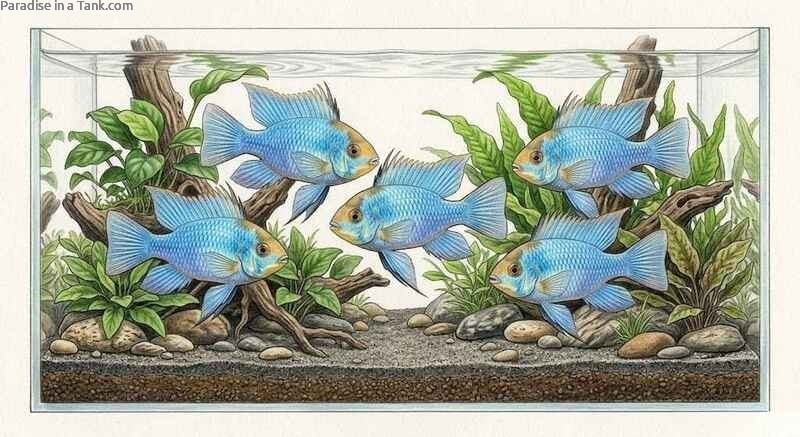
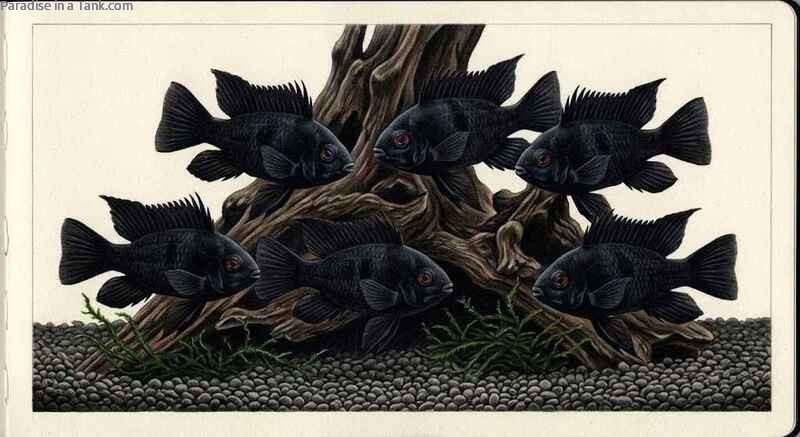
- The Selective Aquarium Strains: Humanity’s obsession with bright colors has birthed a variety of highly modified domestic mutations. These include the Electric Blue morph, which blankets the entire fish in an intense, solid metallic turquoise; the Gold Ram, which eliminates black pigmentation entirely to reveal a clean, pastel yellow palette; and the Midnight Black morph, a highly coveted, deeply melanistic strain that looks like a dark shadow gliding through the tank.
| Lineage Variety | Maximum Average Size | Primary Color Markers | Relative Genetic Hardiness |
|---|---|---|---|
| German Blue Classic | 2.0–2.5 Inches | Iridescent blue spangles, yellow head, dark lateral blotch. | Moderate; highly sensitive to poor water quality. |
| Bolivian Ram | 3.0–3.5 Inches | Pastel gray, yellow chest, red-tipped lyretail margins. | High; tolerates wider pH and temperature fluctuations. |
| Electric Blue Morph | 2.0–2.5 Inches | Solid, unbroken shimmering metallic neon turquoise. | Low; highly prone to internal parasites and stress. |
| Midnight Black Morph | 2.0–2.5 Inches | Solid, deep matte charcoal to jet-black coloration. | Very Low; requires highly experienced husbandry protocols. |
While domestic color morphs look spectacular under modern LED aquarium lighting, you must recognize that selective line-breeding often comes at a steep genetic cost. The more highly modified the color strain, the more fragile the fish’s internal organs, liver function, and immune system tend to be. If you are a beginner looking to build your confidence, starting with the robust Bolivian cousin or a high-quality wild-type German Blue is a much wiser path than diving straight into the incredibly sensitive, highly inbred Midnight Black or Electric Blue varieties.
General Dwarf Cichlid Tank Layouts and System Foundations
To build a truly functional, long-term sanctuary for these fish, you must completely reject the outdated concept of a bare, brightly lit community tank. Your system architecture must focus on security, territorial line-of-sight breaks, and immaculate water filtration. Start with a foundation of ultra-fine, natural aquarium sand; these fish are avid sand-sifters, and using coarse, sharp gravel will physically tear their delicate mouthparts, leading to horrific systemic bacterial infections and secondary fungal growth.
Your hardscape should prominently feature massive, intertwined networks of natural driftwood, bogwood, and smooth, flat river stones. These structures do not just look stunning; they serve as critical territorial markers that allow multiple fish to coexist without constantly catching sight of each other and engaging in endless, stressful physical battles. Populating the layout with dense clusters of low-demanding, shade-tolerant live plants like Java Fern, Anubias, and sprawling beds of Cryptocoryne provides natural cover while actively soaking up excess chemical waste from the water column.
To complete your setup, structuring proper Ram cichlid feeding regimens and community tank mate selection is vital to ensure your high-backed dwarfs are not bullied or starved by faster swimmers. Filtration must be incredibly robust yet gentle; choose a high-capacity canister filter or an oversized sponge filter setup that delivers exceptional biological breakdown capabilities without creating a massive, exhausting torrent of high-velocity water movement that will leave these slow-moving dwarf cichlids completely spent.
- Substrate Layering: Always implement a thick 2–3 inch base of washed, inert sand to encourage natural, stress-reducing foraging behaviors.
- Territorial Visual Breaks: Arrange driftwood branches vertically and horizontally to completely cut off direct horizontal lines of sight across the length of the aquarium.
- Spawning Site Placement: Scatter several smooth, flat, horizontally oriented stones in dark, secluded corners of the tank to serve as stable nesting platforms.
- Chemical Stability Targets: Maintain ammonia at absolute 0 PPM, nitrite at 0 PPM, and utilize routine, disciplined water changes to prevent nitrate from ever creeping past 10 PPM.
By respecting the ancient, evolutionary needs of the Mikrogeophagus genus, you successfully transition from a casual, reactive pet keeper into a highly disciplined, proactive custodian of nature. Watch your water parameters like a hawk, feed a varied diet rich in high-protein live or frozen foods, and provide a complex, structurally rich environment. Your reward will be a thriving, brilliantly colored display of raw, natural cichlid behavior right before your eyes.