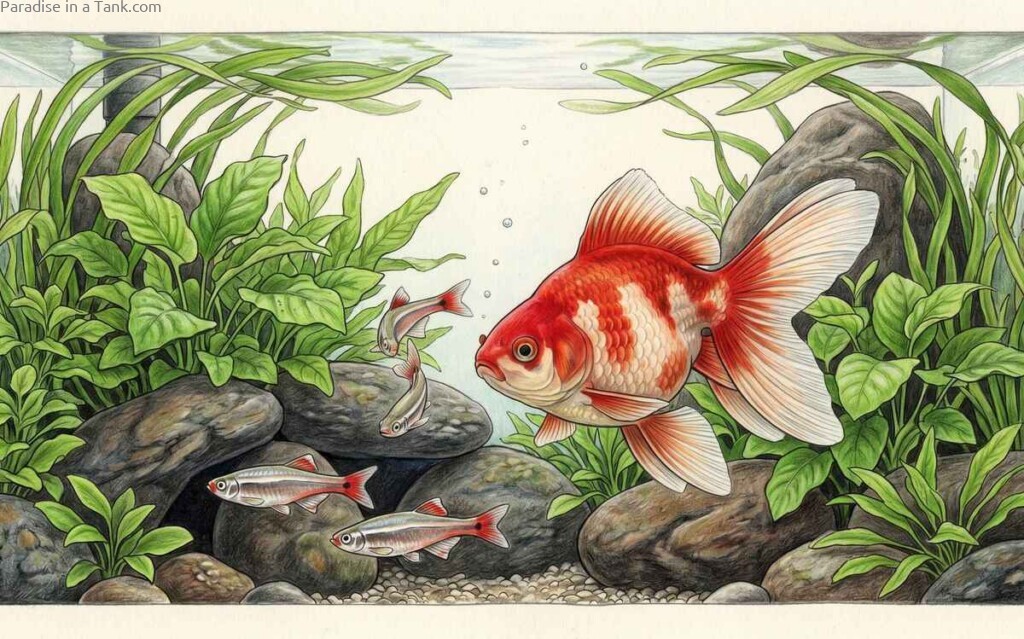
What is a True Fantail Goldfish?
The Fantail goldfish is a resilient, double-finned fancy goldfish characterized by an egg-shaped body and a split caudal fin structure. To thrive, a single Fantail requires a minimum tank size of 15 to 20 gallons of water, a low-flow filtration system to protect its delicate fins, and a strict diet of sinking pellets to prevent chronic swim bladder issues.
When you first step into the world of keeping fancy aquatic life, the sheer variety can leave your head spinning. The true Fantail goldfish stands as the historic foundation of all modern fancy varieties. These are not your standard, hyperactive pond comets that zip around like small orange missiles. They are deliberate, heavy-bodied, and deeply elegant animals that have traded streamlined swimming efficiency for beautiful fin anatomy. Keeping them successfully means honoring their distinct anatomical shapes rather than treating them like ordinary, bulletproof feeder fish.
Anatomical Standards: The Double (Split) Caudal Fin Architecture
The defining hallmark of a true, show-grade Fantail is its magnificent double caudal fin system. Unlike the single vertical tail of a common goldfish, the Fantail possesses a completely split tail that attaches to the caudal peduncle at a clean, distinct angle. When looking down from above, this structure splits completely down the center line, creating two identical, mirrored fin lobes that drape downward like a heavy silk skirt.
This double-finned blueprint completely alters how the animal moves through the water column. They do not glide smoothly; they waddle with a beautiful, rhythmic kinetic motion driven by their pelvic and anal fins working in tandem. If the tail sections are fused, bent, or single-lobed, the animal does not meet the true structural archetype of the breed. This unique split fin design makes them incredibly vulnerable to strong water currents, which can easily rip, tear, or fray the delicate tissue.
Torpedo Bodies vs. Egg-Shaped Conformations: Spotting Quality Breeds
When you are hunting for a healthy juvenile at your local shop, you must closely examine the structural geometry of the fish’s torso. Low-quality stock or poorly bred common variants often feature elongated, torpedo-shaped bodies that closely resemble regular comets. A high-quality Fantail showcases a short, highly compressed, egg-shaped conformation. The back should arch upward in a smooth, high, dramatic curve right behind the head, while the belly balances it with a deep, round drop.
This compressed, spherical shape means all their internal organs are tightly packed into a very small structural space. This internal crowding is exactly why the breed demands precise care. Buying a torpedo-shaped fish means you are getting a cross-breed that might swim faster, but it lacks the iconic presentation of a true fancy. Look for a thick, solid midsection without any sharp indentations, lumps, or asymmetrical bloating that could signal internal genetic deformities.
Why the Basic Fantail is the Ideal Beginner Fancy Goldfish
If you are anxious about diving into the delicate world of fancy varieties, the basic Fantail is your perfect safety net. They are far tougher and more forgiving than their highly mutated cousins like Bubble Eyes or delicate Celestials. They lack the fleshy, infection-prone head growths of Orandas and possess completely normal, fully functional eyes that let them hunt down food easily.
They provide the absolute best introductory learning curve for anyone looking to master fancy husbandry. They give you the gorgeous aesthetic of long, flowing fins without the extreme physical fragility that leaves other varieties constantly teetering on the edge of a health crisis. They are a tough, beautifully expressive canvas that allows a disciplined custodian to master water chemistry and advanced diet routines before moving on to more fragile bloodlines.
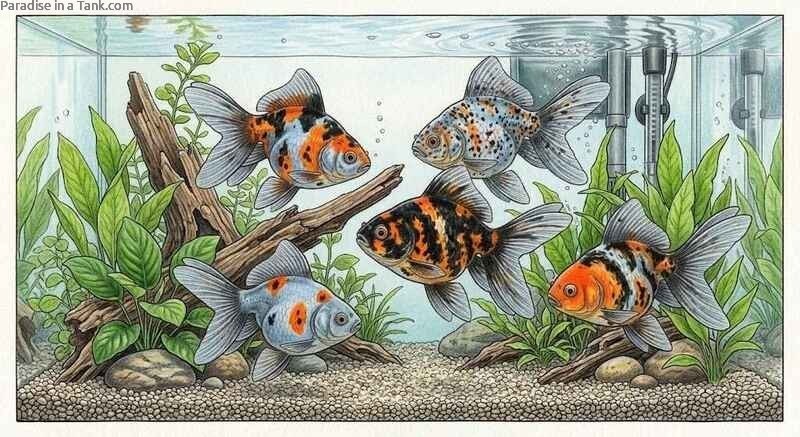
Popular Color Varieties: From Metallic Gold to Calico Fantailed Goldfish
The visual appeal of the Fantail lies heavily in how its color varieties interact with its unique scale structures. Over centuries of selective breeding, these fish have developed diverse expressions of pigment. Understanding these variations helps you anticipate how your fish will mature over time. Check out our ultimate guide to fantailed varieties to see exactly how these striking body shapes and color variations develop as the fish matures.
The Classic Gold Fantail Goldfish (Scale Pigment & Color Retention)
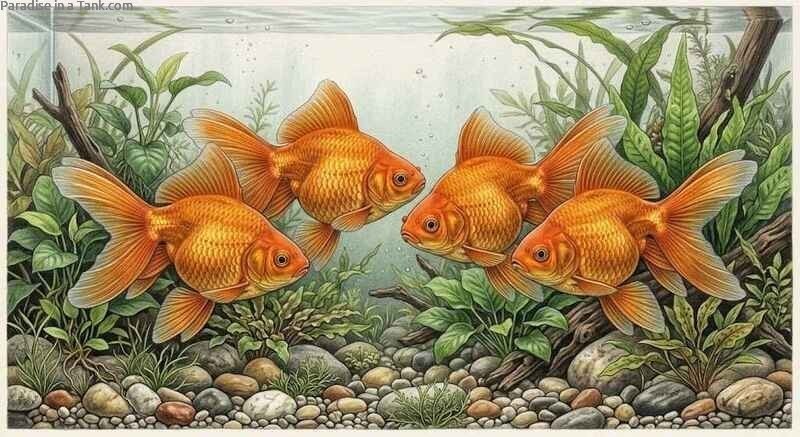
The classic gold variant relies on highly reflective metallic scales that gleam like polished copper or deep orange under quality aquarium lighting. These scales contain high amounts of guanine, a crystalline substance that reflects light sharply. When they are young, these fish often look dark greenish-bronze or completely black, only clearing up and changing into their true orange or deep gold coats as they cross their first full year of life.
Maintaining this rich orange and red pigment requires deliberate husbandry choices. If you keep your fish in a dimly lit room or over a stark white substrate, their chromatophores (pigment-producing cells) will naturally fade, leaving you with a washed-out, pale yellow fish. High-intensity lighting, paired with a dark gravel or sand substrate, stimulates strong color expression. Feed them natural foods rich in carotenoids—like astaxanthin, spirulina, and krill meal—to keep those metallic scales looking vibrant.
Calico Fantail Identification: Nacreous Scale Patterns & Show Grading
Calico specimens are a completely different visual experience because they possess nacreous scales, which are semi-transparent and mother-of-pearl in texture. This unique scale structure allows you to see deep pigment layers embedded far below the surface of the skin. A high-grade calico should feature a beautiful, complex mosaic of deep velvet black patches, rich ruby reds, soft oranges, and a rare, highly sought-after slate blue background.
When grading a calico, look closely at the distribution of the black pigment. You want clean, distinct speckles and bold patches rather than a muddy, smeared appearance that looks like the fish was dipped in dirt. The presence of that deep slate blue color is the true sign of premium breeding, as it indicates excellent depth of tissue pigmentation. Avoid specimens that have massive, entirely clear patches with visible pink skin underneath, as these scales are overly fragile and prone to frequent bruising.
| Color Variety | Scale Type | Key Visual Grading Indicators |
|---|---|---|
| Classic Metallic Gold | Highly reflective metallic | Deep, uniform orange-red sheen without pale yellow bleaching. |
| Premium Calico Mosaic | Semi-transparent nacreous | High contrast black spots over a distinct slate blue base. |
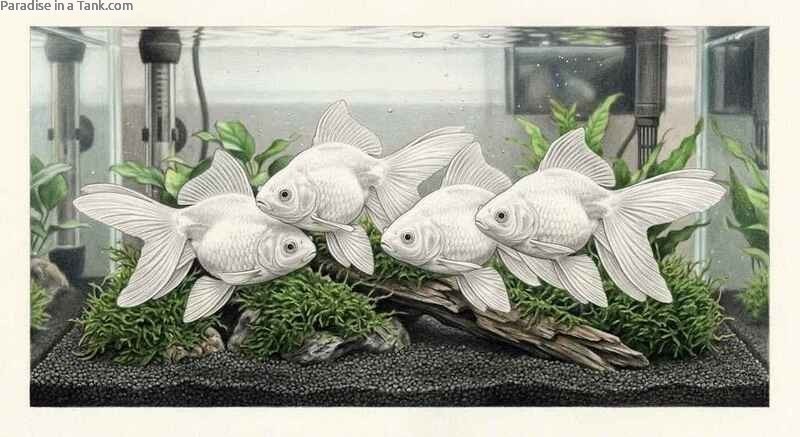
| Solid Matte White | Non-reflective matte | Pure chalky white texture entirely free of pink tissue bruising. |
Advanced Aquarium Setup & Water Chemistry
Setting up a successful home for these round-bodied fish requires discarding old myths about small bowls and cramped setups. Their heavy bodies produce a massive amount of waste that will instantly ruin poor water quality. You must build a highly functional ecosystem that balances sheer water volume with smart physical mechanics.
Stacking Rules: Why One Fantail Needs 15 Gallons (Plus 7 Gallons Per Extra Fish)
Let’s get one thing straight: you cannot keep a Fantail in a small bowl or a 5-gallon tank without slowly killing it through toxic ammonia poisoning. A single, fully grown Fantail requires an absolute minimum of 15 gallons of water to live safely. For every additional fancy goldfish you want to introduce to the aquarium, you must add at least 7 gallons of water to the total volume.
This strict spacing requirement is entirely driven by their fast, inefficient digestive tracts. They do not have true, fully developed stomachs; instead, they have a continuous intestinal system that processes food quickly and dumps raw ammonia directly into the water through their gills and waste. A 15-gallon baseline ensures that this heavy waste load is heavily diluted, protecting the fish from burning its delicate gills on its own waste while giving its massive double fins enough physical room to turn around without constantly scraping the glass walls.
Managing Low Flow: Using Sponge Filters to Protect Flowing Fin Geometry
While these fish produce a massive amount of waste, you cannot simply throw a powerful, high-output powerhead or a heavy-churning canister filter into the tank. The drag created by their deep double tail fin makes them terrible swimmers in heavy currents. A strong water flow will quickly exhaust the fish, forcing it to huddle in a corner, thrash wildly against the glass, and eventually blow out or tear its delicate tail fin geometry.
The absolute best tool for the job is a large, dual-cylinder sponge filter driven by a strong air pump, or a heavily baffled hang-on-back filter. Sponge filters provide excellent biological filtration by giving beneficial bacteria a massive surface area to grow on. At the same time, they mechanical filter the water through gentle suction that never pulls at long fins. The rising air bubbles create excellent vertical gas exchange, pulling oxygen into the water without creating a spinning whirlpool effect that traps your fish in a exhausting, never-ending current.
Ideal Parameters: Maintaining Stable Temperature, KH, and GH Levels
Fancy goldfish are not tropical fish, but they are also not wild, freezing-cold pond fish. They thrive best in a stable temperature range between 68 and 74 degrees Fahrenheit. Sudden, dramatic temperature drops can easily paralyze their digestive systems, while sustained temperatures above 80 degrees Fahrenheit deplete crucial dissolved oxygen levels, leaving the fish gasping at the surface.
You must keep your water hardness consistently high to provide a protective chemical buffer for the ecosystem. Aim for a carbonate hardness (KH) of 4 to 8 degrees, and a general hardness (GH) of 10 to 15 degrees. A strong carbonate hardness acts like an invisible shield, preventing dangerous, sudden drops in water acidity that can occur when heavy organic waste builds up in the substrate. Never use pure reverse osmosis water without re-mineralizing it first, as stripped water causes severe osmotic stress that will make your fish look pale and listless.
Preventing & Managing Swim Bladder Disorders in Round-Bodied Fish
Because selective breeding has crammed a massive digestive tract and a dual-chambered swim bladder organ into a tiny, round body cavity, these fish are incredibly prone to buoyancy issues. A single mistake in your feeding style can quickly turn a happy swimmer into a floating or sinking tragedy.
The Flake Danger: Why Sinking Pellets Prevent Intestinal Gas Crises
Standard, cheap tropical fish flakes are an absolute nightmare for a round-bodied fancy goldfish. When flakes float on the surface, they dry out quickly and trap tiny pockets of air within their structure. When your fish rushes to the top to gulp these down, it sucks in huge amounts of raw atmospheric air alongside the dry food.
Once inside the compressed gut, the dry flakes instantly absorb moisture and swell up like tiny sponges, pressing directly against the delicate swim bladder organ. The trapped air causes severe intestinal gas crises, leaving your fish floating helplessly upside down at the surface, unable to dive. You must exclusively feed them high-quality sinking pellets. Always soak the pellets in a small cup of tank water for two minutes before dumping them in, ensuring they sink straight to the bottom where the fish can forage naturally without swallowing any air.
Natural Foraging: Using Live Plants and Gel Foods for Regularity
To keep their compressed digestive tracts moving smoothly, you need to provide a lot of natural dietary fiber. In the wild, these fish spend every waking hour browsing on fibrous plant matter. You can easily replicate this ancestral behavior by anchoring tough, fast-growing live plants like Anubias, Java Fern, or floating duckweed directly into their tank. They will happily nip and shred the duckweed, which acts as a fantastic, nutrient-rich laxative.
You should also integrate high-quality gel foods into their weekly feeding routine. Gel foods are made by mixing nutrient-dense powders with boiling water to form a soft, dense jello block that contains zero trapped air and an incredibly high moisture content. This soft texture allows the fish to digest the food instantly without any internal swelling or blockages. If you ever notice your fish struggling to stay level, fast them for 48 hours and then feed them a single, blanched green pea with the outer skin peeled off to quickly clear out the blockage.
Safe Tank Mates: Avoiding Fast Comets and Fin-Nipping Tropicals
Choosing companions for your Fantail is a delicate balancing act. You cannot group them by simple species lines; you must match their exact physical swimming speeds and temperaments. Putting them in a tank with the wrong tank mates will quickly lead to starvation, severe stress, or torn fins.
Never house slow-moving fancy fish in the same space as single-tailed common goldfish, shubunkins, or comets. Those streamlined breeds are far too fast and aggressive during feeding times. They will easily out-swim your waddling Fantail, gobbling up every single pellet before the fancy fish can even locate the food. This constant competition leaves your round-bodied fish chronically stressed and malnourished.
You must also completely avoid fast, aggressive, or nippy tropical species like Tiger Barbs, Serpae Tetras, or aggressive cichlids. The long, trailing, double tail fins of your Fantail look exactly like an open invitation to hunt for these nippy fish. They will relentlessly pester, chase, and nip at the delicate tail edges, opening up raw wounds that quickly turn into deadly bacterial fin rot outbreaks. Instead, choose calm, slow-moving fancy roommates, or small, peaceful bottom-dwellers like Corydoras catfish that stay out of the way and clean up dropped food.
If you are looking to branch out into other distinct fancy varieties with unique visual profiles, you should check out our comprehensive guide on veiltail goldfish care and fin health to see how their husbandry needs match up. Alternatively, if you are setting up a specialized, top-view display tank or an indoor shallow water feature, our breakdown on butterfly tail goldfish care for ponds and aquariums offers excellent insights into managing these specialized configurations safely.
By focusing on a spacious 15-gallon setup, avoiding floating foods, and choosing slow, gentle tank mates, you will easily transition from a casual keeper into a disciplined custodian. Watch your fish closely, maintain your water parameters diligently, and enjoy the beautiful, rhythmic dance of your double-finned companions.