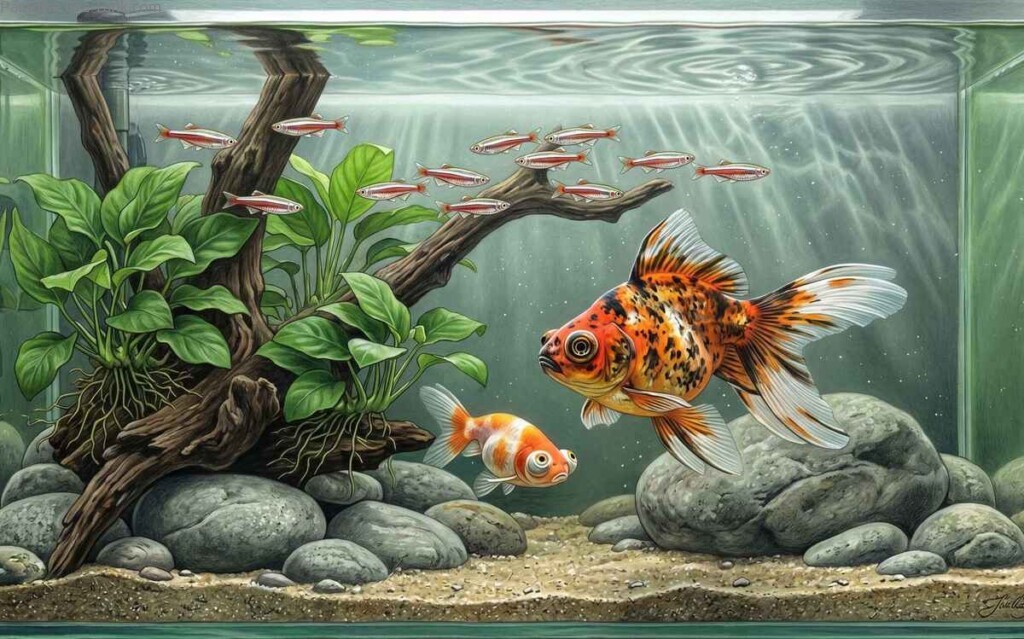
To keep a goldfish alive and thriving for over 10 years, you must house them in a spacious tank providing a minimum of 15 gallons for a single 4-inch fish, plus an additional 10 gallons per extra fish. You must also establish a robust biological nitrogen cycle, install active aeration, feed a low-protein diet balanced with weekly fibrous vegetables, and execute regular 30% weekly water changes.
Why Do So Many Beginner Goldfish Die Within a Week?
When starting out with fish keeping, many of us have bought our first goldfish, only to see it die in about a week. It has often been difficult to even determine what went wrong. The classic image of a goldfish swimming happily in a small glass bowl is a dangerous myth. In reality, bowls are basically death traps for fish. If you are new to the hobby, please don’t beat yourself up over past losses. We have all been there due to decades of terrible pop-culture marketing.
Animals are creatures hardwired with primitive survival mechanics and specialized anatomy, shaped by millions of years of evolution. Goldfish are heavy waste producers. In a small, unfiltered bowl, their own poop and uneaten food rapidly decompose, creating a toxic chemical soup. It is not very difficult to keep goldfish healthy, even if you are just starting out, but you must throw away the outdated idea of the bowl. Once you know what your goldfish need to be comfortable and healthy, it takes a lot of stress away and you will gain confidence to keep them in a good condition. If you want to understand the exact mechanics behind why these compact setups fail, learning about caring for goldfish in a bowl will shed light on the structural limitations of small water volumes.
Fish bowls are simply not an option, unless you transfer the goldfish to a larger tank within a week or two of getting them. If you are wondering about other species, you might ask, can guppies live in a bowl? The short answer for almost all fish is a resounding no. They all need filtration and swimming room to survive long-term.
How Do You Set Up an Appropriate Goldfish Aquarium?
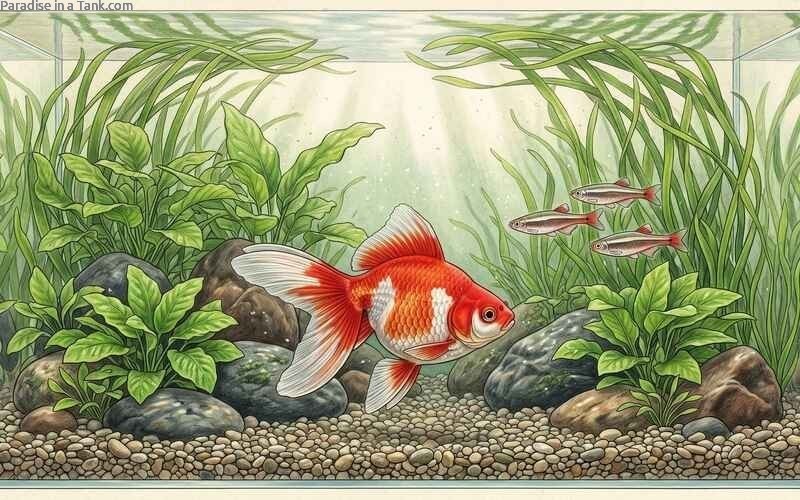
Contrary to what people think, goldfish are supposed to be kept in an aquarium with large enough space for them to move around and turn freely, without any restrictions to their movement. Ideally, you would set up an aquarium before you even buy your fish. When your aquarium arrives, you will need to put in some simple but important equipment to keep the habitat stable.
The Respiratory Lifeline: Air Pumps and Filters
First off, you will need an air pump, along with an air stone. This will help in circulating fresh air into the tank, enabling the fish to breathe freely. Next, you will need a filter for your tank. You can choose from a range of different types and sizes of filters depending on the size of your aquarium. Many filters also provide a continuous flow of fresh air to the tank. Watch out though, if you don’t have an air stone or a filter that’s supplying air, the goldfish will start to suffocate in as little as a few minutes!
You can notice when this happens, because the fish will start breathing heavily and their mouths will open and close much faster than they usually do. When the oxygen supply really runs out, they will even come to the surface and try to gulp in air directly from above the water. You need to keep an eye out for this, as when this stage arrives, they cannot survive for very long. If this emergency oxygen situation does arise, and for some reason you can’t immediately start an air pump or filter, you can remove 20% to 30% of the tank water and replace it with fresh water. The newer water will have more dissolved oxygen, and should help the fish regain their breath in a couple of minutes.
Decor, Lighting, and Substrate
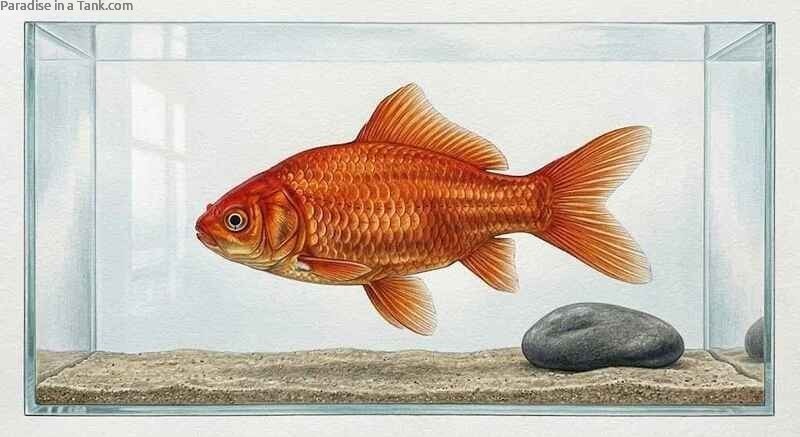
Goldfish will do well when they have some areas of the tank completely to themselves—places from where they can’t see you, nor can you see them. This can be accomplished by setting up decorations around the tank, especially at the rear corners. When the goldfish feels scared or stressed, it can go there and feel safe.
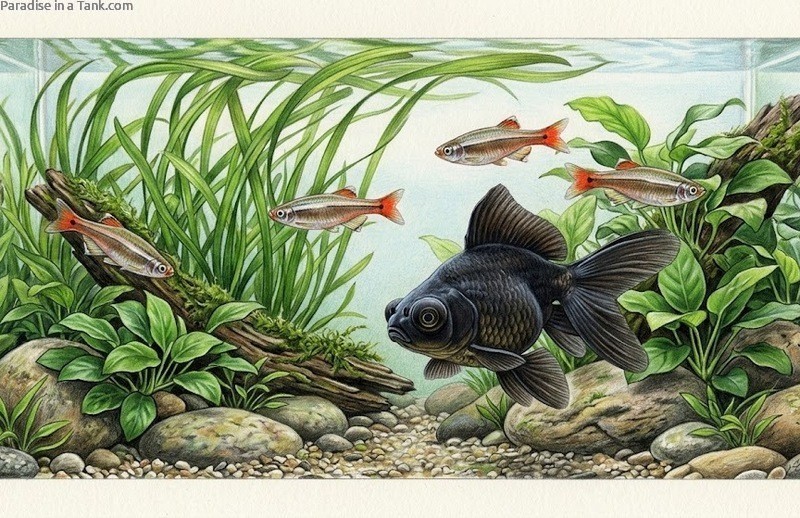
A light source is also essential, as it will enable the goldfish to see their surroundings, both within and outside their tank. They should be able to see outside the tank too, because if something or someone suddenly moves or a loud noise is suddenly heard, they will get startled and dart around the tank without looking at what’s in front of them. As a result, they can crash into the glass, decorations, stones, or the filter, causing serious injuries. Finally, you will need an aquarium heater to prevent sharp temperature drops and small stones to line the bottom of the tank.
What is the Nitrogen Cycle and Why is it the Number One Killer?
The next step to care for your goldfish is to cycle your tank. Understanding the biological nitrogen cycle is essential, as not being aware of it has got to be the number 1 killer of aquarium fish worldwide. Most fish owners don’t realize how this cycle works, and as a result, their fish end up dying way before their average lifespan.
When there is decaying matter in the tank, such as uneaten fish food and fish poop, highly toxic ammonia starts building up. In a properly cycled tank, beneficial bio-filters, like Nitrosomonas bacteria, colonize the filter media and gravel to break this ammonia down into nitrites. Then, another set of beneficial bacteria, specifically Nitrobacter, converts those nitrites into nitrates. When any of these chemical compounds get produced in high concentrations, they prove deadly to your fish. You must allow these bacterial colonies time to grow before overloading the system with livestock.
What Water Parameters Do Goldfish Require to Thrive?
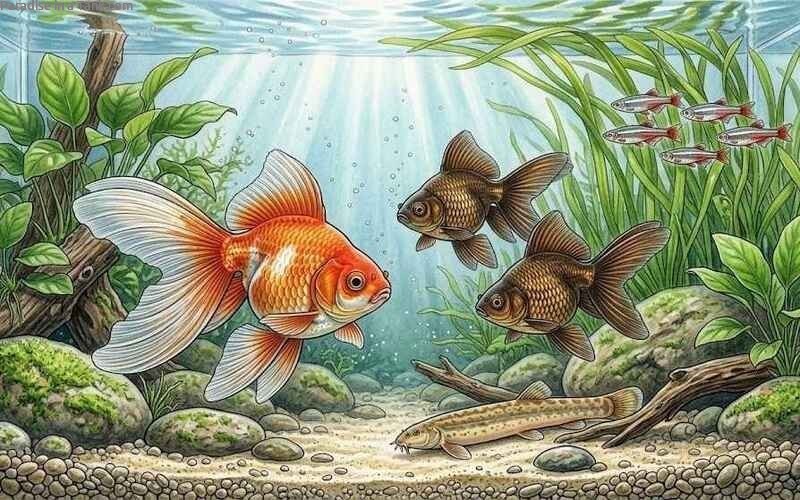
Your goldfish will thrive when provided with certain consistent water parameters. There are certain things which need to be measured regularly using a reliable water testing kit. These parameters need to be kept within a certain range, or they will prove to be dangerous for the goldfish. While individual tolerance ranges vary slightly across different fish species, the requirements are very similar for all goldfish varieties. Understanding how aquarium bioload affects these parameters will help you maintain a clean, balanced ecosystem.
| Goldfish Variety Group | General Water Hardness (GH) | Carbonate Hardness (KH) | Ideal pH Range | Target Temperature |
|---|---|---|---|---|
| All Common & Fancy Breeds | Moderate to High | Moderate | 7.0 – 8.0 | Stable Room Temp (Cool water) |
How Do You Select and Buy a Healthy Goldfish?
Taking all these environmental precautions will be pointless if the goldfish you buy isn’t healthy to begin with. Getting a sick fish home is almost certainly going to kill it, especially if you are new to fish keeping. What’s worse is that a sick fish can pass on the sickness to your other, healthy fish.
For slightly more experienced fish keepers, it is highly recommended to set up a separate quarantine tank to isolate new arrivals before introducing them to your main community. If a contagious pathogen has infected a seemingly healthy fish at the pet store, its health could go south very fast once you get it home.
Symptoms of a Healthy vs. Sick Goldfish
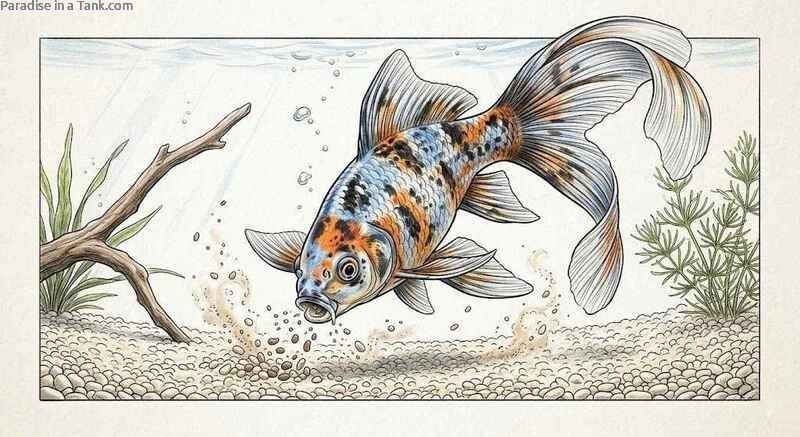
- Signs of a Healthy Goldfish: All the fins and the tail should be opened up and away from the body, not clenched. The goldfish should be swimming about freely in all directions, breathing comfortably, looking around at the stones on the tank floor, and moving pebbles about with their mouths.
- Signs of a Sick Goldfish: A sick fish will sit at the bottom of the tank, rest constantly on a decoration or plant, or gulp for air at the water surface. Its breathing will look stressful, with the mouth opening and closing rapidly, and its fins or tail will be tightly closed and clenched towards the body.
Don’t get a goldfish showing any of these negative symptoms. In fact, you would be better off not getting even a healthy-looking fish from a tank that contains other sick fish at the pet store.
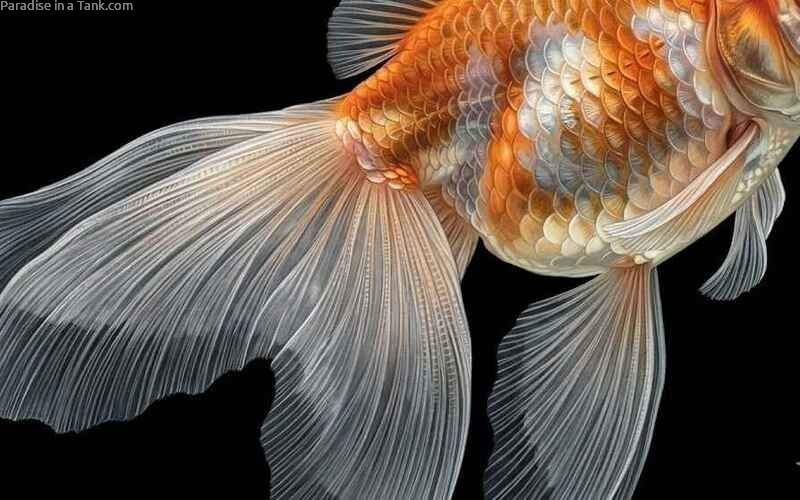
If you want the hardiest options, choose goldfish varieties that are closer to their natural ancestors, such as Comet Goldfish and Shubunkins. The more varieties and mutations of goldfish we breed that are different in body shape, size, and features to their natural ancestors, such as highly modified fancy breeds, the more susceptible they become to structural diseases and infections.
How Do You Safely Acclimatize and Transfer New Fish?
The Bucket Acclimatization Method
- Empty the Bag: Take the plastic bag provided by the store and empty both the water and the fish into a clean, chemical-free bucket.
- Add Tank Water Slowly: Take half a mug of water from your destination aquarium and pour it into the bucket.
- Pause and Repeat: Wait 5 minutes, then add another half mug of water from your tank. Wait 5 more minutes and repeat the process.
- Achieve the Right Ratio: Keep repeating this until more than half of the total water volume in the bucket consists of water from your tank. This slowly acclimatizes the goldfish to their new environment.
- Net and Transfer: Once the fish is swimming comfortably in this mixed water, gently scoop the fish out using a soft net and transfer it safely into the aquarium.
- Discard the Waste Water: Pour out and throw away the remaining water left in the bucket rather than dumping it into your display tank. You can use it to water your household plants.
What is the Proper Way to Feed a Goldfish?
Goldfish do not have stomachs, so they tend to overeat because they lack the physical internal anatomy to store large meals. Instead, food moves continuously through their digestive tract. If you are trying to figure out the exact menu options, checking out a complete list of what do goldfish eat will help you diversify their meals safely.
Portion Control and Feeding Mechanics
You can feed them in limited quantities 2 to 3 times a day. The quantity of food should be such that the goldfish can eat all of it in about 1 minute. Goldfish easily eat both floating flakes and sinking pellets. If you choose pellets, make sure their size is small enough that the fish can swallow them whole. Always select food specifically manufactured for goldfish or Koi, as Koi share very similar nutritional requirements.
Watch out if there are one or two aggressive feeders in your tank that gobble up everything quickly and leave nothing for the slower fish. You can spread the entire quantity of food all over the water surface to ensure everyone gets a turn. Turning off the aquarium filter while feeding, for no more than 5 minutes, is an excellent trick. If left running, the water currents will suck uneaten food particles straight into the filter media or trap them deep in between the bottom gravel. There, they will quickly rot and rapidly foul the water quality.
Balancing Proteins and Fibers
While high-quality commercial pellets should serve as their staple diet, you can also offer your goldfish tiny pieces of fresh meat as a treat. This includes small bits of fish, shrimp, or chicken. You must cut these pieces up tiny enough to be swallowed whole, as goldfish do not have teeth in their mouths to chew food up. If they cannot swallow it instantly, they will just chew on it fruitlessly for a while and spit it back out. Rotten meat depletes dissolved oxygen and ruins water quality shockingly fast.
They will also readily eat live or freeze-dried tubifex worms and bloodworms. Because goldfish are omnivores that don’t require massive amounts of protein, limit meat or worm feedings to no more than 3 times a week. If you feed your fish 14 to 21 times a week, space out the meat treats to just 1 to 3 of those feeding sessions on completely separate days to prevent a dangerous protein overdose.
To keep their digestive tracts moving, make it a rule to feed your goldfish soft green peas every single week. Peas possess an incredibly high fiber content, which helps the fish poop easily and avoid dangerous intestinal blockages. Constipation in fish is neither easy nor quick to cure, and it regularly leads to the death of the animal; therefore, prevention is always better than cure. Simply boil the peas until they are completely soft, peel off and discard the tough outer skin, and chop the soft interior into tiny, easily manageable pieces.
How Do You Keep a Messy Goldfish Tank Clean?
One of the best perks of fish keeping is that they do not require daily cleaning routines. Even the busiest keepers can find time for regular maintenance. Maintenance simply requires you to regularly siphon out a portion of old water and replace it with fresh, clean water.
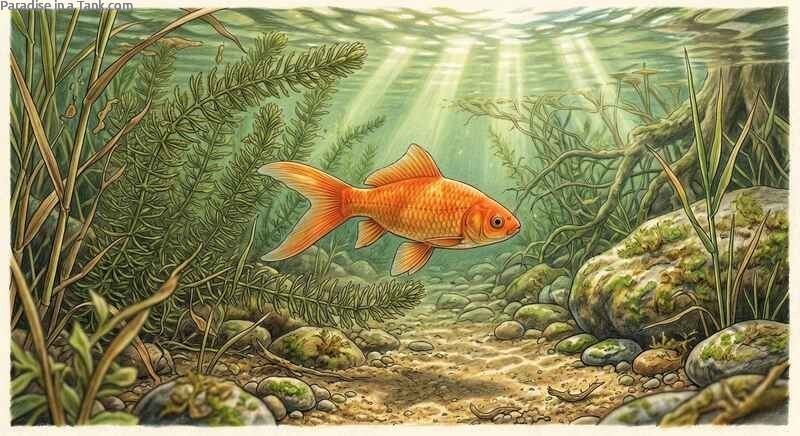
Goldfish are incredibly messy animals. They eat constantly, produce significant amounts of solid poop, and fancy varieties are notoriously slow swimmers. If you are reckless with your feeding portions, excess pellets will sink to the bottom, lodge tightly between the stones, and pollute the ecosystem.
- Standard Maintenance Stocking: Perform at least a 30% water change every single week.
- Overstocked Systems: If you have more fish swimming in the tank than the ideal recommended parameters, you must increase both the frequency and the volume percentage of your water changes to keep toxic spikes at bay.
What Chemical Hazards Must You Avoid?
Goldfish are highly susceptible to acute chemical poisoning. Severe care must be taken to ensure absolutely no household chemicals enter the aquarium water.
Critical Environmental Contaminants
- Soap and Detergent Residues: Residual soap left behind on buckets, nets, or filters after cleaning is highly lethal. Use only warm water to scrub out your tank and equipment. Avoid chemical cleaners entirely. If a situation forces you to use a cleaner, rinse the gear thoroughly with fresh water multiple times to remove every single trace of residue.
- Airborne Contaminants: Liquid air fresheners, plug-ins, and scent diffusers must be positioned far away from the fish tank. Never position an aquarium inside a kitchen, as heavy grease fumes and cooking gases emitted during meal prep will settle onto the water surface.
- Pesticides and Bug Sprays: Insecticides, fly sprays, and commercial bug bombs must be deployed far away from the aquarium zone. Always seal the top of the tank completely with a protective cover or plastic wrap while spraying rooms.
- Tap Water Toxins: Raw tap water contains heavy chlorine and chloramines designed to kill microbes, which will quickly destroy your fish’s gills. Always use a commercial dechlorinator when adding tap water during water changes. If you run out of dechlorinator, let the raw tap water sit completely still in an open bucket for a full 24 hours so the chlorine gas can naturally escape into the air.
How Do You Spot and Treat Goldfish Diseases?
While admiring your aquatic pets, get into the habit of closely analyzing their physical appearance and daily behaviors. Catching an infection early is the difference between a quick recovery and a total tank wipeout. To build a deep diagnostic understanding, consulting a guide on fish diseases and treatments will give you specific pathways for clinical remedies.
Warning Signs of Illness
- Gasping heavily at the water surface for air
- Extreme lethargy or resting continuously on the substrate
- A severely bloated belly or scales sticking out like a pinecone
- Long, trailing, sticky feces clinging to the fish
- Swimming tilted awkwardly to one side or floating entirely upside down
- Tiny, defined white spots sprinkled across the body or fins (Ich)
Immediate corrective actions must be deployed the moment these issues surface. Depending on the specific diagnosis, you may need to step up the water temperature, dose specialized medications, dissolve aquarium salts into the water, reduce your feeding schedules, or move the patient into a bare-bottom hospital tank for targeted therapy.
How Much Space Do Goldfish Actually Need to Grow?
There is a hard physical limit to how many goldfish can safely inhabit an aquarium. Depending on their exact breed, a healthy goldfish will easily grow anywhere between 4 inches to 12 inches long over its lifespan.
It is vital to understand the physics of aquarium bioload. An 8-inch goldfish is not twice the size of a 4-inch goldfish. While it is exactly twice as long, its total internal body mass can be up to four times that of a fish half its length! This biological reality means an 8-inch fish will consume up to four times as much food and excrete four times as much metabolic poop as a 4-inch individual. If you house a single 8-inch goldfish in one tank, and four separate 4-inch goldfish in an identical aquarium, both systems will produce the exact same bioload and require the exact same water change schedule to stay safe. Do your structural research before filling a tank, as a large fish in a small space will quickly degrade the water quality.
The Goldfish Tank Size Calculator
To guarantee your pets have enough swimming room and a stable volume of water to buffer against rapid pollution spikes, apply these strict space equations:
- The Primary Fish Rule: Provide a minimum of a 15-gallon long tank for the very first 4-inch goldfish.
- The Social Addition Rule: Goldfish are social and need companions. For every single additional 4-inch goldfish you introduce, you must increase the volume of the tank by 10 gallons.
- The Large Adult Rule: Due to the massive bioload and waste production mentioned above, a single 8-inch long adult goldfish requires a minimum of a 45-gallon tank all to itself just to move freely and prevent catastrophic chemical crashes.
| Number of 4-Inch Fish | Calculation Breakdown | Minimum Required Tank Volume |
|---|---|---|
| 1 Fish | Base Tank Allowance | 15 Gallons (Long) |
| 2 Fish | 15 Gallons + 10 Gallons | 25 Gallons |
| 3 Fish | 15 Gallons + 10 Gallons + 10 Gallons | 35 Gallons |
| 4 Fish | 15 Gallons + 30 Gallons for additions | 45 Gallons (Long) |
Armed with this core biological and environmental knowledge, you can now step away from the dangerous mistakes of the past. By providing your goldfish with the proper space, clean water, and disciplined care they truly deserve, you will enjoy their bright company for a decade to come.