Want to add a splash of vibrant, moving color to your home with a gorgeous goldfish? While they are indisputably the most popular aquarium fish on the planet, many beginners walk into a local pet shop totally blind to a harsh biological reality: different goldfish breeds have wildly unique water, tank, and care needs. You cannot simply toss any two varieties together into a glass bowl and expect a fairytale ending. From the bulletproof, lightning-fast Common goldfish to the astonishingly fragile, slow-moving Bubble Eye, keeping these creatures thriving requires stepping up as a disciplined custodian of nature.
Why Do Different Goldfish Breeds Need Unique Care?
To keep different goldfish breeds alive, you must match them by swimming speed and physical vulnerability. While all varieties tolerate a water acidity spectrum of 6.5 to 8.0 and a water hardness of 5 to 25 dGH, highly developed fancy breeds have compromised immune systems, lack dorsal fins, and require warmer, ultra-stable water compared to bulletproof common varieties.
Over centuries of dedicated care and intense selective breeding, Chinese and Japanese aquarists transformed the humble wild carp into dozens of distinct, breathtaking breeds. But here is the biological catch that catches millions of well-meaning beginners completely off guard: although every single goldfish breed on earth belongs to the exact same biological species, their physical alterations dictate radically different environmental boundaries.
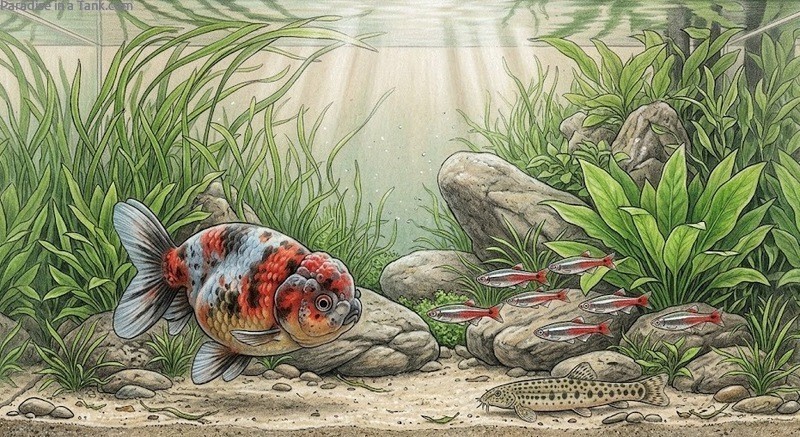
It all comes down to genetic real estate. The more a specific breed is selectively developed to exaggerate an exotic physical feature—such as giant, fluid-filled bubbles under the eyes or an extreme, balloon-like spine—the weaker and more compromised its internal biological systems become. Fancy goldfish are essentially the high-maintenance thoroughbreds of the aquatic world. They are jaw-droppingly stunning, but they are incredibly fragile.
A minor spike in toxic raw ammonia or a sudden dip in water quality that a hardy common goldfish wouldn’t even register could easily trigger a catastrophic bacterial infection or systemic organ failure in a highly developed fancy variety. Fortunately, they do share a uniform baseline tolerance when it comes to water chemistry, surviving comfortably in a water hardness range of 5 to 25 dGH and a water acidity spectrum between 6.5 and 8.0. However, the thermal energy they require and the sheer environmental stability they demand vary wildly across the spectrum.
Goldfish Quick-Reference Care Chart
Before you pick out your first aquatic companion, you must assess your own experience level and understand how these breeds stack up against one another. If you are a true beginner hobbyist who has never established a nitrogen cycle or maintained an aquarium before, you must stick strictly to beginner-tier fish. These ancestral streamlined varieties possess a massive tolerance for environmental fluctuations and minor water chemistry mistakes. If you are an intermediate hobbyist who has successfully kept a stable ecosystem running healthy for at least two consecutive years, you can confidently graduate to managing the delicate physical handicaps of fancy varieties.
| Goldfish Breed | Skill Level Required | Ideal Water Temperature | Key Physical Distinction |
| Common Goldfish | Beginner | Cool to Temperate | Closest to natural ancestors; sleek body |
| Comet Goldfish | Beginner | Cool to Temperate | Taller dorsal fin; much longer tail |
| Shubunkin | Beginner | Cool to Temperate | Calico colors over a rare blue background |
| Fantail Goldfish | Beginner | Cool to Temperate | Long fins; vertically split double tail |
| Black Moor Goldfish | Intermediate | Warmer Tolerant | Velvet black body; slightly protruding eyes |
| Butterfly Tail Goldfish | Intermediate | Cool to Temperate | Tail resembles butterfly wings from above |
| Oranda Goldfish | Intermediate | Cool to Temperate | Fleshy head growth (wen); has dorsal fin |
| Ryukin Goldfish | Intermediate | Cool to Temperate | Exceptionally high, camel-like arched back |
| Pearlscale Goldfish | Intermediate | Cool to Temperate | Raised scales with light centers; shimmering |
| Veiltail Goldfish | Intermediate | Cool to Temperate | Extra-long fins; very round body shape |
| PomPom Goldfish | Intermediate | Cool to Temperate | Peculiar fluffy growths on the nose |
| Linehead Goldfish | Intermediate | Cool to Temperate | Large head growth; lacks a dorsal fin |
| Ranchu Goldfish | Intermediate | Cool to Temperate | Head growth; no dorsal fin; highly arched back |
| Lionchu Goldfish | Intermediate | Cool to Temperate | Ranchu body shape with Lionhead face growth |
| Telescope Goldfish | Intermediate | Cool to Temperate | Eyes extend dramatically outwards from face |
| Celestial Goldfish | Intermediate | Cool to Temperate | Upturned stargazer eyes; no dorsal fin |
| Bubble Eye Goldfish | Intermediate | Cool to Temperate | Large fluid-filled sacs under upturned eyes |
17 Incredible Goldfish Breeds Extensively Explained
1. Common Goldfish
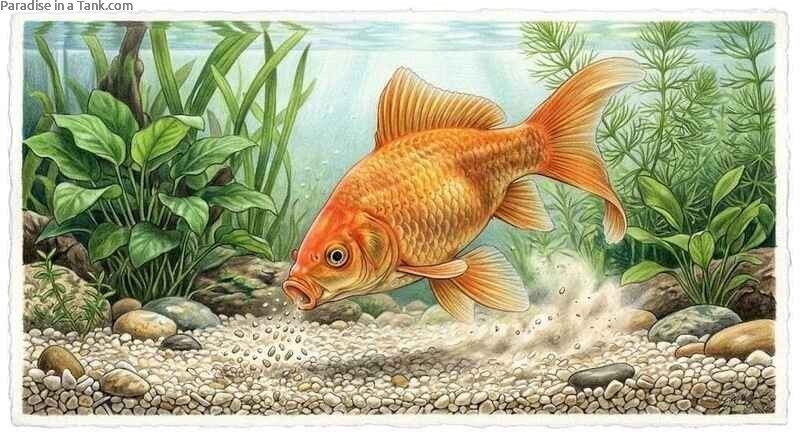
These are the timeless, iconic orange fish you see everywhere from carnivals to commercial displays. Because they are genetically the absolute closest to their wild Prussian carp ancestors, they retain an incredibly hardy biological constitution. Their streamlined bodies are built for power and rapid swimming. They don’t mind a few inevitable beginner mistakes while your tank’s biofilter establishes, making them the ultimate starter fish for the outdoor pond or a massive indoor setup.
2. Comet Goldfish
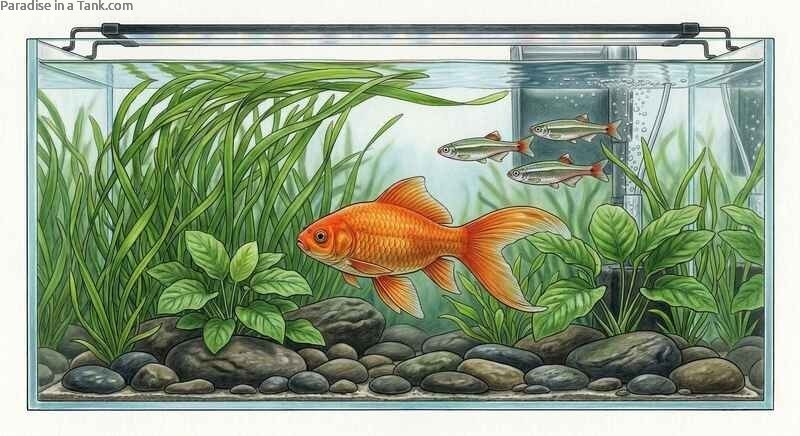
At a quick glance, Comet goldfish look strikingly similar to the Common variety. However, look closer and you will spot two distinct anatomical upgrades: a much taller, prouder dorsal fin cutting through the water and a deeply forked, incredibly long, trailing tail. Because they haven’t been heavily hybridized or distorted by breeders, their internal organs remain uncrowded, making them far hardier and faster than any fancy variety.
3. Shubunkins
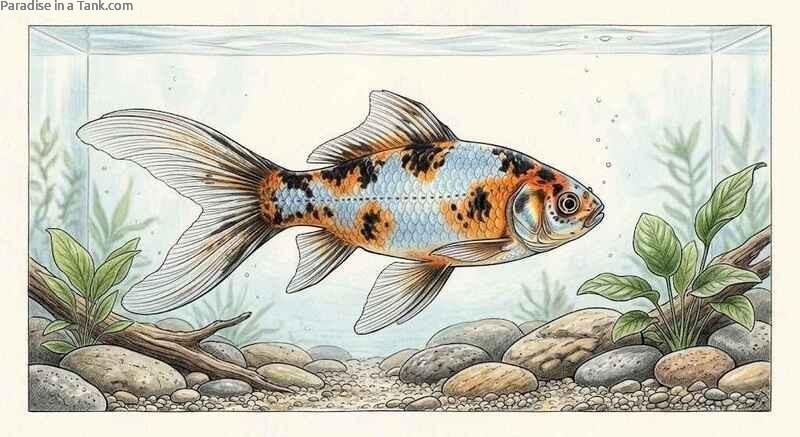
Shubunkins are breathtaking living art pieces that display a complex, mottled mix of patches known as calico patterns. Their scales flash vivid strokes of blood red, fiery orange, deep midnight black, and rustic brown. What truly sets them apart from every other creature in the hobby is that these intense patterns sit over a stunning, deep blue background—which is actually an optical illusion created by a rare, dull silver hue beneath transparent scales.
4. Fantail Goldfish
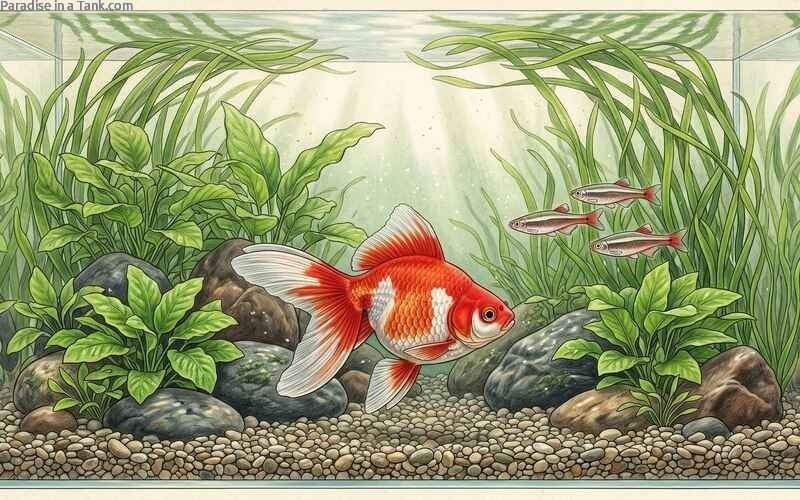
The Fantail is widely recognized by master aquarists as the primary gateway to fancy goldfish keeping. It boasts an elegant, teardrop-shaped body and long, flowing fins. Its most famous evolutionary trait is a caudal fin that is completely split vertically right at the base of the peduncle, making it look as though the fish possesses two gorgeous tails sitting perfectly side-by-side. They are the sturdiest of the egg-shaped fancies.
5. Black Moor Goldfish
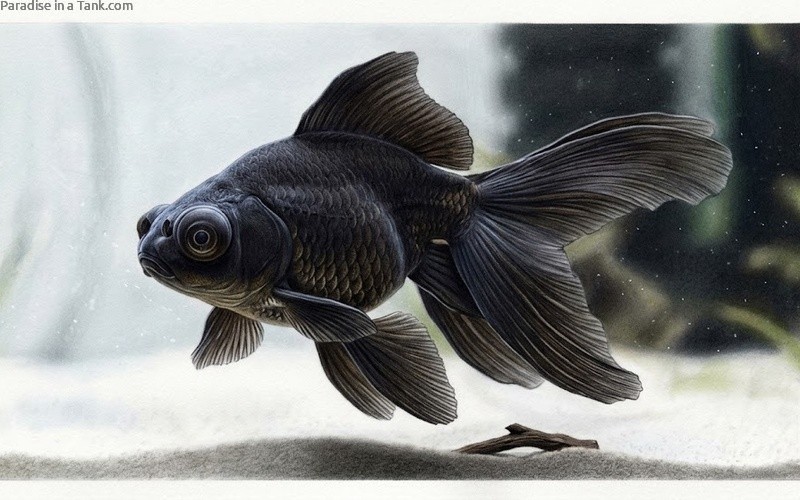
This stunning, dark-as-night fish looks physically similar to a classic Telescope goldfish, though its ocular stalks do not project quite as far out from the skull. The Black Moor sports an entirely midnight-black body covered in a luxurious, velvet-like texture. Interestingly, if you utilize dependable aquarium heaters to maintain their habitat on the warmer end of their tolerance scale, their bellies can undergo a permanent chemical transformation into a beautiful, shimmering golden coloration.
6. Butterfly Tail Goldfish
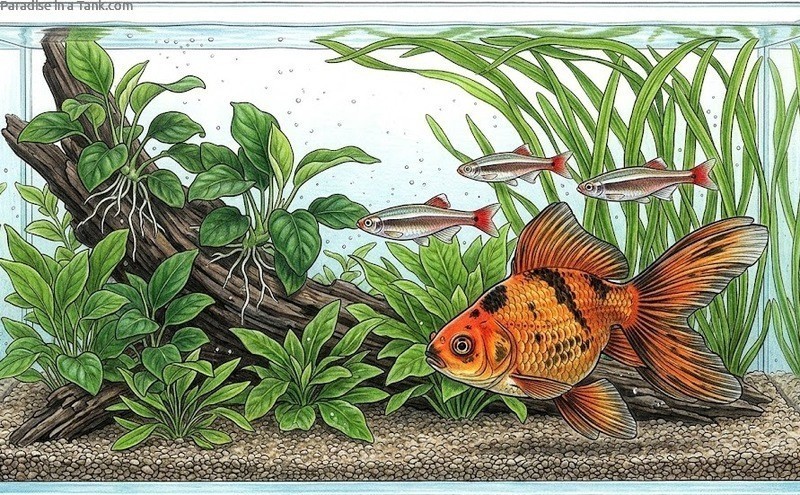
The absolute showstopper for this specific breed is its magnificent caudal fin layout. When you gaze straight down at this fish from the top of an aquarium or shallow pond, the wide, flat spread of the tail perfectly mimics the open wings of a soaring butterfly. They feature a highly compressed, short, round body, and their eyes can either protrude outwards like a Moor or remain completely flush with the skull.
7. Oranda Goldfish
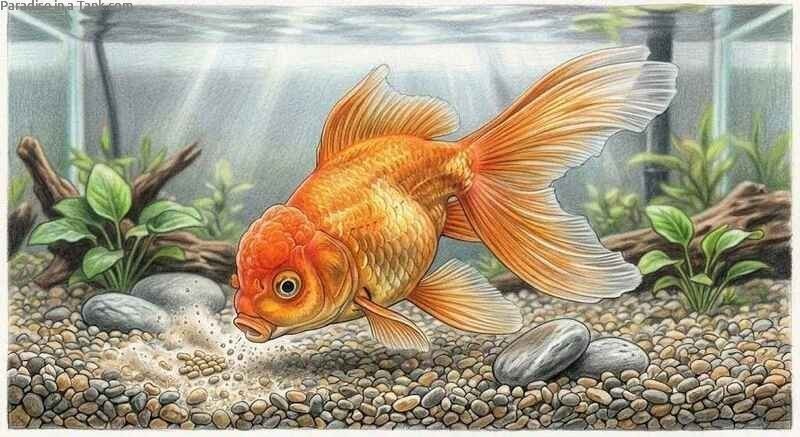
The Oranda is a highly prized, regal fancy goldfish bred specifically to grow a bumpy, raspberry-like fleshy mass on its head called a “wen”. Novice keepers frequently confuse them with Lionheads, but there is an incredibly easy anatomical trick to tell them apart: Orandas possess a prominent, upright dorsal fin on their backs, whereas Lionheads display a completely smooth, finless spine.
8. Ryukin Goldfish
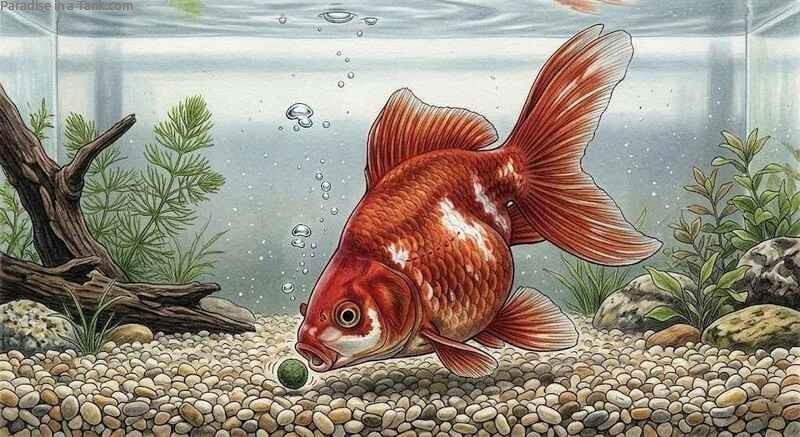
If you want an aquatic pet with aggressive, dramatic geometric lines, the Ryukin is your fish. These animals possess an exceptionally high, arched back that looks exactly like a desert camel’s hump. This dramatic muscular hump tilts forward slightly and begins rising sharply almost the exact spot the head ends, creating a remarkably tall, imposing silhouette in the water column.
9. Pearlscale Goldfish
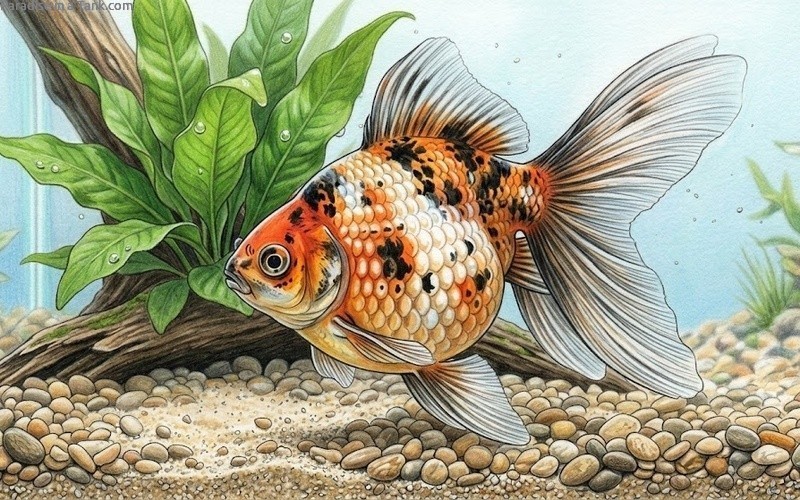
The Pearlscale is built like a dense, little round golf ball covered in rows of tiny beads. Each of its individual scales is heavily raised and calcified right in its center. Because this raised center is much lighter in color than the outer edges of the scale, the fish looks like it has been intricately wrapped in rows of shimmering pearls. They feature a twin-tail structure, a dorsal fin, and a highly compromised swim bladder due to their compacted organs.
10. Veiltail Goldfish
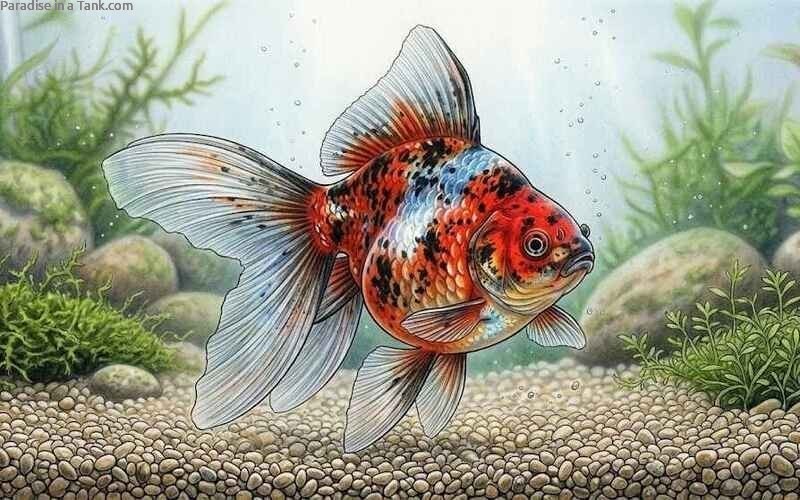
The Veiltail is an incredibly elegant, rare variety that shares the vertically split double tail of its Fantail cousin. However, you can easily distinguish a true Veiltail because its central body mass is significantly rounder, and its delicate fins are exponentially longer, draping down through the water column like a fine, weightless silk veil. They are notoriously poor swimmers that cannot fight filter currents.
11. PomPom Goldfish
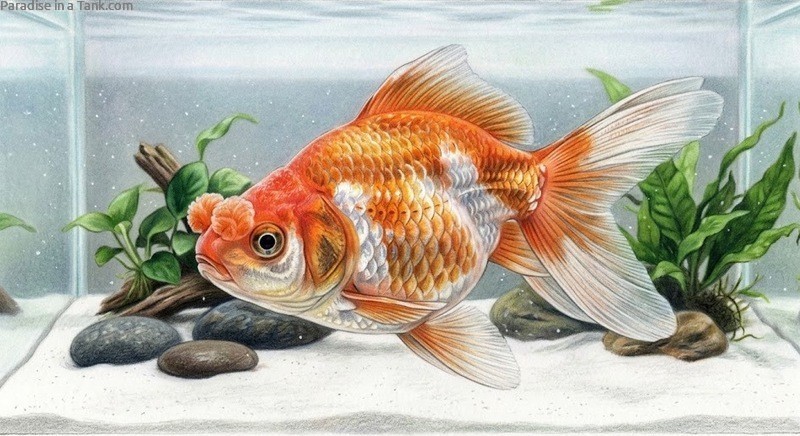
True to their whimsical name, these goldfish grow peculiar, fluffy, bundled outgrowths of flesh right on their nasal septums that look exactly like miniature cheerleader pompoms. They have short, compacted, round bodies similar to Fantails and feature a standard, fully developed dorsal fin that helps you easily identify them against other finless oddities.
12. Lionhead Goldfish
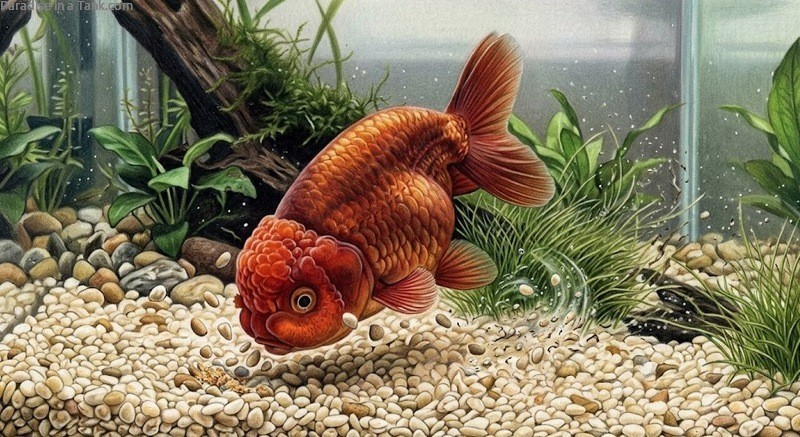
The Lionhead is a classic, historical fancy variety selectively bred for a massive, bumpy, hood-like growth that eventually covers its entire face, cheeks, and operculum. Unlike the Oranda, the true Lionhead completely lacks a dorsal fin along its spine, giving it a very smooth, uninterrupted, gently sloping silhouette across its entire back.
13. Ranchu Goldfish
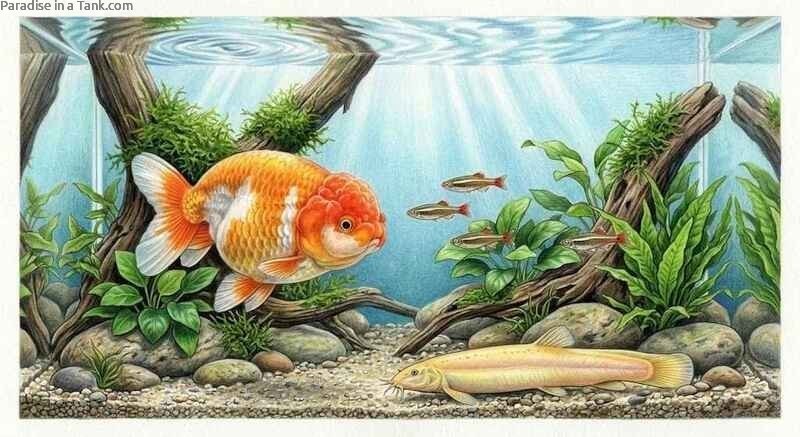
Hailed across Asia as the “King of Goldfish,” the Ranchu looks highly similar to the Lionhead because it also features a fleshy head growth and lacks a dorsal fin altogether. However, an expert eye will instantly notice that a Ranchu’s spine arches much higher before curving sharply, almost at a right angle, down into the base of the tail. Because of this incredibly strict breeding standard, they are among the most expensive goldfish breeds in the world.
14. Lionchu Goldfish
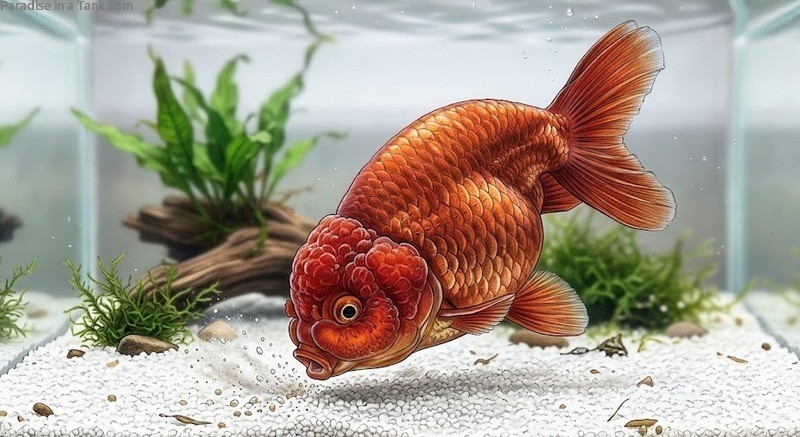
Can’t decide between the smooth lines of a Lionhead and the dramatic curve of a Ranchu? Asian breeders solved this aesthetic dilemma by crossing the two varieties to create the Lionchu. This fascinating modern hybrid inherits the highly desirable, steeply curved, deep body shape of a premier Ranchu alongside the massive, explosive facial wen growth of a top-tier Lionhead.
15. Telescope Goldfish
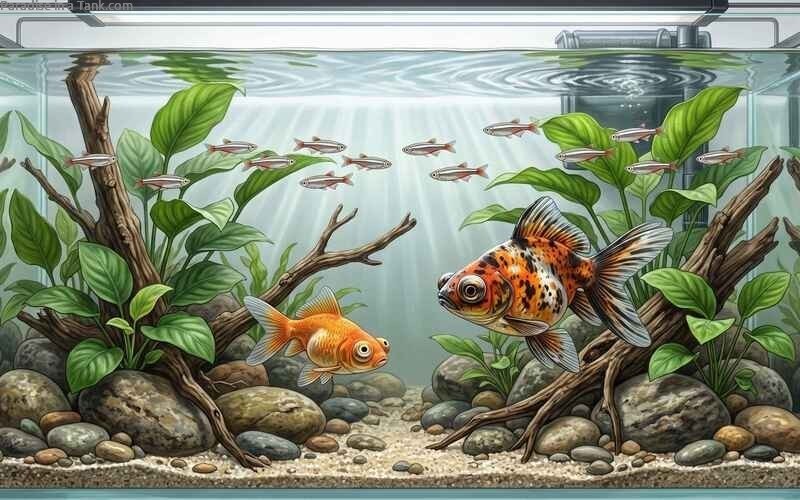
The Telescope goldfish looks delightfully alien because its ocular structures extend far outwards from its skull on large, skin-covered, stalk-like cylinders. When they are tiny fry, their eyes look totally normal and flush. The dramatic physical protrusion begins to pop out and expand when they hit roughly 2 to 3 months of age, completely altering their depth perception.
16. Celestial Goldfish
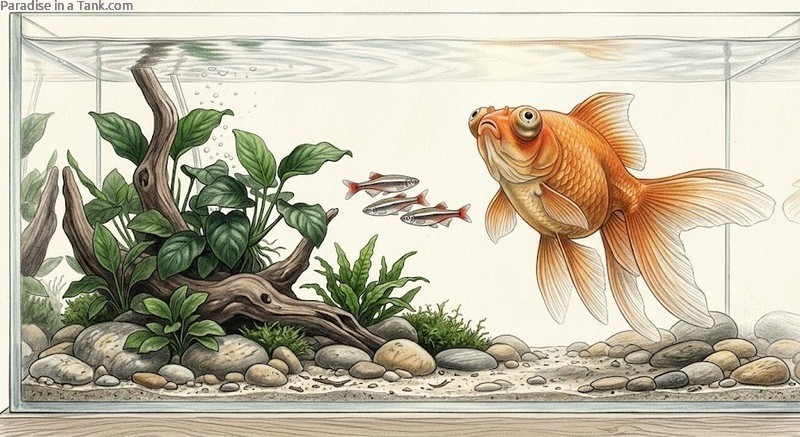
The Celestial goldfish—or “The Stargazer,” as it was beautifully named in ancient China—was selectively bred to have its pupils permanently locked pointing straight up toward the heavens. They completely lack a dorsal fin and possess short, rigid, egg-shaped bodies. Because their eyes point strictly upward, they are incredibly slow, uncoordinated swimmers who cannot see what is happening directly in front of or beside them.
17. Bubble Eye Goldfish
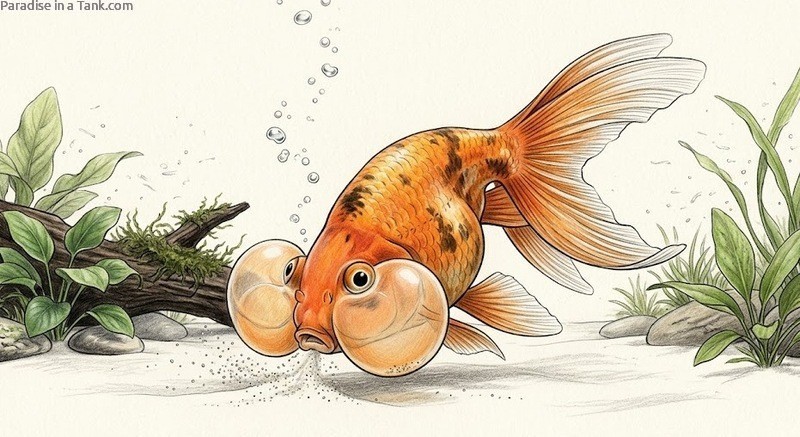
This highly delicate breed is named for the enormous, fluid-filled bladders that rest directly underneath its upturned eyes. These heavy sacs start growing at 6 months of age and keep expanding until the fish hits maturity at 2 years old. Combined with the fact that they lack a dorsal fin, Bubble Eyes have an incredibly hard time swimming smoothly and possess a severely limited field of view.
The Goldfish Menu: What to Feed (and What to Avoid)
Goldfish are notoriously enthusiastic eaters, but they possess a major anatomical handicap: they do not have true biological stomachs to hold massive, singular meals. Because of this unique, continuous-flow digestive tract, you must feed them small amounts 2 to 3 times every single day to keep their digestion running smoothly and prevent blockages. Furthermore, they lack any teeth in their mouths to chew up large chunks of food.
Every single piece of food you drop into the tank must be small enough for them to swallow completely whole, or they will simply spit it back out in frustration, causing your water to turn filthy and cloudy in a matter of minutes. Fortunately, they are active omnivores that explore all areas of their habitat, gladly gobbling up nutrition from both the water’s surface and the substrate. To keep their systems running perfectly, memorize these specific nutritional inventories:
Actionable Toolkit: Safe Foods Your Goldfish Will Love
- Commercial flakes and high-quality sinking pellets formulated specifically for coldwater fish.
- Raw, finely chopped seafood like shrimp or white fish to provide clean protein.
- Live or freeze-dried tube worms and bloodworms to trigger natural foraging instincts.
- Boiled, deshelled green peas, which act as an excellent, fiber-rich natural remedy for swim bladder constipation.
- Boiled beans chopped carefully down to appropriate, swallowable sizes.
Threat Inventory: Foods to Avoid to Prevent Fatal Illness
- Cichlid pellets, flakes, or sticks, which contain completely inappropriate protein-to-fat ratios for cyprinids.
- Heavy mammal or avian meat (like beef heart), which completely destroys their coldwater digestive systems.
- Oversized chunks of food that cannot be swallowed completely whole, leading to decomposition and water fouling.
Designing a Safe Tank: Plants and Decorations
Goldfish are notorious, destructive underwater landscapers. They love to constantly graze and snack on live greenery, which means you have to be highly selective about your aquascaping choices or watch your expensive plants get shredded to pieces. If you want a beautifully planted ecosystem, stick exclusively to tough, bitter-tasting epiphyte plants like Java Fern, Java Moss, Anubias, Crypts, and Amazon Swords, as goldfish will generally leave their tough leaves alone. Avoid delicate fronds like Water Sprite, Duckweed, and Anacharis completely, unless you want them to be instantly eaten down to the bare roots within an hour.
If you choose to keep fancy breeds with protruding ocular features—such as the Telescope, Black Moor, Celestial, or Bubble Eye—you must take extreme care during decoration. Their extended eyes and fluid-filled sacs can easily catch on rough surfaces, causing horrific, infection-prone skin tears. To safeguard these delicate fancies, enforce these strict design parameters:
Risk Mitigation Rules for Delicate Breeds
- Completely ban any gravel, rough substrate, or rock decorations that are even slightly pointed, jagged, or sharp.
- Choose smooth, rounded river stones or fine, soft pool filter sand instead to protect delicate underbellies and bubbles.
- Ensure all internal equipment, including heaters and intake pipes, is safely baffled or placed out of reach so slow-moving fish cannot squeeze behind them and get trapped or burned. Utilizing specialized filter designs will prevent your vulnerable fancies from getting pinned by heavy suction forces.
Choosing Safe Tank Mates
Goldfish are wonderfully peaceful, social community members, meaning they will never actively hunt, stalk, or bully their tank mates. You can safely house almost any goldfish varieties together, provided they share similar swimming speeds and physical capabilities. Fast commons will outcompete slow fancies for food every single time. They also do wonderfully well with other peaceful, cool-water bottom dwellers such as Hillstream Loaches, Yoyo Loaches, Zebra Loaches, freshwater snails, and hardy aquarium shrimp.
Stick to slow, peaceful companions, keep that water pristine via rigorous weekly maintenance, and your stunning goldfish will reward you with years of bright, bubbly companionship. Every expert keeper started exactly where you are standing today, so take it step by step, design a safe environment, and enjoy the incredibly rewarding journey of goldfish keeping!