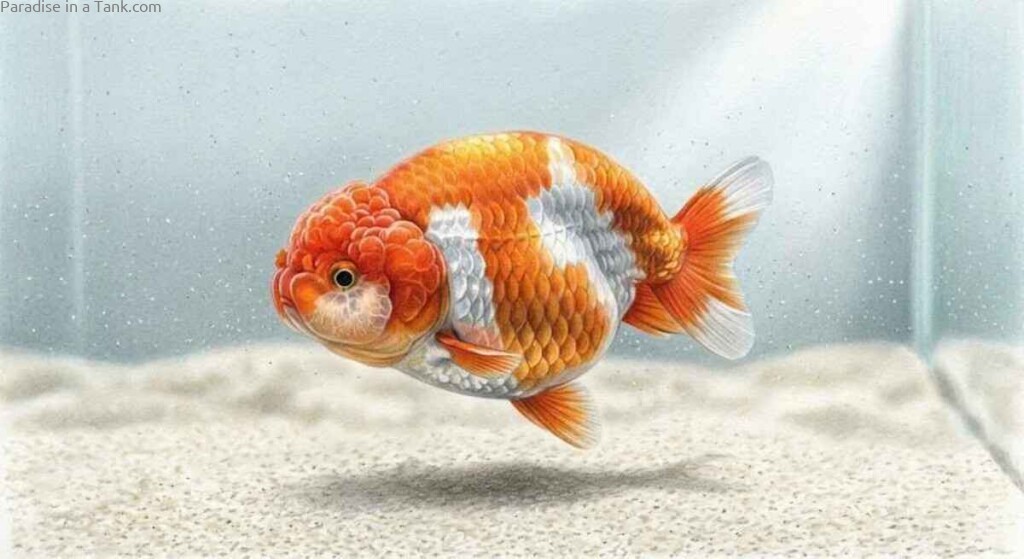
Most of us start our fishkeeping journey with a classic image in mind: a simple, elegant glass bowl sitting on a desk with a bright orange fish swimming lazily inside. It is a layout that remains highly popular for beginners worldwide. But if you are reading this, chances are you are already keeping a goldfish in a bowl and noticing that things aren’t as simple as they look. If you haven’t brought your fish home yet, I strongly urge you to hit the brakes and set up a proper aquarium first. Animals are hardwired with primitive survival mechanics, deep geological histories, and specialized anatomy that a tiny plastic or glass orb completely fails to support.
However, if you are currently staring at a goldfish in a bowl right now, do not panic. This guide is your temporary emergency blueprint to keep your aquatic companion alive until you can transition them into a sustainable, long-term home.
The Reality of Bowl Environments
To keep a goldfish alive in a small bowl temporarily, you must run an active air pump to prevent suffocation, execute a daily 50% manual water change using a dechlorinator, enforce incredibly strict portion control during feedings, and actively plan an upgrade to a long-term aquarium of at least 15 to 45 gallons depending on fish size.
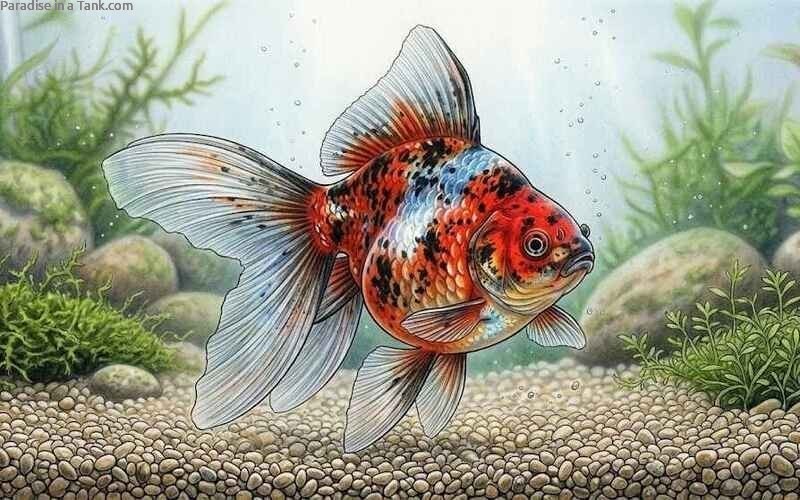
Why is a goldfish bowl a literal chemical and biological time bomb? The answer comes down to sheer water volume. Goldfish poop a lot, which means that the water gets dirty far more quickly than it would with almost any other standard pet fish. Because a bowl holds a minimal amount of water, even the slightest shift in your water parameters can instantly become highly dangerous to your fish. There simply isn’t enough water volume to dilute the heavy accumulation of poop, toxic chemical compounds, or rotting, uneaten food particles.
Furthermore, the physical dynamics of small volumes mean the water temperature fluctuates violently. In a large aquarium, if one end starts heating up due to a nearby draft, it takes hours for the heat to disperse through the entire system. This gives you a realistic window of time to recognize that something is wrong and fix it. In a tiny bowl, your fish is subjected to instant, violent environmental shocks as the water rapidly matches the ambient room temperature. Without understanding these hidden mechanics, beginner hobbyists often face heartbreak when their complete goldfish care guide for beginners principles aren’t fully realized.
Fixing the Critical Oxygen Deficit
Goldfish require a continuous, heavy supply of fresh air delivered directly to their water to breathe freely. One of the primary ways that oxygen is absorbed by water is through direct contact with the atmosphere at the water’s surface. The larger the surface area of the water, the more air is naturally exchanged between the atmosphere and the aquatic ecosystem.
In a classic spherical goldfish bowl, however, the curved design means there is very little surface area exposed to the air at the top. Because of this structural restriction, the dissolved oxygen levels in the water will go down rapidly, causing your goldfish to suffocate. You can completely avoid this suffocation hazard by installing an air pump in your bowl. The pump continuously draws fresh air from outside the bowl and forces it into the water in the form of rising bubbles. This mechanical process ensures fresh air is constantly added to the ecosystem so your fish can breathe easily.
Oxygen Deprivation and Environmental Risks
- Gasping at the Surface: Fish constantly keeping their mouths open at the top of the water line.
- Rapid Gill Movement: Gills moving violently as the fish struggles to pull oxygen from depleted water.
- Lethargy and Sluggishness: Sitting completely still at the bottom of the bowl due to low energy.
- Thermal Shock Risks: Rapidly climbing room temperatures accelerating oxygen depletion in stagnant water.
The Dangerous Reality of Stunted Growth
When caring for goldfish in a restricted space, you have to realize that keeping them alive means managing their physical, biological, and psychological health. Goldfish are highly curious creatures that naturally spend a lot of time searching and looking around their environment. If you leave them in a completely bare, tight space with nothing to explore, they experience immense psychological stress. However, the physical toll of a small space is far more devastating.
When a goldfish is kept in small, constricted spaces, its external skeletal growth slows down significantly. Depending on how much space it has, the fish could reach a specific size and stop growing further externally. This triggers a brutal physiological process known as the internal crushing mechanism.
For instance, a Comet Goldfish, which has the evolutionary potential to grow to be 1 foot long, may stop growing externally after reaching just 7 inches in a bowl. When this happens, the outer skeletal frame stops expanding, but the internal organs continue to grow anyway. Severe biological problems arise when there isn’t enough room inside the fish’s torso for these organs to expand. This cruel physiological bottleneck basically leads the goldfish to a slow, painful, and invisible death. This hidden internal damage is one of the main reasons behind why a beginner’s fish died suddenly without showing any obvious external wounds.
Feeding Guidelines in Minimal Water
Because goldfish do not possess a true stomach to store and slowly digest large meals, they need to be fed small quantities 2 to 3 times a day. You can feed them floating pellets or sinking food, but your daily portion control must be incredibly strict. To successfully keep a goldfish alive in a small bowl, you must live by a set of uncompromising feeding guidelines.
The 5-Minute Eviction Rule
- Drop Tiny Portions: Add only a couple of pellets or a tiny pinch of food at a time.
- Observe Feeding: They should be fed only as much as they can actively eat within 5 minutes.
- Physical Removal: You must be absolutely sure to physically remove any uneaten food after those 5 minutes are over.
If left behind in the bowl, the excess nutrients will immediately start to decompose. Because of the tiny water volume, rotting food will rapidly make the water dirty, foul-smelling, and completely toxic for your fish. Knowing exactly what do goldfish eat helps, but managing the leftover waste is what actually saves their lives in a tight space.
Designing a Safe Bowl Environment
To give your fish a fighting chance, you must optimize the layout of the bowl to handle waste and prevent chronic stress. This requires following strict substrate and positioning rules.
Your bowl should have some substrate, like gravel, along the bottom. The substrate collects loose dirt and helps in keeping the water looking visually clear. Be sure to use gravel specially made for aquarium use, or you can use natural rocks and stones that have been thoroughly cleaned.
You must position the bowl carefully. It should be kept completely away from direct sunlight, room heaters, and kitchen stoves, because goldfish do not handle higher temperatures well. You can also keep small, smooth decorations in the bowl to keep your goldfish busy and satisfy their natural curiosity.
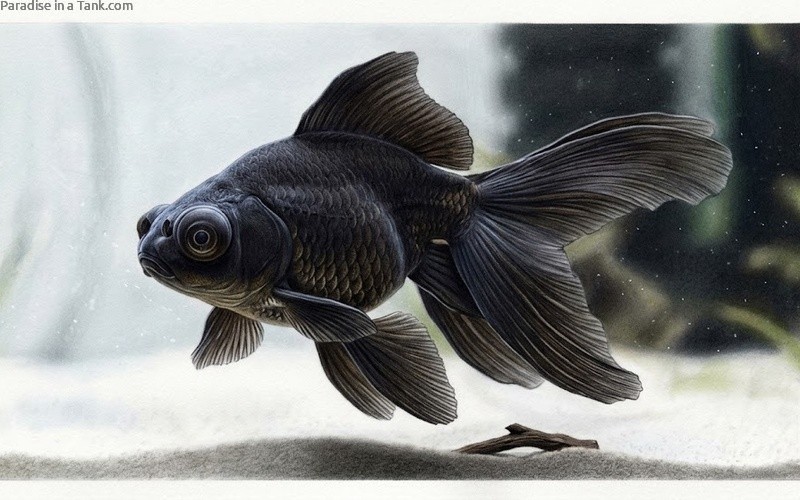
When considering decorations, integrating real, living plants into a goldfish bowl is an excellent idea. They provide natural biological filtration by consuming the toxic nutrients from goldfish poop, thereby enhancing the overall water quality. They also make the bowl look more beautiful. Understanding the benefits of aquarium plants is crucial, but you must also understand their specific respiration biology when using them in a confined space:
- Daytime Oxygen Production: Plants release fresh oxygen into the water during the day through photosynthesis.
- Nighttime Oxygen Consumption: Plants reverse this process and use up oxygen from the water during the night.
While this oxygen drain is not a problem in larger tanks that have a few plants, small bowls with lots of plants will experience severe nighttime oxygen crashes. Keeping a plant or two in a bowl makes it even more vitally important to run an active air pump. Because the bowl barely has any natural air exchange from the water’s surface, adding a plant to a bowl that has no air stone creates a literal death trap. Your goldfish will likely suffocate and won’t make it until morning.
The Aggressive Cleaning Regime Required for Survival
In a proper aquarium, routine cleaning is made convenient and automated by a motorized filter. As there isn’t enough physical space for a filter inside a small bowl, you will need to do manual water changes far more frequently to keep your fish alive.
The Daily 50% Reset Process
- Execute Daily Changes: You need to change 50% of the bowl’s water daily, or at least every two days without fail.
- Dechlorinate Everything: If you are using standard tap water, you cannot add it directly to the bowl. You must put 1 to 2 drops of a chemical dechlorinator into the tap water and leave it to sit for an hour before pouring it in. This gives the stabilizer time to neutralize toxic chlorine compounds.
- Stir the Substrate: When performing these frequent water changes, don’t just scoop water from the top. Use a small tube or your hand to move the gravel around before removing the dirty water.
- Suck Out Solid Waste: Stirring the substrate will release the trapped poop particles, allowing them to be sucked out along with the old water.
If you do not systematically remove these solid waste particles from the gravel regularly, dangerous, invisible gases will build up over time. These toxins can be very dangerous and will easily kill your goldfish. Because these chemical gases are completely invisible, they stay undetected unless you check water parameters regularly. Without this gravel maintenance, you will be left wondering why your fish died suddenly out of nowhere.
Upgrading to a Real Aquarium
While the daily maintenance routine can keep a juvenile fish alive in a bowl temporarily, your ultimate goal must be to transition them into a long-term home that respects their biological scale. Goldfish require a certain amount of space to feel comfortable, swim freely, and maintain stable health. Giving them a larger volume of water makes it much easier to clean the tank. It provides enough water so that their constant pooping doesn’t make the water quality plummet overnight.
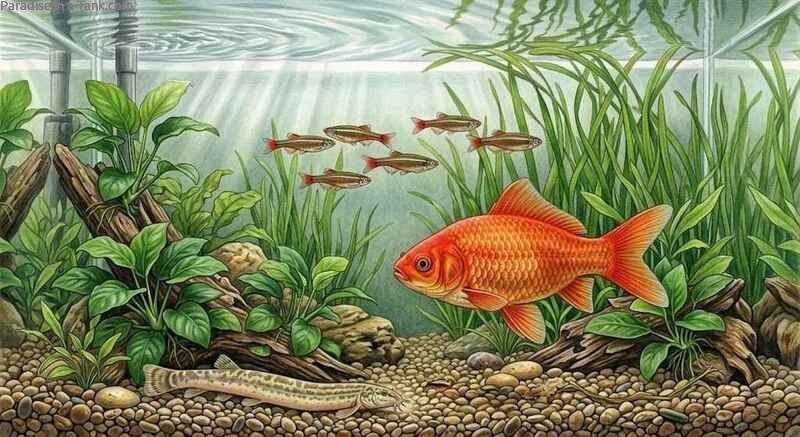
How much space you need to give them depends entirely on how big your specific goldfish variety is going to get and how many fish you intend to keep together. Never keep just one goldfish long-term; they are social animals, and your fish will need some friends to interact with. For each additional 4-inch goldfish you add to the group, you must increase the tank size by 10 gallons.
The following table outlines the minimum space guidelines for keeping 4-inch goldfish healthy:
| Number of 4-Inch Goldfish | Recommended Tank Style | Minimum Water Volume Required |
|---|---|---|
| 1 Goldfish | Long Tank (Length > Height) | 15 Gallons |
| 2 Goldfish | Long Tank (Length > Height) | 25 Gallons |
| 3 Goldfish | Long Tank (Length > Height) | 35 Gallons |
| 4 Goldfish | Long Tank (Length > Height) | 45 Gallons |
Remember the law of biomass growth when planning your upgrade. A single 8-inch long goldfish is twice as long as a 4-inch fish, but its total biological mass is actually four times greater. This means that a single 8-inch fish will eat four times the food, require four times the physical space, and poop four times as much as a smaller fish! Therefore, a single 8-inch long adult goldfish will need a minimum of a 45-gallon tank just to have enough room to move about freely, and to ensure there is enough water volume to prevent massive, lethal fluctuations in water quality.
Deploy these emergency bowl interventions immediately to safeguard your fish today, and begin planning for a proper aquarium so your curious companion can live a long, healthy life.